The strategic positioning of your sharehouse relative to Tokyo’s major shopping districts creates profound implications for your monthly spending patterns that extend far beyond the obvious convenience factors. Living in proximity to commercial centers fundamentally alters consumption behaviors, impulse purchasing tendencies, and overall financial management approaches in ways that many international residents discover only after experiencing significant budget overruns during their initial months in Tokyo.
The psychological and practical influences of shopping district accessibility operate through multiple interconnected mechanisms that affect daily decision-making processes, social activities, and lifestyle choices. Understanding these dynamics enables more informed housing decisions and better financial planning strategies that align spending patterns with long-term budget goals while maximizing the benefits of Tokyo’s incredible retail diversity.
The Psychology of Proximity-Driven Consumption
Geographic proximity to shopping districts creates psychological accessibility that fundamentally shifts spending behaviors through reduced friction between desire and acquisition. The mere convenience of reaching stores within walking distance eliminates traditional barriers such as transportation costs, time investment, and effort requirements that typically moderate impulse purchasing decisions in more remote locations.
Research in consumer psychology demonstrates that physical proximity to retail environments increases purchase frequency through what behavioral economists term “availability heuristic” effects, where easily accessible options receive disproportionate consideration in decision-making processes. How convenience store proximity affects daily costs explores similar patterns on a smaller scale, illustrating how even basic retail access influences spending habits.
The sensory stimulation provided by vibrant shopping environments creates what retail psychologists call “shopping mood induction,” where exposure to attractive displays, promotional activities, and social shopping atmospheres triggers emotional states that favor consumption decisions. Living near districts like Shibuya, Harajuku, or Ginza means regular exposure to these stimulating environments during routine activities such as commuting or socializing.
Habituation effects compound these influences over time, as regular exposure to shopping opportunities normalizes frequent purchasing behaviors that might seem excessive to residents of less commercial neighborhoods. The gradual adjustment of personal spending baselines occurs unconsciously, making budget management increasingly challenging without deliberate awareness and intervention strategies.
Economic Impact of Major Shopping Districts
Tokyo’s primary shopping districts each exert distinct economic influences on nearby residents based on their unique commercial characteristics, target demographics, and pricing structures. Living costs in Tokyo sharehouses explained provides broader context for understanding how location affects overall living expenses beyond basic accommodation costs.
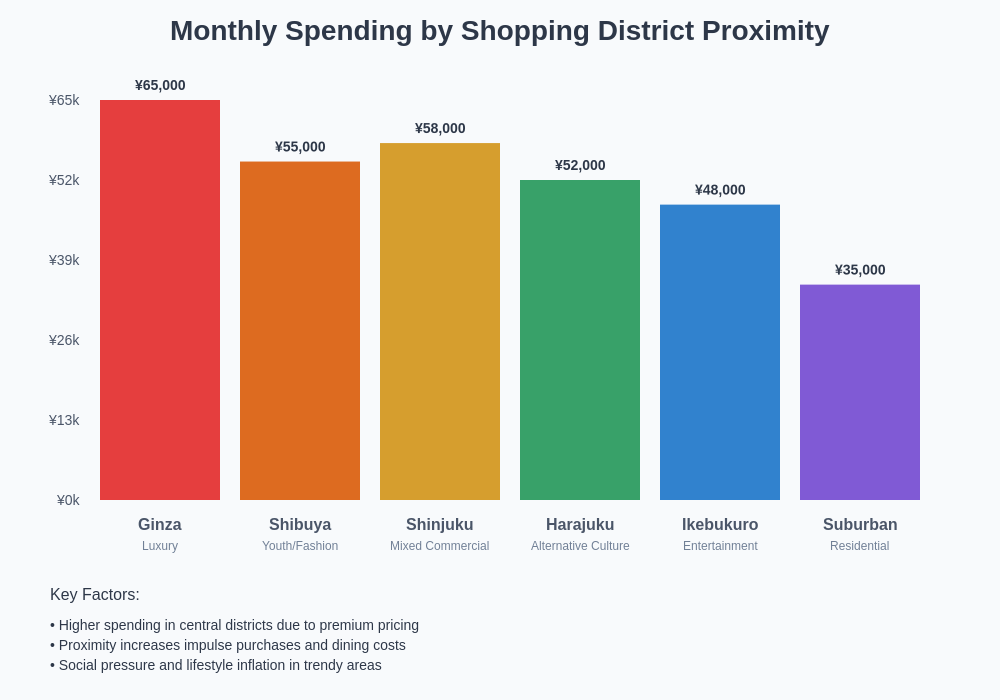
Shibuya’s youth-oriented retail environment emphasizes fashion, technology, and entertainment options that typically command premium prices while targeting disposable income segments. Residents of sharehouses within walking distance often report monthly discretionary spending increases of 30-50% compared to their pre-Tokyo budgets, driven primarily by clothing, accessories, and social entertainment expenses.
Ginza represents luxury retail concentration that influences spending patterns even among budget-conscious residents through aspirational purchasing behaviors and social pressure to maintain appearance standards appropriate to the area’s upscale atmosphere. The presence of department stores, high-end boutiques, and premium dining establishments creates lifestyle inflation pressures that affect monthly budget allocations across multiple expense categories.
Harajuku’s alternative culture focus and tourist-oriented retail landscape generates unique spending patterns characterized by novelty purchasing, souvenir accumulation, and participation in trend-driven consumption cycles. Dating while living in Tokyo sharehouses touches on how social activities in trendy areas contribute to elevated entertainment and appearance-related expenses.
Transportation and Access Cost Dynamics
The relationship between shopping district proximity and monthly spending encompasses complex transportation economics that affect both direct travel costs and indirect behavioral influences on consumption patterns. How commute times impact your quality of life examines broader transportation considerations that apply to recreational shopping activities.
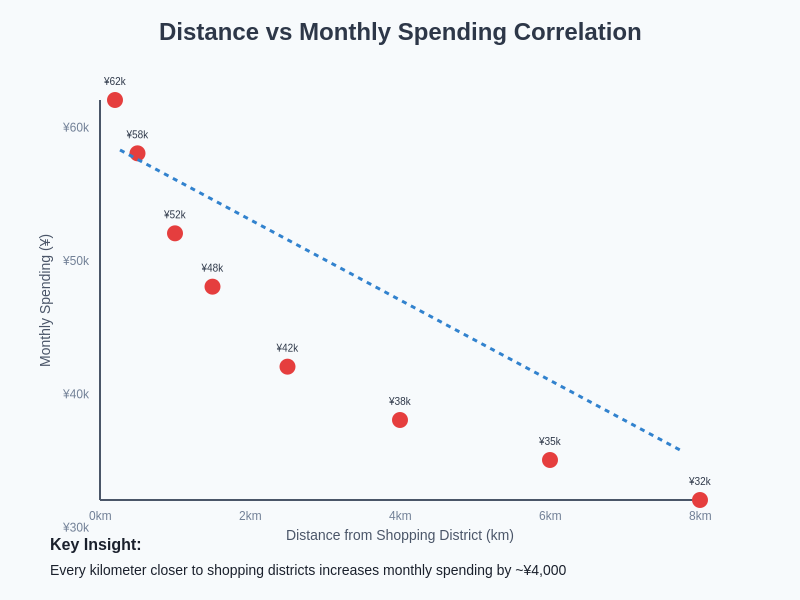
Residents living within walking distance of major shopping areas eliminate per-visit transportation costs that might otherwise moderate shopping frequency. This cost reduction often translates into increased visit frequency rather than absolute savings, as the psychological barrier of transportation planning disappears and spontaneous shopping becomes effortless.
Conversely, residents requiring train travel to reach shopping districts face both monetary costs and time investments that create natural spending moderation effects. The ¥200-400 round-trip train costs, combined with 30-60 minute travel commitments, encourage more deliberate purchasing decisions and consolidated shopping trips that typically result in lower overall monthly retail spending.
The accessibility advantage of proximity extends beyond direct shopping activities to include social meetups, dining engagements, and entertainment events that occur in commercial districts. These secondary activities often generate ancillary spending on food, beverages, and experiences that contribute significantly to monthly budget impacts without being directly attributable to shopping behavior.
Impulse Purchasing and Convenience Factors
The elimination of friction between impulse recognition and satisfaction creates dramatic changes in purchasing patterns that compound over monthly cycles to produce substantial budget impacts. How bulk shopping changes in shared living explores related consumption pattern changes in sharehouse environments.
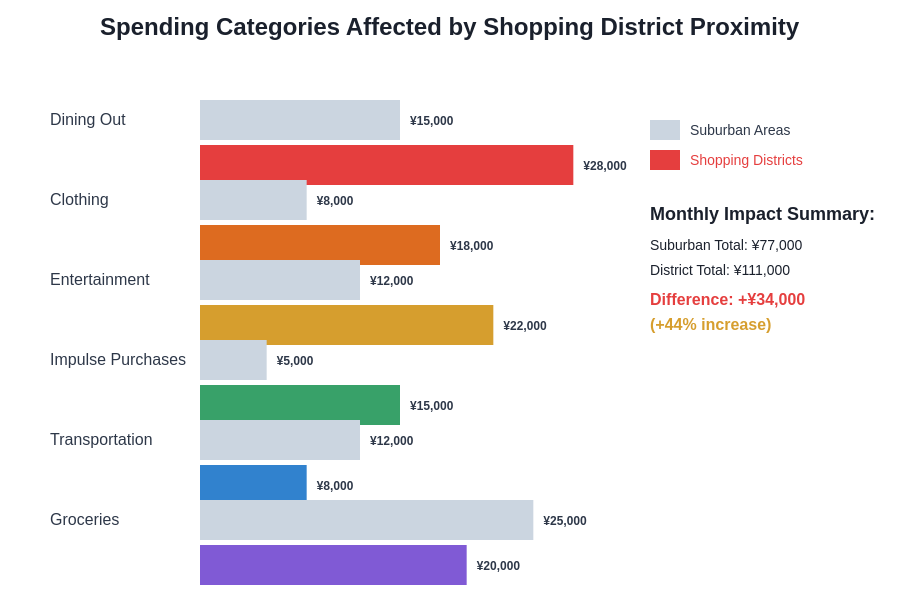
Convenience shopping behaviors shift dramatically when basic retail needs can be met through premium-priced district retailers rather than budget-oriented alternatives in residential areas. The tendency to purchase immediate needs at nearby expensive stores rather than planning trips to affordable options can increase routine shopping costs by 40-70% monthly.
Seasonal sales events, limited-time promotions, and flash marketing campaigns become more influential when residents can easily access participating stores without advance planning. The fear-of-missing-out psychology combined with effortless access creates powerful spending triggers that affect even disciplined budget managers.
Social shopping influences multiply in areas with high foot traffic and diverse retail options, as casual browsing with friends or housemates frequently evolves into unplanned purchases. Making friends through Tokyo sharehouse communities discusses how social dynamics in sharehouses can influence spending behaviors through group activities.
Restaurant and Dining Cost Implications
Shopping districts concentrate premium dining options that significantly impact food-related monthly expenses through both direct meal costs and social dining pressures. The presence of trendy restaurants, themed cafes, and international cuisine options creates dining lifestyle inflation that extends beyond basic nutritional needs.
Restaurant density in shopping areas encourages frequent dining out behaviors that replace home cooking activities, effectively shifting food expenses from grocery budgets to restaurant spending at substantially higher per-meal costs. How dietary restrictions complicate meal planning explores related food budgeting challenges in sharehouse environments.
Social dining expectations increase in areas known for food culture and Instagram-worthy establishments, as residents feel pressure to participate in trending dining experiences and maintain social media presence consistent with their location. These social pressures can add ¥10,000-30,000 monthly to food budgets compared to residents of less commercially dense areas.
The convenience of nearby dining options reduces meal planning discipline and increases spontaneous food purchases during work breaks, shopping trips, or social activities. The cumulative effect of these small convenience purchases often exceeds the cost of planned restaurant visits in less accessible locations.
Entertainment and Social Activity Costs
Shopping districts serve as entertainment hubs that concentrate social activities requiring financial participation, from arcade games and karaoke to seasonal events and cultural experiences. How cultural festivals affect house activities examines how location-based events influence resident spending patterns.
The density of entertainment options creates social pressure to participate in activities that might be optional in less stimulating neighborhoods. Residents often report feeling obligated to take advantage of nearby attractions, leading to elevated entertainment spending that feels justified by convenience and opportunity.
Date-related expenses increase significantly in shopping districts due to the concentration of premium entertainment venues, romantic restaurants, and experience-based activities that command higher prices than suburban alternatives. Living with Japanese roommates in Tokyo sharehouses touches on cultural factors that influence social spending expectations.
Seasonal events, pop-up experiences, and limited-time attractions in commercial districts create additional spending opportunities that residents feel compelled to experience due to proximity and perceived exclusivity. These special events often require advance purchases and premium pricing that impacts monthly budgets unpredictably.
Comparative Analysis of District-Specific Impacts
Different Tokyo shopping districts exert varying influences on resident spending patterns based on their unique commercial compositions, demographic targets, and cultural atmospheres. Best Tokyo neighborhoods for sharehouse living provides context for understanding neighborhood characteristics that affect living costs.
Shibuya’s influence tends toward technology, fashion, and youth culture purchases, with residents reporting average monthly increases of ¥15,000-25,000 in discretionary spending compared to suburban baseline costs. The area’s concentration of electronics stores, fashion boutiques, and entertainment venues creates multiple spending temptations during routine activities.
Shinjuku’s mixed commercial environment affects spending across broader categories including professional attire, dining, and entertainment, with particularly strong influences on working professionals who benefit from the area’s business district amenities. Monthly spending impacts typically range from ¥20,000-35,000 above suburban baselines.
Ikebukuro’s anime and manga culture concentration creates specialized spending patterns that primarily affect residents with related interests, while its shopping mall infrastructure influences routine retail purchases through convenient access to diverse product categories. The district’s impact varies dramatically based on individual interest alignment with its commercial focus.
Strategies for Managing Proximity-Related Spending
Successful spending management in shopping district proximity requires deliberate awareness of psychological triggers and implementation of specific behavioral controls that counteract environmental influences. How to budget realistically for sharehouse living offers broader budgeting strategies applicable to location-based spending challenges.
Pre-commitment strategies such as automated savings transfers, spending limits on discretionary categories, and scheduled budget reviews help maintain financial discipline despite environmental pressures. Setting specific monthly allowances for proximity-related purchases creates conscious boundaries that prevent unconscious spending escalation.
Alternative activity planning that leverages proximity benefits without requiring high spending can satisfy social and entertainment needs while controlling costs. Utilizing free events, window shopping as entertainment, and meeting friends in commercial areas without purchase obligations maintains social benefits while minimizing financial impact.
Physical barriers such as leaving cards at home during casual district visits, using cash-only systems for discretionary purchases, and implementing waiting periods for non-essential items help moderate impulse purchasing behaviors that proximity facilitates.
Long-term Financial Planning Considerations
The cumulative financial impact of shopping district proximity extends beyond monthly spending variations to influence long-term financial goals, savings rates, and overall financial health during Tokyo residency. Why some residents develop better communication skills explores personal development aspects that can include financial discipline improvement.
Residents who successfully navigate proximity-related spending pressures often develop enhanced financial literacy, budgeting skills, and consumer awareness that benefit their long-term financial management capabilities. The challenging environment forces development of discipline and strategic thinking that proves valuable beyond the Tokyo experience.
Housing decision-making should incorporate realistic assessments of personal spending tendencies, social pressures susceptibility, and financial discipline levels when evaluating sharehouses near major commercial districts. Understanding personal vulnerability to proximity influences enables more informed cost-benefit analyses of location choices.
The trade-offs between convenience, experience richness, and financial impact require careful consideration of individual priorities, career stage, and financial goals. Some residents find the enhanced lifestyle opportunities justify increased costs, while others prioritize savings rates and choose less commercial locations.
Career development benefits from shopping district proximity, including networking opportunities, cultural immersion, and professional appearance maintenance, may offset increased living costs through enhanced earning potential and career advancement opportunities that arise from central location advantages.
The complex relationship between shopping district proximity and monthly spending reflects fundamental aspects of consumer psychology, urban economics, and lifestyle management that affect all Tokyo residents. Understanding these dynamics enables more informed housing decisions, better financial planning, and strategic approaches to maximizing the benefits while controlling the costs of living in one of the world’s most vibrant commercial environments.
Disclaimer
This article is for informational purposes only and does not constitute professional financial advice. Individual spending patterns vary significantly based on personal circumstances, financial discipline, and lifestyle preferences. Readers should conduct their own research and consider their specific financial situation when making housing and budgeting decisions. The spending estimates mentioned may vary based on individual behavior, economic conditions, and district-specific factors.