The integration of smart home technology into Tokyo’s sharehouse landscape represents a fundamental shift in how residents experience daily living, transforming everything from basic utility management to complex social interactions within shared spaces. Modern sharehouses equipped with intelligent systems are reshaping traditional expectations about communal living, creating environments where technology seamlessly enhances convenience, efficiency, and community dynamics in ways that were unimaginable just a few years ago.
The proliferation of smart home features in contemporary sharehouses extends far beyond simple convenience upgrades, fundamentally altering behavioral patterns, time management strategies, and interpersonal relationships among residents. Understanding these technological transformations becomes essential for anyone considering modern sharehouse living, as these systems increasingly define the quality and character of daily experiences in shared residential environments.
The Evolution of Smart Sharehouses in Tokyo
Tokyo’s sharehouse market has embraced smart home technology with remarkable enthusiasm, driven by the city’s tech-forward culture and the practical benefits these systems provide in high-density living situations. How to find the perfect sharehouse in Tokyo increasingly involves evaluating technological amenities that were considered luxury features just a few years ago but have now become standard expectations among discerning residents.
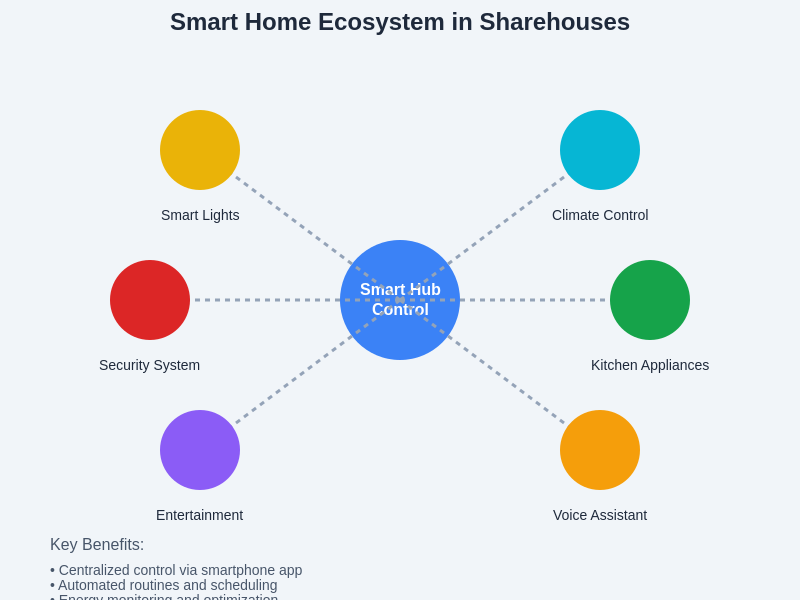
Smart home implementations in sharehouses range from basic automated lighting and climate control systems to comprehensive IoT ecosystems that manage everything from security access to utility consumption tracking. These technological integrations create living environments that respond intelligently to resident needs, preferences, and usage patterns, fundamentally changing how people interact with their living spaces and each other.
The adoption rate of smart home features in Tokyo sharehouses has accelerated dramatically, with property managers recognizing that technological amenities significantly influence resident satisfaction, retention rates, and premium pricing opportunities. Why sharehouses are better than apartments in Tokyo often highlights the technological advantages that shared living spaces can offer compared to traditional individual accommodations.
Morning Routine Transformations Through Automation
Smart home technology has revolutionized morning routines in sharehouses by eliminating common friction points and coordination challenges that traditionally create stress and inefficiency in shared living environments. Automated lighting systems gradually adjust brightness and color temperature throughout the morning hours, creating natural wake-up experiences that align with circadian rhythms while reducing conflicts over shared space illumination preferences.
Intelligent bathroom scheduling systems have emerged as game-changing features that address one of the most persistent challenges in sharehouse living. Why morning bathroom queues are inevitable in sharehouses explores traditional challenges, while smart booking systems allow residents to reserve bathroom time slots through mobile applications, eliminating uncertainty and reducing wait times during peak morning hours.
Climate control automation ensures optimal temperature and air quality conditions throughout common areas without requiring constant manual adjustments or negotiations between residents with different comfort preferences. Smart thermostats learn usage patterns and automatically adjust settings based on occupancy levels, time of day, and weather conditions, creating consistently comfortable environments that enhance morning productivity and mood.
Kitchen automation features including smart appliances, inventory tracking systems, and automated coffee preparation have transformed breakfast routines from potential conflict zones into efficient, enjoyable experiences. Why kitchen politics actually work in Japanese sharehouses examines traditional dynamics, while smart systems reduce friction through automated scheduling, usage monitoring, and resource allocation.
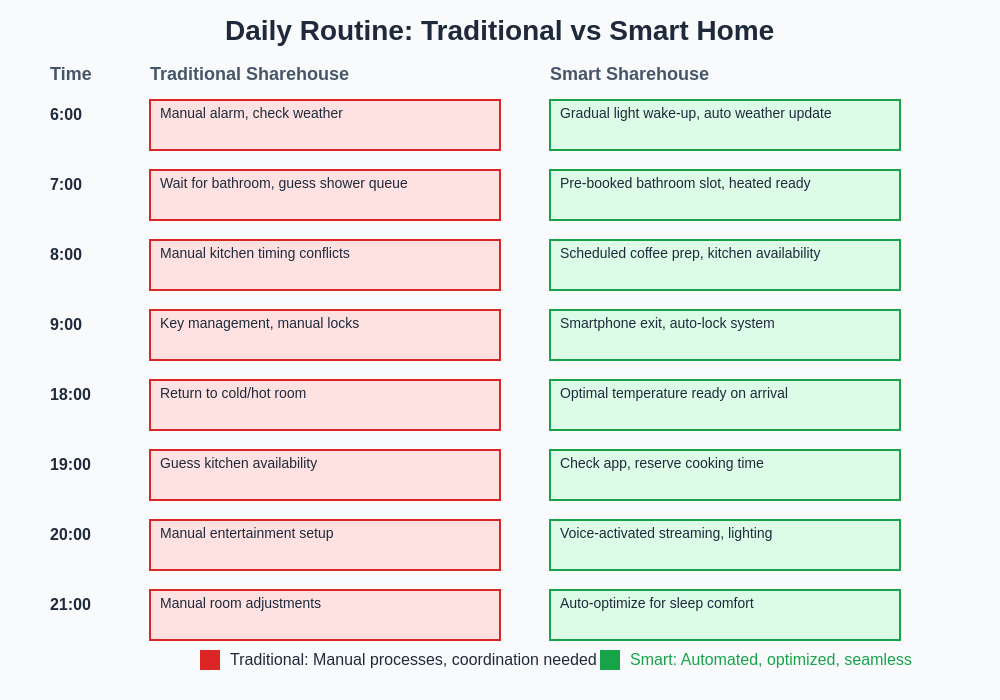
The transformation of daily routines through smart home integration demonstrates clear advantages in time management, coordination efficiency, and overall resident satisfaction compared to traditional sharehouse operations.
Energy Management and Utility Optimization
Smart home systems have revolutionized utility management in sharehouses by providing unprecedented visibility into consumption patterns, enabling fair cost allocation, and promoting conservation behaviors through real-time feedback and gamification elements. Understanding utility bills in Japanese sharehouses becomes more transparent and manageable when smart systems provide detailed usage breakdowns and predictive billing estimates.
Automated energy optimization systems adjust heating, cooling, and lighting based on occupancy detection, weather forecasts, and resident preferences, significantly reducing utility costs while maintaining comfort levels. These systems learn from usage patterns and continuously optimize performance, often achieving 20-30% reductions in energy consumption compared to manual control systems.
Water management systems track usage across different fixtures and provide insights into conservation opportunities, leak detection, and maintenance needs. Smart water heaters optimize heating schedules based on usage patterns, ensuring hot water availability during peak demand periods while minimizing standby energy consumption during low-usage hours.
Individual room monitoring allows residents to track their personal consumption and compare usage patterns with household averages, creating awareness and incentives for conservation behaviors. These systems often include features that reward efficient usage through reduced individual billing or community recognition programs.
Security and Access Control Revolution
Smart security systems have transformed how residents interact with their living spaces and manage access to shared facilities, creating safer environments while providing greater flexibility and convenience. Digital access control eliminates the need for physical keys and allows for sophisticated permission management that can be adjusted instantly based on changing circumstances or security requirements.
Facial recognition and smartphone-based access systems provide seamless entry experiences while maintaining detailed logs of facility usage patterns. Why security cameras create false sense of safety examines traditional security limitations, while modern smart systems provide more comprehensive protection through integration with monitoring services and automated response protocols.
Package delivery management has been revolutionized through smart locker systems and delivery coordination platforms that eliminate the traditional problems of missed deliveries and package security. Why package delivery becomes complicated explores traditional challenges, while smart systems provide secure storage and automated notification systems that enhance convenience and security.
Emergency response capabilities include automated detection of unusual activities, medical emergencies, or safety hazards, with direct connections to appropriate response services and automatic notification of emergency contacts. These systems provide peace of mind for both residents and their families, particularly important for international residents living far from traditional support networks.
Social Interaction and Community Building
Smart home technology has created new opportunities for community interaction and social coordination that enhance the traditional benefits of sharehouse living. Digital bulletin boards and communication systems provide platforms for residents to coordinate activities, share resources, and build relationships through structured interaction opportunities.
Making friends through Tokyo sharehouse communities has been enhanced by smart systems that facilitate introductions, suggest compatibility based on lifestyle preferences, and coordinate group activities based on shared interests and availability patterns.
Shared entertainment systems allow residents to collaborate on music playlists, movie selections, and gaming experiences through democratic voting systems and personalized recommendation engines. These technologies create natural conversation starters and shared experiences that strengthen community bonds.
Event coordination features help residents organize social gatherings, cultural exchanges, and community activities through automated invitation systems, RSVP tracking, and resource scheduling. Why some residents become unofficial leaders often relates to their ability to facilitate community interactions, while smart systems democratize these organizational capabilities.
Kitchen and Meal Management Intelligence
Smart kitchen systems have addressed many traditional challenges associated with shared cooking facilities by providing intelligent scheduling, inventory management, and coordination tools that reduce conflicts and enhance culinary experiences. Automated inventory tracking systems monitor food storage, track expiration dates, and provide suggestions for reducing waste through shared meal planning and coordination.
Why some residents monopolize cooking times becomes less problematic when smart scheduling systems provide fair access to cooking facilities through advance reservation systems and usage monitoring that encourages equitable sharing of resources.
Recipe sharing and meal coordination platforms built into smart kitchen systems enable residents to collaborate on cooking projects, share cultural dishes, and learn from each other’s culinary traditions. These systems often include features for dietary restriction management, nutritional tracking, and cost-sharing for group meals.
Smart appliances provide guided cooking experiences that help less experienced residents develop culinary skills while ensuring food safety and optimal results. These systems can automatically adjust cooking parameters, provide step-by-step instructions, and alert users to potential issues before they become problems.
Maintenance and Housekeeping Automation
Automated maintenance monitoring systems have transformed how sharehouses manage upkeep responsibilities and address maintenance issues before they become major problems. Smart sensors continuously monitor air quality, temperature, humidity, and equipment performance, providing early warning of potential issues and optimizing maintenance schedules.
Why cleaning responsibilities create house drama has been significantly reduced through automated task allocation systems that fairly distribute cleaning responsibilities and track completion status through IoT sensors and verification systems.
Equipment monitoring provides predictive maintenance capabilities that prevent unexpected failures and optimize replacement schedules. Smart systems can automatically order replacement filters, schedule professional maintenance services, and provide residents with clear instructions for routine maintenance tasks.
Cleaning robots and automated systems handle routine maintenance tasks in common areas, reducing the burden on residents while maintaining consistently high cleanliness standards. These systems operate during low-traffic periods and can be scheduled around resident activities and preferences.
Privacy and Personal Space Management
Smart home systems have introduced sophisticated privacy controls that help residents maintain personal boundaries while enjoying the benefits of shared living environments. Individual room climate control allows personalized comfort settings without affecting common areas or other residents’ preferences.
Why privacy is limited even in private rooms examines traditional challenges, while smart systems provide technological solutions including white noise generation, activity status indicators, and Do Not Disturb modes that help residents communicate availability and preferences.
Personal device integration allows residents to maintain individual control over their immediate living environment while participating in shared house systems. Smart locks, lighting controls, and entertainment systems can be personalized without requiring separate installations or conflicting with house-wide systems.
Data privacy protections ensure that personal usage patterns and preferences remain confidential while allowing for system optimization and community features. Advanced systems use anonymized data aggregation and provide residents with full control over their information sharing preferences.
Cost Implications and Value Considerations
The financial impact of smart home features in sharehouses extends beyond simple utility savings to include broader value propositions that affect overall living costs and experiences. How much Tokyo sharehouses really cost per month increasingly includes technological amenities that provide long-term value through improved convenience, efficiency, and quality of life.
Initial investment costs for smart home systems are typically absorbed by property managers and distributed across residents through slightly higher rental rates, but the resulting utility savings and enhanced experiences often provide net positive value for residents. Detailed cost-benefit analyses consistently demonstrate favorable returns on investment for both operators and residents.
Energy savings from automated systems often result in lower individual utility bills despite higher base rents, creating situations where residents enjoy enhanced amenities while reducing overall living costs. Why utility bill calculations can be manipulated becomes less relevant when transparent smart systems provide detailed usage tracking and automated fair allocation.
Premium pricing for smart-enabled sharehouses reflects the genuine value these systems provide through time savings, convenience improvements, and enhanced living experiences. Market data consistently shows higher resident satisfaction and retention rates in technology-enabled properties, justifying the additional investment.
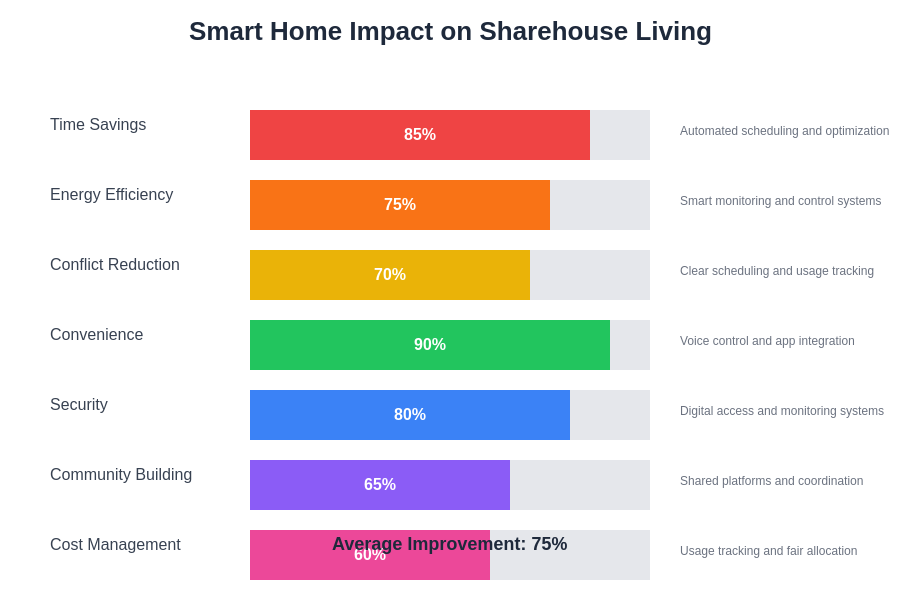
Quantitative analysis reveals significant improvements across all aspects of sharehouse living when smart home features are properly implemented and maintained.
Future Implications and Emerging Trends
The trajectory of smart home development in Tokyo sharehouses points toward increasingly sophisticated systems that will further transform daily living experiences and social dynamics. Artificial intelligence integration promises even more personalized and predictive systems that anticipate resident needs and optimize experiences proactively.
How sharehouse living prepares you for future challenges increasingly includes technological literacy and adaptation skills that become valuable in an increasingly automated world. Residents who experience smart home systems in sharehouses develop competencies that transfer to other living and working environments.
Integration with city-wide smart infrastructure will create seamless connections between home automation systems and urban services, transportation networks, and emergency services. These connections will enhance the already significant advantages of Tokyo sharehouse living by providing unprecedented convenience and connectivity.
Environmental sustainability features will become increasingly important as smart systems optimize resource usage, coordinate renewable energy integration, and promote conservation behaviors through real-time feedback and community-based incentive programs.
The evolution of smart home technology in sharehouses represents more than simple technological advancement; it embodies a fundamental reimagining of how communal living can enhance individual experiences while strengthening community bonds. As these systems continue to evolve and improve, they will undoubtedly play an increasingly central role in defining the appeal and effectiveness of sharehouse living in Tokyo and beyond.
Disclaimer
This article is for informational purposes only and does not constitute professional advice regarding smart home technology or housing decisions. Smart home features and availability vary significantly between different sharehouses and operators. Readers should verify specific technological amenities and capabilities when evaluating housing options. The effectiveness and reliability of smart home systems may vary based on implementation quality, maintenance standards, and individual usage patterns.