The requirement for resident registration before securing sharehouse accommodation represents one of the most perplexing administrative challenges facing international residents in Tokyo, creating what appears to be an impossible circular dependency that confuses newcomers and experienced expatriates alike. This bureaucratic maze stems from complex interactions between national immigration policies, local ward regulations, and individual property management practices that have evolved over decades of administrative precedent and legal interpretation.
Understanding why certain areas maintain these requirements while others operate with more flexibility requires deep examination of the underlying legal framework, historical development of housing regulations, and practical considerations that drive administrative decision-making at both municipal and property management levels. The implications extend far beyond simple paperwork inconvenience, affecting housing availability, demographic distribution, and the overall experience of international community integration throughout Tokyo’s diverse neighborhoods.
The Legal Foundation of Resident Registration
Japan’s resident registration system, known as juminhyo, operates as the fundamental mechanism through which local governments track population demographics, allocate resources, and ensure compliance with various administrative obligations that affect everything from taxation to emergency services. Understanding utility bills in Japanese sharehouses becomes significantly more complex when registration requirements determine service eligibility and billing procedures.
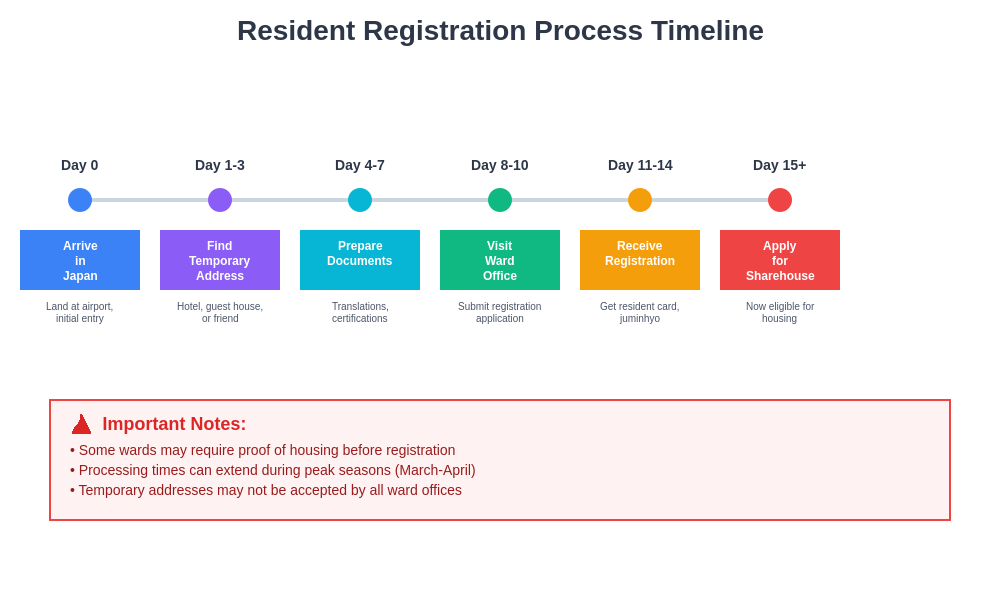
The national framework requires all residents, including foreign nationals with valid visas, to register their address with the local ward office within fourteen days of establishing residence in any given location. This registration creates the official record that enables access to healthcare, banking services, employment verification, and numerous other essential functions that underpin daily life in Japan.
Local ward offices maintain considerable autonomy in interpreting and implementing these registration requirements, leading to significant variations in procedures, documentation demands, and enforcement practices across Tokyo’s twenty-three special wards. Some areas have developed streamlined processes that accommodate the unique circumstances of sharehouse residents, while others maintain rigid interpretations that create substantial barriers for international residents seeking flexible housing arrangements.
The registration process itself involves multiple steps including address verification, documentation submission, and often waiting periods that can extend beyond the standard fourteen-day requirement, particularly during peak moving seasons when ward offices experience heavy application volumes. Understanding these timelines becomes crucial for coordinating housing transitions and maintaining legal compliance throughout the relocation process.
Ward-Specific Policies and Variations
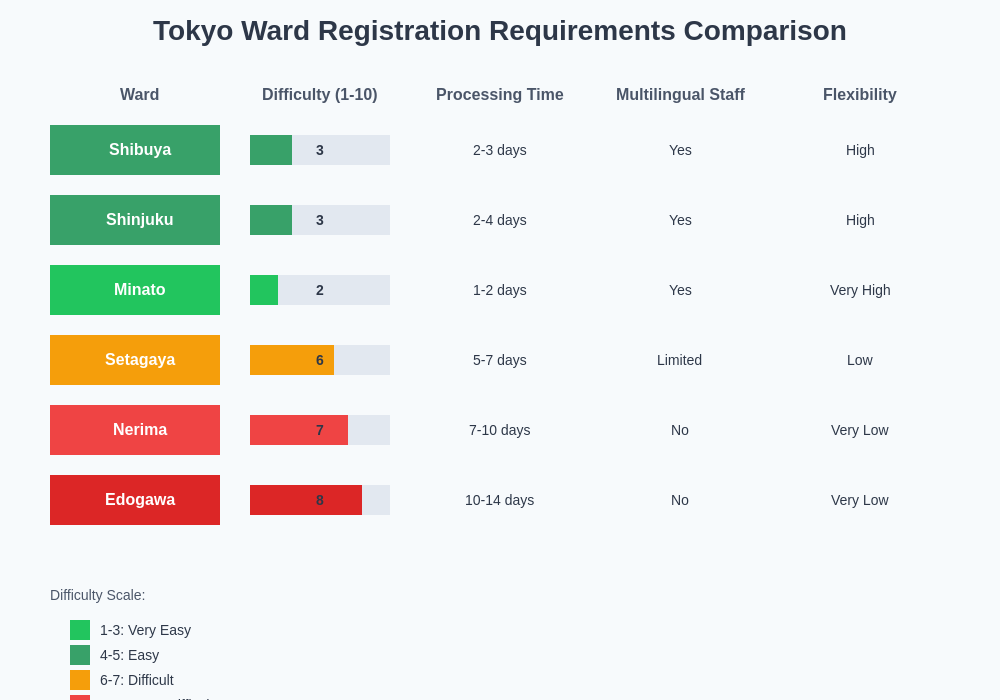
Tokyo’s administrative structure creates a complex patchwork of policies where each ward develops its own interpretation of national guidelines, resulting in dramatically different experiences for sharehouse seekers depending on their chosen location. Best Tokyo neighborhoods for sharehouse living often correlates with areas that have developed more accommodating registration procedures for international residents.
Central wards such as Shibuya, Shinjuku, and Minato have typically developed more streamlined processes due to their high international resident populations and extensive experience handling foreign documentation. These areas often maintain multilingual staff, extended office hours, and specialized procedures designed to accommodate the unique circumstances of temporary and shared housing arrangements.
Suburban wards with lower international resident populations may maintain more traditional approaches that assume conventional family-based housing arrangements, creating additional challenges for sharehouse applicants who must navigate unfamiliar procedures without specialized support services. Cheaper sharehouse options in Tokyo suburbs often require additional preparation and documentation to satisfy local registration requirements.
The variation in required documentation can range from basic passport and visa verification to comprehensive employment documentation, guarantor information, and detailed housing contracts that some sharehouses may not provide in formats acceptable to certain ward offices. These differences create strategic considerations for housing selection that extend beyond simple proximity and cost calculations.
Property Management Risk Assessment
Sharehouse operators and property management companies have developed varying approaches to resident registration requirements based on their risk tolerance, operational capacity, and historical experiences with ward office procedures. How to spot financial red flags in sharehouse contracts includes understanding how registration requirements affect contract terms and resident obligations.
Large-scale operators with established relationships with multiple ward offices often maintain comprehensive knowledge of local requirements and can provide guidance or assistance throughout the registration process. These companies may require proof of registration completion before finalizing housing contracts to ensure compliance and avoid potential complications during residency periods.
Smaller operators or individual property owners may lack the resources or expertise to navigate complex registration procedures, leading them to implement blanket requirements for completed registration before considering housing applications. This approach shifts the administrative burden to prospective residents while protecting property managers from potential legal complications or regulatory enforcement actions.
The liability concerns driving these policies stem from potential issues including tax collection problems, emergency contact difficulties, and complications during lease termination or damage recovery procedures. Property managers recognize that unregistered residents create administrative risks that can affect their relationship with local authorities and their ability to operate within regulatory compliance standards.
Breaking the Circular Dependency Challenge
The apparent impossibility of requiring an address for registration while needing registration for an address has created numerous workaround strategies and alternative solutions that vary in legality, practicality, and long-term sustainability. What documents you need for Tokyo sharehouse applications becomes more complex when registration timing affects document validity and acceptance.
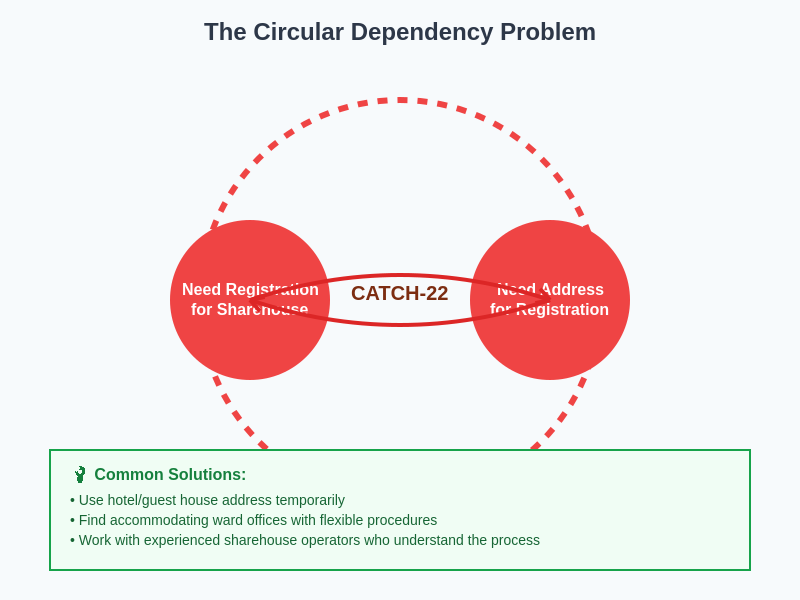
Temporary accommodation solutions including hotels, guest houses, and short-term rentals can provide initial addresses for registration purposes, allowing residents to establish legal presence before transitioning to longer-term sharehouse arrangements. However, these solutions require additional financial investment and careful timing to ensure seamless transitions without registration gaps.
Some ward offices have developed preliminary registration procedures that allow initial documentation submission with temporary addresses, followed by address updates once permanent housing is secured. These accommodating approaches recognize the practical challenges facing international residents while maintaining compliance with national registration requirements.
Professional services including relocation consultants, legal advisors, and specialized housing agencies have emerged to help navigate these complex requirements, though their services add costs and complexity to the housing search process. Understanding when such services provide value versus managing the process independently requires careful evaluation of individual circumstances and risk tolerance.
Enforcement Variations and Practical Realities
The enforcement of registration requirements varies significantly not only between wards but also within individual ward offices depending on staff interpretation, workload pressures, and specific circumstances of each application. Living costs in Tokyo sharehouses explained must account for potential costs associated with meeting registration requirements and potential penalties for non-compliance.
Some ward offices maintain strict interpretation of timing requirements and documentation standards, while others exercise discretionary flexibility for international residents facing genuine practical challenges. The unpredictability of these approaches creates uncertainty for sharehouse seekers who must balance legal compliance with practical housing needs.
Penalty enforcement for registration violations also varies considerably, ranging from administrative warnings and deadline extensions to more serious consequences including visa status complications and difficulty accessing essential services. Understanding the potential ramifications of non-compliance helps residents prioritize registration completion while managing competing demands during relocation periods.
The practical reality often involves informal accommodation by ward office staff who recognize the genuine challenges facing international residents, though relying on such discretionary treatment creates uncertainty and potential complications if policies change or different staff members handle subsequent interactions.
Strategic Approaches for Navigating Requirements
Successful navigation of registration requirements requires strategic planning that begins well before arriving in Tokyo, incorporating timeline management, documentation preparation, and contingency planning for potential complications or delays. How to find perfect sharehouse in Tokyo becomes significantly more complex when registration timing affects housing availability and application success.
Pre-arrival preparation includes researching specific ward requirements for intended neighborhoods, gathering necessary documentation with appropriate translations and certifications, and identifying backup housing options that can accommodate temporary registration needs. This preparation reduces stress and complications during the critical initial weeks when multiple administrative tasks require attention.
Communication with prospective sharehouses about registration requirements helps identify properties and operators that can provide assistance or accommodation for international residents navigating these procedures. Some operators maintain relationships with local ward offices or can provide documentation in formats that facilitate registration completion.
Timeline coordination becomes essential when managing visa status, employment start dates, and housing availability to ensure all requirements align within regulatory deadlines. Building buffer time into relocation schedules accommodates unexpected delays or complications that commonly arise during complex administrative processes.
Impact on Housing Market Dynamics
Registration requirements create significant effects on housing market accessibility, demographic distribution, and community development patterns throughout Tokyo’s diverse neighborhoods. Student sharehouses near top Tokyo universities often cluster in areas with more accommodating registration procedures due to student population needs.
Areas with strict registration requirements may experience lower international resident populations, affecting local business development, cultural diversity, and community character. These demographic patterns create self-reinforcing cycles where areas become more or less international resident-friendly based on accumulated experience and infrastructure development.
Property values and rental rates can reflect the relative ease or difficulty of meeting local registration requirements, with more accommodating areas commanding premium prices due to increased demand from international residents. Understanding these market dynamics helps inform housing decisions and budget planning for prospective residents.
The concentration of international residents in specific areas due to registration accessibility can create both positive community-building opportunities and potential challenges related to integration, resource allocation, and maintaining balanced neighborhood demographics that serve diverse resident populations effectively.
Long-term Policy Evolution and Trends
The ongoing evolution of registration policies reflects broader trends in Japanese society including demographic changes, international migration patterns, and administrative modernization efforts that gradually address practical challenges facing international residents. Why some areas have poor public transit access often correlates with areas maintaining traditional administrative approaches that create barriers for international residents.
Digital transformation initiatives within municipal governments promise to streamline registration procedures through online applications, electronic document submission, and integrated database systems that reduce paperwork requirements and processing times. However, implementation timelines and coverage vary significantly across different wards and administrative functions.
Increasing international resident populations and business community pressure for administrative efficiency create incentives for ward offices to develop more accommodating procedures. Tokyo vs Osaka sharehouses for international students reflects how administrative efficiency affects city competitiveness for international residents.
National policy discussions regarding immigration, tourism, and international competitiveness influence local implementation of registration requirements as municipalities balance compliance with practical considerations for maintaining attractive environments for international residents and businesses.
Practical Solutions and Workarounds
Experienced international residents and housing professionals have developed numerous practical approaches for managing registration requirements while maintaining legal compliance and access to desired housing options. Real stories from Tokyo sharehouse residents often include accounts of successfully navigating complex registration procedures.
Professional consultation services specializing in international resident needs can provide valuable guidance for navigating complex requirements, though their costs must be weighed against potential time savings and reduced stress during the relocation process. These services often maintain current knowledge of ward-specific procedures and can provide tailored strategies for individual circumstances.
Community resources including international resident organizations, embassy services, and online forums provide valuable peer support and practical advice from others who have successfully navigated similar challenges. These resources often contain the most current information about policy changes and effective strategies for specific situations.
Building relationships with ward office staff through patient, respectful interaction can facilitate smoother processing and provide access to unofficial guidance that helps navigate complex requirements. Understanding cultural expectations for government office interactions improves outcomes and reduces friction during administrative procedures.
Understanding why some areas require resident registration first represents just one aspect of the complex administrative landscape that international residents must navigate when establishing life in Tokyo. Success requires patience, preparation, and strategic thinking that balances legal compliance with practical housing needs while building foundations for long-term residence and community integration in Japan’s dynamic capital city.
Disclaimer
This article is for informational purposes only and does not constitute legal advice. Resident registration requirements and procedures change frequently and vary by ward. Readers should consult with relevant ward offices, legal professionals, or qualified consultants for current requirements and specific guidance. The author does not guarantee the accuracy of information regarding specific ward policies or procedures, and individual experiences may vary significantly from general descriptions provided.