The dynamics of entertainment choices in Tokyo sharehouses reveal complex social patterns that can inadvertently create invisible barriers between residents, transforming what should be unifying recreational activities into sources of division and exclusion. Understanding these mechanisms becomes crucial for anyone seeking to build inclusive communities where cultural differences enhance rather than fragment the living experience.
Entertainment preferences often reflect deeper cultural values, economic circumstances, and social expectations that residents bring from their home countries and personal backgrounds. When these preferences clash or exclude certain demographics, the resulting social stratification can undermine the fundamental promise of sharehouse living as a space for cross-cultural connection and mutual understanding.
The Language Barrier in Entertainment Selection
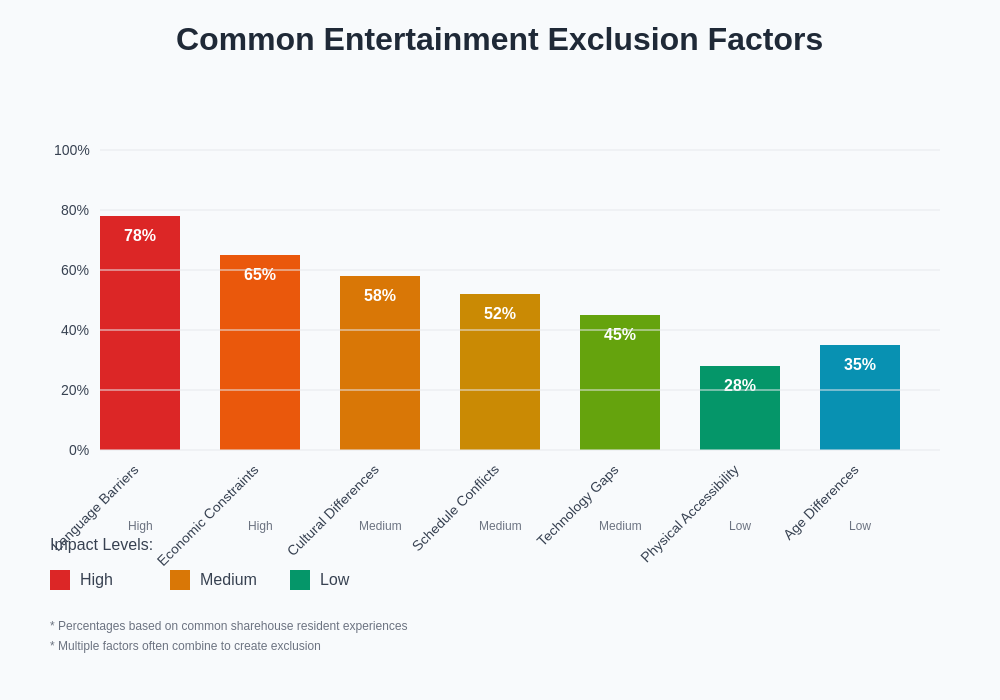
Language requirements create the most immediate and visible form of entertainment exclusion in international sharehouses, where activities demanding high Japanese proficiency or specific cultural knowledge automatically limit participation to certain resident groups. Living with Japanese roommates in Tokyo sharehouses often involves navigating these linguistic entertainment boundaries that can feel more pronounced during leisure time than in daily practical interactions.
Television programming, board games with Japanese text, and local comedy shows require language skills that many international residents have not yet developed, creating natural divisions between those who can fully participate and those who remain passive observers. The exclusion extends beyond simple comprehension to include cultural references, humor styles, and social cues that are embedded within the entertainment medium itself.
Video gaming communities within sharehouses frequently develop around specific language preferences, with Japanese-speaking residents gravitating toward local releases and English-speaking residents forming separate gaming circles. This linguistic segregation in entertainment choices often mirrors broader social divisions that can persist throughout the entire sharehouse experience, despite residents’ best intentions to remain inclusive.
The temporal aspect of language-based entertainment exclusion becomes particularly evident during peak social hours when common areas are most active, forcing residents with limited Japanese skills to either struggle through activities they cannot fully enjoy or retreat to private spaces, missing opportunities for community building and cultural exchange.
Economic Disparities in Entertainment Accessibility
Financial constraints create subtle but persistent barriers to entertainment participation, where seemingly minor costs associated with group activities can exclude residents operating on tight budgets or dealing with currency exchange disadvantages. How much Tokyo sharehouses really cost per month touches on basic living expenses, but entertainment costs often create additional financial pressures that affect social participation patterns.
Restaurant visits, movie theater outings, and paid entertainment venues require discretionary spending that varies dramatically among sharehouse residents based on their employment status, visa limitations, and home country economic backgrounds. Students on tight budgets, working holiday participants, and professionals with different salary levels naturally develop different entertainment preferences based on their financial realities rather than personal interests.
The compounding effect of entertainment exclusion based on economic factors extends beyond individual events to affect long-term relationship building, where residents who consistently cannot participate in group activities may gradually become isolated from the main social circles within the house. This economic segregation often intersects with other forms of exclusion, creating multiple barriers that can be difficult for affected residents to overcome.
Group entertainment decisions frequently favor those with higher disposable incomes, as activities requiring significant financial investment become normalized among residents who can afford them, while budget-conscious alternatives may be dismissed as less desirable or exciting. The social pressure to participate in expensive entertainment options can create stress and resentment among residents who feel forced to choose between financial responsibility and social integration.
Cultural Entertainment Preferences and Social Clustering
Cultural backgrounds heavily influence entertainment preferences in ways that can create natural clustering patterns within sharehouses, where residents gravitate toward activities that align with their familiar social practices and cultural comfort zones. Making friends through Tokyo sharehouse communities becomes more challenging when cultural entertainment preferences create rigid social boundaries.
Western residents often prefer individualistic entertainment options such as personal music listening, solo gaming, or small group discussions, while residents from more collectivist cultures may gravitate toward large group activities, communal meals, and participatory entertainment that involves the entire house community. These fundamental differences in social entertainment expectations can lead to conflicts over common space usage and activity scheduling.
Religious and cultural dietary restrictions significantly impact entertainment choices involving food, where residents who cannot participate in alcohol-centered socializing or specific cuisine-based gatherings may find themselves excluded from major social events. The intersection of entertainment and cultural practices creates complex scenarios where well-intentioned inclusivity efforts may still inadvertently exclude certain residents.
Generational cultural differences add another layer of complexity, where younger residents from the same cultural background may have different entertainment preferences than older residents, creating age-based subdivisions within already culturally segmented social groups. These multiple intersecting factors can create intricate social dynamics that require careful navigation to maintain house harmony.
Technology and Digital Entertainment Divides
The digital entertainment landscape in sharehouses reflects broader technological literacy gaps and platform preferences that can exclude residents who lack access to specific devices, high-speed internet, or familiarity with popular entertainment platforms. Understanding utility bills in Japanese sharehouses often includes internet costs, but the quality and capacity of connections can vary significantly between properties.
Streaming service preferences create natural divisions where residents cluster around specific platforms based on their home country accessibility, language preferences, and content libraries, leading to separate viewing groups that rarely cross-pollinate. The proliferation of region-locked content and subscription-based entertainment platforms means that residents from different countries may have entirely different entertainment ecosystems that don’t overlap.
Gaming platforms and online entertainment communities often require specific hardware investments and ongoing subscription fees that create barriers for residents with limited technology budgets or those who are unfamiliar with Japanese gaming culture. The learning curve associated with new entertainment platforms can be particularly steep for older residents or those from countries with different technological adoption patterns.
Social media integration with entertainment choices adds another layer of exclusion, where residents who use different platforms or have varying privacy preferences may find themselves excluded from entertainment planning, event coordination, and group communication that occurs through specific digital channels.
Time Zone and Schedule-Based Entertainment Exclusion
The temporal aspects of entertainment in sharehouses create exclusion patterns based on work schedules, academic commitments, and personal routine preferences that can systematically exclude certain residents from recurring social activities. Student sharehouses near top Tokyo universities often experience schedule-based entertainment conflicts between students and working residents.
Shift workers, freelancers with irregular schedules, and residents with demanding academic programs may find that most house entertainment activities occur during times when they are unavailable, leading to gradual social isolation despite their desire to participate. The concentration of entertainment activities during traditional evening and weekend hours favors residents with conventional work schedules while excluding those with alternative arrangements.
International residents dealing with time zone differences for maintaining relationships in their home countries may need to reserve specific hours for family communication or business calls, preventing participation in house activities that conflict with these commitments. The scheduling challenges become particularly acute for residents managing professional or educational obligations across multiple time zones.
The tendency for entertainment planning to occur spontaneously or with short notice can exclude residents who require advance planning due to work schedules, childcare responsibilities, or other commitments that require coordination. This informal approach to entertainment organization, while appealing to residents with flexible schedules, systematically excludes those who need more structured social planning.
Physical and Accessibility Barriers in Entertainment
Physical limitations and accessibility requirements create often-overlooked barriers to entertainment participation that can exclude residents with mobility issues, chronic health conditions, or sensory impairments from activities that appear universally accessible. Japanese sharehouse rules every foreigner should know may not adequately address accessibility considerations in entertainment planning.
Venue-based entertainment activities frequently occur in locations that are not fully accessible, requiring navigation of stairs, crowded spaces, or venues with limited accommodation for residents with disabilities. The assumption that all residents can participate in physical activities or visit entertainment venues without considering accessibility needs can lead to systematic exclusion of residents who face mobility challenges.
Sensory-intensive entertainment options such as loud music events, visually demanding activities, or venues with strong odors or bright lighting can exclude residents with sensory sensitivities or processing differences. The overlap between cultural entertainment preferences and sensory accessibility creates complex scenarios where residents may face multiple barriers to participation.
Age-related physical considerations affect entertainment participation patterns, where older residents may find certain activities too physically demanding while younger residents may gravitate toward high-energy options that exclude those with different physical capabilities or energy levels.
The Psychology of Entertainment Social Dynamics
The psychological mechanisms underlying entertainment-based exclusion in sharehouses involve complex social identity formation processes where residents define their belonging through shared activities and cultural practices. Real stories from Tokyo sharehouse residents often reveal the subtle ways entertainment choices affect long-term relationship dynamics and house community cohesion.
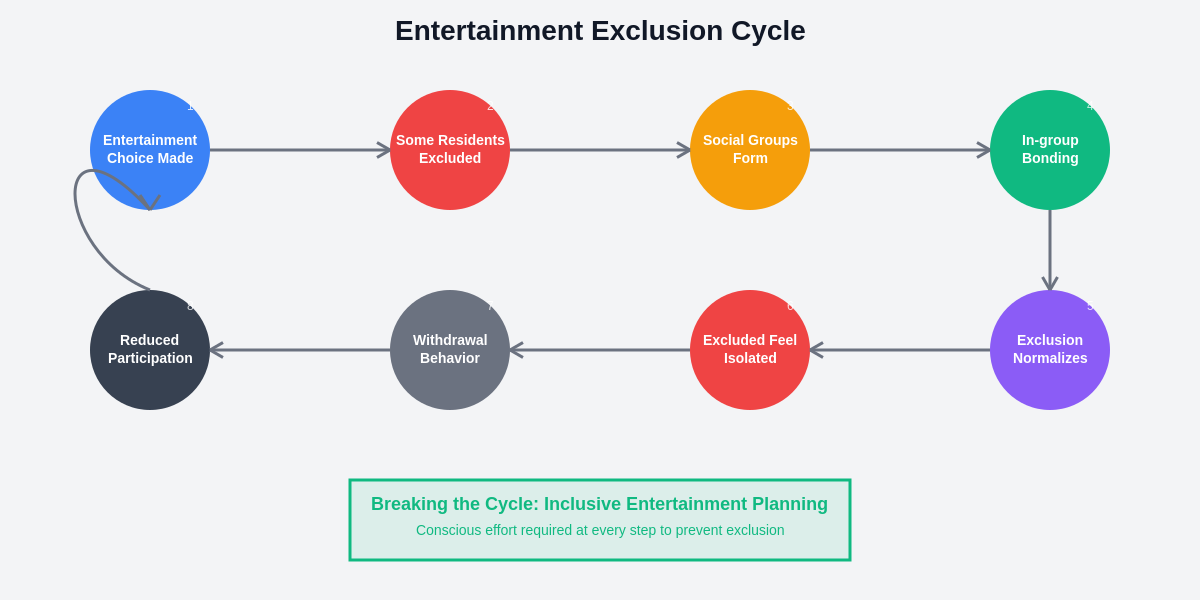
In-group formation around entertainment preferences creates psychological benefits for included members while simultaneously reinforcing barriers for those outside the established social circles. The human tendency to bond through shared experiences means that residents who consistently participate in the same entertainment activities develop stronger relationships, while those excluded from these activities may struggle to form meaningful connections.
Social proof mechanisms in entertainment selection create feedback loops where popular activities become more entrenched as group preferences, while alternative options that might be more inclusive lose consideration due to their perceived lower status or participation rates. The democratic nature of group entertainment decisions can inadvertently perpetuate exclusion by reinforcing majority preferences.
The emotional impact of entertainment exclusion extends beyond simple disappointment to include feelings of cultural inadequacy, social anxiety, and isolation that can affect residents’ overall sharehouse experience and mental health. The cumulative effect of repeated exclusion from entertainment activities can lead to withdrawal behaviors that further reinforce social isolation.
Strategies for Inclusive Entertainment Planning
Developing inclusive entertainment approaches requires intentional effort and systematic consideration of diverse resident needs, preferences, and circumstances that might otherwise be overlooked in spontaneous activity planning. How to handle roommate conflicts without moving out provides frameworks that can be adapted for proactive entertainment inclusion strategies.
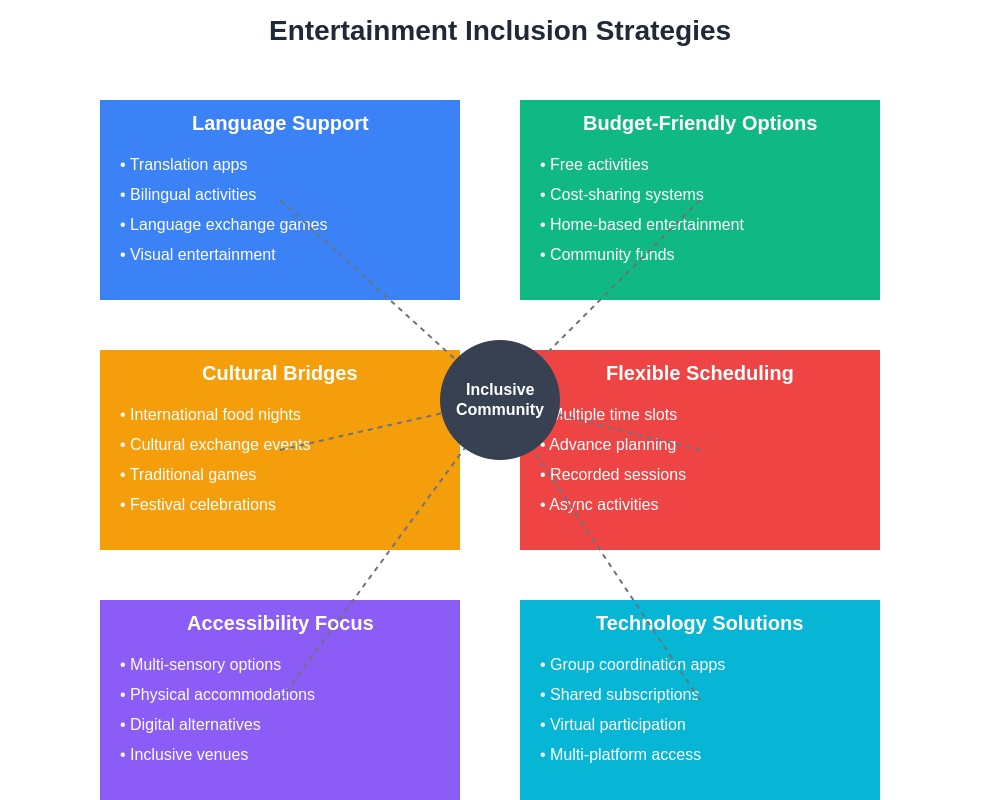
Rotation systems for entertainment selection ensure that different cultural preferences, economic circumstances, and activity types receive equal consideration over time, preventing the dominance of any single entertainment style or cost level. This systematic approach to variety helps ensure that all residents have opportunities to introduce and participate in activities that align with their interests and capabilities.
Budget-conscious entertainment planning involves establishing house funds for group activities, offering sliding scale participation options, and regularly incorporating free or low-cost entertainment alternatives that don’t create economic barriers to participation. The key lies in normalizing diverse entertainment price points rather than treating budget-friendly options as inferior alternatives.
Multi-modal entertainment approaches that combine different participation levels allow residents to engage with activities according to their language skills, cultural comfort, or physical capabilities while still contributing to the group experience. This might involve providing translation support, offering multiple role options within activities, or creating parallel tracks that accommodate different participation styles.
Building Cultural Bridge Activities
Cross-cultural entertainment initiatives that explicitly celebrate and incorporate different cultural traditions can transform potential sources of division into opportunities for mutual learning and appreciation. Dating while living in Tokyo sharehouses demonstrates how personal cultural differences can either create barriers or opportunities for deeper understanding.
Cultural exchange entertainment events where residents take turns introducing activities from their home countries create structured opportunities for inclusion while educating all participants about different entertainment traditions and practices. These educational approaches to entertainment can reduce cultural barriers by providing context and instruction that enable broader participation.
Language learning through entertainment activities can address linguistic barriers while creating shared goals that unite residents across different proficiency levels. Game nights focused on language practice, cultural movie discussions with explanation sessions, and collaborative cooking activities that incorporate cultural education can serve multiple inclusion objectives simultaneously.
Collaborative entertainment creation projects that involve residents working together to plan, organize, or create entertainment experiences can build social bonds while ensuring that diverse perspectives are incorporated into the activity design process. This collaborative approach often results in more innovative and inclusive entertainment options than individual planning efforts.
Technology Solutions for Entertainment Inclusion
Digital tools and platforms can help address some entertainment exclusion issues by providing translation support, cost-sharing mechanisms, and scheduling solutions that accommodate diverse resident needs and preferences. English-speaking sharehouses in Tokyo for foreigners may benefit from technology solutions that bridge language gaps in entertainment planning.
Group coordination apps that support multiple languages and cultural calendar systems can improve entertainment planning inclusivity by ensuring that all residents receive information in accessible formats and that cultural holidays and commitments are considered in scheduling decisions. These technological solutions can supplement but not replace the need for cultural sensitivity in entertainment planning.
Cost-splitting applications and shared entertainment subscriptions can address economic barriers by making expensive entertainment options more accessible through group participation, while also providing transparency about costs that helps residents make informed participation decisions based on their budget constraints.
Virtual entertainment options that can be accessed from private spaces provide alternative participation methods for residents who cannot attend in-person activities due to schedule conflicts, accessibility needs, or social anxiety, ensuring that entertainment inclusion doesn’t require physical presence for all activities.
Long-term Community Impact of Entertainment Choices
The cumulative effect of entertainment inclusion or exclusion practices shapes the overall community culture within sharehouses, influencing resident satisfaction, turnover rates, and the development of house traditions that either welcome or exclude future residents. Best Tokyo neighborhoods for sharehouse living often correlate with communities that have developed inclusive entertainment cultures.
Inclusive entertainment practices create positive feedback loops where residents feel valued and welcomed, leading to increased participation in house activities, stronger community bonds, and reduced turnover that benefits all residents through improved social stability and continuity. The investment in entertainment inclusion pays dividends in overall house harmony and resident satisfaction.
Exclusive entertainment patterns can create toxic house cultures where social hierarchies based on cultural background, economic status, or personal preferences become entrenched, leading to resident dissatisfaction, increased conflicts, and higher turnover rates that disrupt community building efforts. The long-term costs of entertainment exclusion extend far beyond individual social events.
The reputation effects of entertainment inclusion practices can influence the ability of sharehouses to attract and retain diverse resident communities, as word-of-mouth recommendations and online reviews increasingly reflect the social climate and inclusive practices rather than just physical amenities and location advantages.
The challenge of entertainment inclusion in Tokyo sharehouses reflects broader social integration issues that affect international communities worldwide, requiring ongoing attention, cultural sensitivity, and commitment to equity that extends beyond simple tolerance to active inclusion and celebration of diversity. Understanding these dynamics empowers residents to make conscious choices that enhance rather than fragment their shared living experience, creating communities where entertainment truly brings people together rather than driving them apart.
Disclaimer
This article is for informational purposes only and reflects general observations about social dynamics in shared living environments. Individual experiences may vary significantly based on specific house cultures, resident demographics, and management approaches. The strategies mentioned are suggestions that may not be appropriate or effective in all situations. Readers should consider their specific circumstances and community context when applying these concepts.