Living in a Tokyo sharehouse presents unique challenges for individuals whose hobbies demand substantial physical space, specialized equipment, or particular environmental conditions. The reality of shared living environments means that personal interests must be carefully balanced against community needs, storage limitations, and practical considerations that affect all residents. Understanding these space requirements becomes essential for maintaining both personal fulfillment and harmonious relationships within the sharehouse community.
The pursuit of meaningful hobbies contributes significantly to mental health, personal development, and overall life satisfaction, making it crucial to find practical solutions that accommodate these interests within the constraints of shared living spaces. Many international residents discover that their cherished activities from home countries require significant adaptations when transplanted into Tokyo’s compact living environments, leading to difficult decisions about which interests to maintain and which to temporarily suspend.
Understanding Space-Intensive Hobbies in Shared Living
Space-intensive hobbies encompass a broad spectrum of activities that require dedicated areas, specialized storage, or specific environmental conditions that may conflict with the practical realities of sharehouse living. Sports equipment storage becomes problematic when considering the limited personal space allocation typical in most Tokyo sharehouses, where residents must carefully prioritize which belongings deserve precious storage real estate.
Musical instruments represent one of the most challenging categories of space-intensive hobbies, combining physical storage requirements with noise considerations that can dramatically affect household dynamics. Acoustic guitars, keyboards, drum sets, and traditional instruments each present unique challenges in terms of both space allocation and sound management that must be carefully negotiated within the community framework of shared living arrangements.
Art and crafting activities often require dedicated workspace, specialized lighting, ventilation systems, and storage for materials and works in progress that extend far beyond the typical personal room allocation. Painting, sculpture, woodworking, pottery, and textile arts each demand specific environmental conditions and safety considerations that may be incompatible with standard sharehouse configurations and community living requirements.
Photography and videography hobbies present complex space requirements that include equipment storage, backdrop setup areas, lighting arrangements, and editing workstations that often exceed the spatial limitations of individual rooms while potentially affecting common areas used by all residents for daily activities and social interaction.
Physical Exercise and Fitness Equipment Challenges
Home fitness enthusiasts face particular difficulties in sharehouse environments where exercise equipment must compete with essential furniture and personal belongings for limited floor space. How exercise routines need complete restructuring becomes apparent when residents attempt to maintain consistent workout schedules within the spatial and noise constraints of shared living arrangements.
Weightlifting equipment, treadmills, stationary bikes, and yoga mats each require specific floor space allocations and storage solutions that may be impractical or impossible within standard sharehouse room dimensions. The weight and structural requirements of certain fitness equipment can also create safety concerns and potential damage to floors and walls that affect the entire community and property management relationships.
Group fitness activities and classes conducted at home become nearly impossible in sharehouses where residents must consider noise levels, space availability, and the impact on other residents’ daily schedules and activities. The enthusiasm for maintaining physical fitness must be balanced against community harmony and practical limitations that require creative solutions and alternative approaches to staying active.
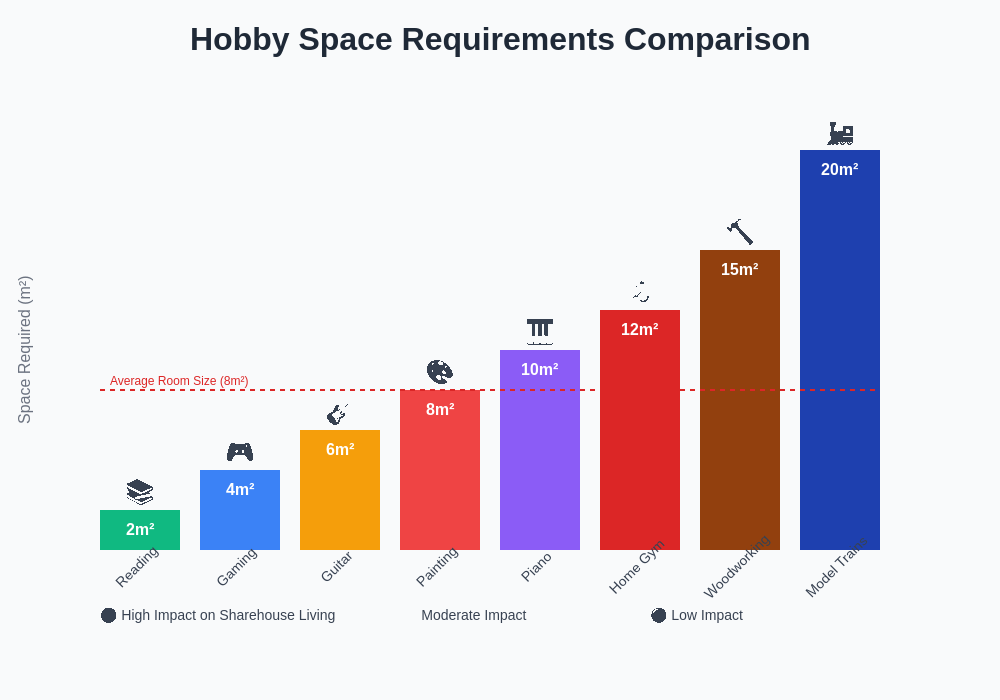
Home gym setups that include multiple pieces of equipment, mirrors, specialized flooring, and adequate ventilation systems require dedicated rooms or spaces that simply do not exist within the typical sharehouse allocation model. Residents must often choose between significantly reducing their fitness equipment collection or seeking external gym memberships that add to monthly living expenses.
Crafting and Making Activities Space Requirements
Handicraft enthusiasts discover that their beloved activities often require work surfaces, tool storage, material organization systems, and project staging areas that extend far beyond personal room capabilities. How art projects take over common areas illustrates the natural tendency for creative activities to expand into shared spaces, creating potential conflicts with other residents who require access to communal facilities for daily activities.
Sewing and textile work demand adequate lighting, cutting surfaces, storage for fabrics and notions, and space for laying out patterns and large projects that may require temporary occupation of dining areas or other common spaces. The noise from sewing machines, sergers, and other equipment can also create disturbances that affect residents during study time, sleep hours, or video conference activities.
Woodworking and carpentry projects require specialized tools, ventilation systems, and workspace configurations that produce sawdust, chemical odors, and noise levels that are completely incompatible with shared living environments. The safety requirements for power tools and the need for proper ventilation make these activities nearly impossible to pursue from within typical sharehouse accommodations.
Model building, whether focused on trains, aircraft, cars, or architectural subjects, requires dedicated workspace, storage for collections, specialized lighting, and ventilation for adhesives and paints that compete with other essential room functions. The precision required for these activities often necessitates undisturbed workspace that may be difficult to maintain in shared living environments where rooms serve multiple purposes.
Technology and Gaming Space Considerations
Modern gaming setups increasingly demand substantial space allocations for multiple monitors, powerful computer systems, specialized chairs, and audio equipment that may exceed the electrical capacity and spatial limitations of typical sharehouse rooms. How gaming requires premium internet plans represents just one aspect of the complex infrastructure requirements that serious gamers face in shared living arrangements.
Virtual reality gaming systems require dedicated floor space for safe movement, proper lighting conditions, and cable management solutions that may be impractical within the confines of small personal rooms shared with essential furniture and belongings. The immersive nature of VR gaming also raises questions about noise levels and potential disturbances to other residents during extended gaming sessions.
Content creation activities including streaming, video production, and podcast recording require controlled acoustic environments, professional lighting setups, and background staging that may be impossible to achieve within standard sharehouse accommodations. The technical requirements for consistent content quality often conflict with the variable conditions and shared infrastructure limitations inherent in communal living situations.
3D printing and maker activities demand dedicated workspace, ventilation systems, storage for materials and completed projects, and electrical capacity for specialized equipment that may exceed both spatial and infrastructure limitations of typical sharehouse environments. The chemical odors and noise produced by 3D printers and other maker equipment can also create disturbances that affect the entire household community.
Musical Pursuits and Sound Management
Musicians face the dual challenge of physical instrument storage combined with acoustic considerations that can significantly impact community relationships and house rules regarding noise levels and practice times. Musical instruments affect noise policies in ways that extend beyond simple volume control to include frequency ranges, resonance effects, and timing restrictions that can severely limit practice opportunities.
Acoustic instruments such as pianos, drum sets, and brass instruments produce sound levels and frequencies that can carry throughout buildings and affect neighbors beyond the immediate sharehouse community, potentially creating legal and social complications that extend far beyond internal house dynamics. The physical space requirements for proper instrument setup and acoustically appropriate practice environments often exceed personal room capabilities.
Electronic music production requires specialized audio equipment, acoustic treatment, and isolation from external noise sources that may be incompatible with shared living environments where residents generate varying levels of ambient noise throughout daily activities. The technical requirements for professional-quality recording and mixing often demand acoustic isolation that is impossible to achieve in standard sharehouse room configurations.
Band practice and collaborative musical activities become logistically complex in sharehouses where multiple participants, equipment setup requirements, and extended practice sessions must be coordinated with other residents’ schedules and noise tolerance levels. The social aspects of musical collaboration often require flexibility in space usage and timing that may conflict with established house rules and community agreements.
Collection and Display Hobbies
Collectors of books, vinyl records, action figures, vintage items, or specialized memorabilia face storage challenges that extend far beyond personal belongings into the realm of curated collections that require specific environmental conditions and display arrangements. Limited storage forces you to live minimally becomes particularly relevant for individuals whose hobbies center around acquiring and maintaining substantial collections of specialized items.
Comic book and manga collections require climate-controlled storage, organizational systems, and protection from light and humidity that may be difficult to achieve within standard sharehouse room configurations. The weight and volume of extensive collections can also exceed furniture capacity and create structural concerns that affect room layouts and safety considerations.
Model train enthusiasts require dedicated space for layout construction, storage for rolling stock and accessories, and electrical systems that support complex operational scenarios. The permanent or semi-permanent nature of model railroad installations conflicts with the temporary and flexible living arrangements typical in sharehouse environments where residents may relocate frequently.
Vintage electronics, audio equipment, and gaming console collections require specialized storage conditions, display arrangements, and electrical considerations that may exceed both spatial and infrastructure limitations of shared accommodations. The value and fragility of collected items also raise security concerns that may be difficult to address within the open and accessible nature of shared living communities.
Adaptation Strategies and Alternative Solutions
Successful sharehouse residents with space-intensive hobbies often develop creative adaptation strategies that allow them to maintain their interests while respecting community needs and spatial limitations. How to find perfect sharehouse in Tokyo involves evaluating properties specifically for hobby accommodation potential, including basement spaces, roof access, or nearby rental facilities that support specialized activities.
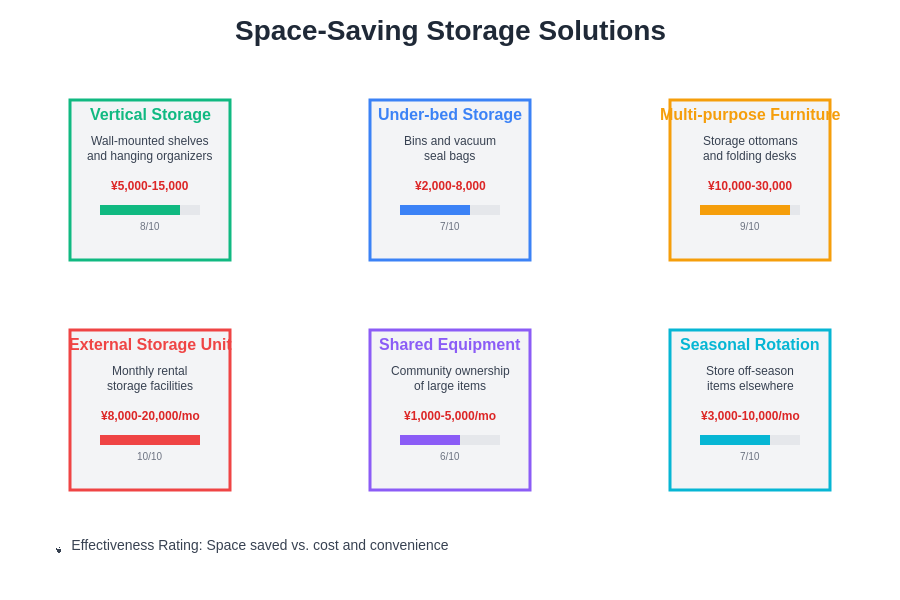
External storage solutions, including monthly rental units, community workshops, and shared maker spaces, provide alternatives that allow residents to maintain hobby equipment and activities without impacting sharehouse living arrangements. These solutions require additional monthly expenses but can provide access to specialized facilities and equipment that would be impossible to maintain within shared accommodations.
Community partnerships with other sharehouse residents who share similar interests can create opportunities for shared equipment purchases, collaborative workspace arrangements, and scheduling systems that maximize limited space utilization while building social connections within the house community. These partnerships often evolve into lasting friendships and mutual support networks that enhance the overall sharehouse living experience.
Seasonal hobby rotation strategies allow residents to maintain multiple interests while managing storage and space requirements through careful planning and temporary equipment arrangements. How seasonal shopping affects storage space principles can be applied to hobby equipment management, creating systems that accommodate changing interests and seasonal activity patterns.
Community Negotiation and House Rules
Successful integration of space-intensive hobbies into sharehouse living requires ongoing communication and negotiation with other residents to establish mutually acceptable arrangements for shared space usage, noise levels, and storage solutions. How to handle roommate conflicts without moving out provides essential strategies for addressing conflicts that may arise from hobby-related space and noise issues.
Formal scheduling systems for common area usage can provide structured access to larger spaces needed for hobby activities while ensuring that all residents maintain access to essential shared facilities for daily living needs. These systems require ongoing maintenance and flexibility as household dynamics and resident needs evolve over time.
Equipment sharing agreements between residents with complementary interests can reduce individual storage requirements while providing access to specialized tools and materials that might otherwise be unaffordable or impractical for individual ownership. These arrangements require clear communication about maintenance responsibilities, usage protocols, and replacement costs for shared items.
House rule modifications and agreements specific to hobby activities can address unique needs and concerns while maintaining community harmony and property management compliance. Japanese sharehouse rules every foreigner should know provides context for understanding existing rule structures that may need adaptation to accommodate specific hobby requirements.
Long-term Planning and Lifestyle Adjustments
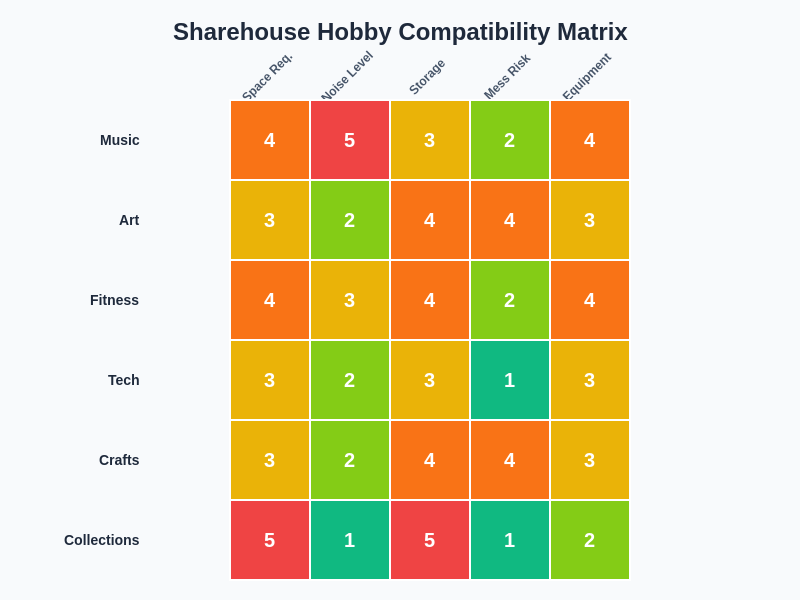
Residents committed to space-intensive hobbies must often make strategic decisions about their living arrangements, choosing sharehouses with specific amenities, locations, or configurations that better accommodate their interests while potentially accepting compromises in other areas such as cost, commute times, or social dynamics. Best Tokyo neighborhoods for sharehouse living includes considerations for hobby-friendly areas with access to specialized facilities and communities.
Career and life stage transitions may require periodic reevaluation of hobby priorities and space requirements, particularly as residents progress through different phases of their Tokyo experience and potentially transition to different housing arrangements that provide greater accommodation for specialized interests. Understanding these transitions helps residents make informed decisions about which hobbies to maintain and which to temporarily suspend.
Budget allocation for external solutions, including studio rentals, equipment storage, and facility memberships, requires careful financial planning that balances hobby maintenance costs against other living expenses and long-term financial goals. How to budget realistically for sharehouse living includes considerations for hobby-related expenses that extend beyond basic accommodation costs.
Future housing planning considerations may include evaluating how current hobby adaptations and compromises influence long-term housing decisions and whether the benefits of sharehouse living continue to justify the limitations placed on personal interests and creative pursuits. These evaluations become particularly relevant as residents establish careers, build relationships, and develop clearer long-term lifestyle preferences.
The intersection of personal interests and shared living arrangements requires ongoing balance between individual fulfillment and community responsibility. Understanding the spatial requirements of meaningful hobbies, developing creative adaptation strategies, and maintaining open communication with fellow residents creates opportunities for successful integration of space-intensive activities within the unique constraints and opportunities of Tokyo sharehouse living.
Disclaimer
This article is for informational purposes only and does not constitute professional advice regarding housing decisions or hobby equipment safety. Individual sharehouse rules, spatial limitations, and community dynamics vary significantly between properties and operators. Readers should carefully evaluate their specific hobby requirements against actual accommodation conditions and communicate openly with property managers and fellow residents about space usage needs and limitations.