
Living in Japan presents countless opportunities for cultural enrichment and unique experiences, yet many international residents quickly discover that certain products they relied on in their home countries simply cannot be found anywhere in Japanese stores. This phenomenon extends far beyond simple market preferences and delves into a complex web of regulatory frameworks, cultural dynamics, business considerations, and historical trade patterns that collectively shape what products reach Japanese consumers and which ones remain perpetually unavailable.
The absence of familiar products can significantly impact daily life for international residents, affecting everything from dietary choices and personal care routines to professional needs and recreational activities. Understanding the underlying reasons for these availability gaps provides valuable insights into Japanese consumer culture, regulatory systems, and market dynamics while helping residents develop alternative strategies for accessing desired items or finding suitable local substitutes.
Regulatory and Compliance Barriers
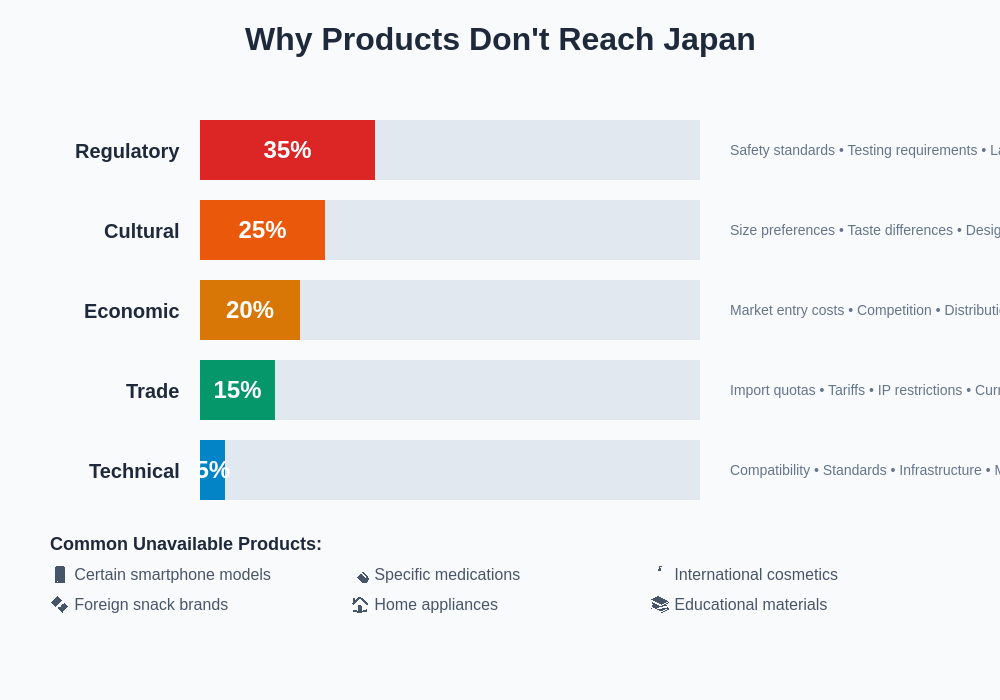
Japan maintains one of the world’s most comprehensive and stringent product regulatory systems, with government agencies implementing detailed safety standards, testing requirements, and approval processes that can effectively exclude foreign products from entering the domestic market. The Pharmaceutical and Medical Devices Agency oversees health-related products with extraordinarily rigorous evaluation procedures, while the Ministry of Health, Labour and Welfare establishes food safety standards that often exceed international norms and require extensive documentation that many foreign manufacturers find prohibitively expensive to obtain.
Product labeling requirements in Japan demand precise Japanese-language information covering ingredients, usage instructions, safety warnings, and company details, with specific formatting standards that must be printed directly on packaging rather than applied as aftermarket stickers. Why some payment methods aren’t accepted demonstrates similar regulatory complexity in other sectors, showing how administrative requirements can effectively restrict market access even when no explicit bans exist.
Chemical composition restrictions affect countless consumer products, from cosmetics containing specific ingredients deemed potentially harmful to cleaning products with formulations that don’t meet Japanese environmental standards. Electronic devices face electromagnetic interference testing, voltage compatibility requirements, and safety certifications that often necessitate hardware modifications specifically for the Japanese market, creating additional costs that manufacturers may choose to avoid by simply not selling their products in Japan.
The approval timeline for new products can extend from months to years, during which manufacturers must maintain inventory, update documentation, and respond to regulatory inquiries while competing products potentially establish market dominance. These temporal barriers particularly affect technology products where rapid innovation cycles make lengthy approval processes economically unfeasible, leading companies to skip the Japanese market entirely rather than risk obsolescence during the regulatory review period.
Cultural Preferences and Consumer Behavior
Japanese consumer culture emphasizes specific quality standards, aesthetic preferences, and functional requirements that can make foreign products seem unsuitable or unappealing to local buyers, regardless of their popularity elsewhere. Size preferences significantly impact product availability, with Japanese consumers typically favoring smaller packaging, compact designs, and portion sizes that reflect different consumption patterns and living space constraints compared to Western markets.
Flavor profiles and ingredient preferences create substantial barriers for food and beverage products, as Japanese taste preferences often favor subtle, balanced flavors over bold or intense tastes that might appeal to international consumers. Why some residents prefer expensive convenience illustrates how local preferences shape consumption patterns and market availability, demonstrating the importance of cultural alignment for product success.
Design aesthetics play crucial roles in product acceptance, with Japanese consumers showing strong preferences for minimalist designs, neutral colors, and high-quality materials that convey durability and sophistication. Products with flashy branding, bold graphics, or culturally inappropriate imagery often fail to resonate with Japanese buyers, leading retailers to avoid stocking items that don’t align with local aesthetic sensibilities.
Seasonal consumption patterns in Japan differ dramatically from other markets, affecting everything from clothing styles and cosmetic formulations to food products and recreational items. Why seasonal demand affects sharehouse prices shows how Japanese seasonal preferences influence various market sectors, creating opportunities for some products while limiting others based on timing and cultural significance.
Market Size and Economic Considerations
The economics of entering the Japanese market often prove prohibitive for smaller manufacturers or niche product categories, as the combination of regulatory costs, marketing investments, and distribution requirements can exceed potential revenue streams. Market entry expenses typically include regulatory compliance, packaging modifications, marketing campaigns, distribution network establishment, and ongoing support infrastructure that collectively represent millions of dollars in initial investment before generating any sales revenue.
Competition from established Japanese manufacturers creates additional challenges for foreign products, particularly in categories where domestic companies have developed products specifically tailored to local preferences and needs. Why some areas have higher crime rates demonstrates how local factors influence various aspects of Japanese society, including market dynamics that favor established domestic suppliers over foreign alternatives.
Distribution network access represents a significant barrier, as Japanese retail systems often rely on long-established relationships between manufacturers, wholesalers, and retailers that can be difficult for foreign companies to penetrate. The complexity of Japanese distribution channels, with multiple intermediary layers and relationship-based business practices, creates additional costs and complications that may discourage international manufacturers from pursuing market entry.
Volume requirements imposed by major retailers often exceed what foreign manufacturers can guarantee, particularly for specialized or niche products that may have limited global production capacity. Japanese retailers frequently demand consistent supply chains, promotional support, and exclusive arrangements that smaller international companies cannot provide, leading to situations where potentially popular products never reach Japanese store shelves.
Import and Trade Restrictions
Specific trade barriers and import restrictions affect various product categories through quotas, tariffs, and bilateral trade agreements that can make certain items economically unfeasible or legally prohibited in Japan. Agricultural products face particularly complex restrictions designed to protect domestic farmers, with import quotas limiting quantities of foreign produce, dairy products, and processed foods that can enter the Japanese market annually.
Intellectual property considerations create additional complications for products that may infringe on Japanese patents or trademarks, leading to legal barriers that prevent importation even when no regulatory or cultural obstacles exist. Why some residents feel unsafe at night shows how various factors influence daily life in Japan, including trade policies that affect product availability and consumer choices.
Bilateral trade relationships between Japan and other countries can significantly impact product availability, with political tensions or trade disputes potentially restricting imports from specific regions or creating preferential treatment for products from allied nations. These diplomatic considerations often operate behind the scenes but substantially influence which products receive approval and market access.
Currency exchange fluctuations create ongoing challenges for imported products, as manufacturers must account for potential cost variations that could affect pricing competitiveness or profit margins. Why exchange rate fluctuations impact budgets explores how currency issues affect various aspects of life in Japan, including the availability and pricing of international products.
Industry-Specific Challenges
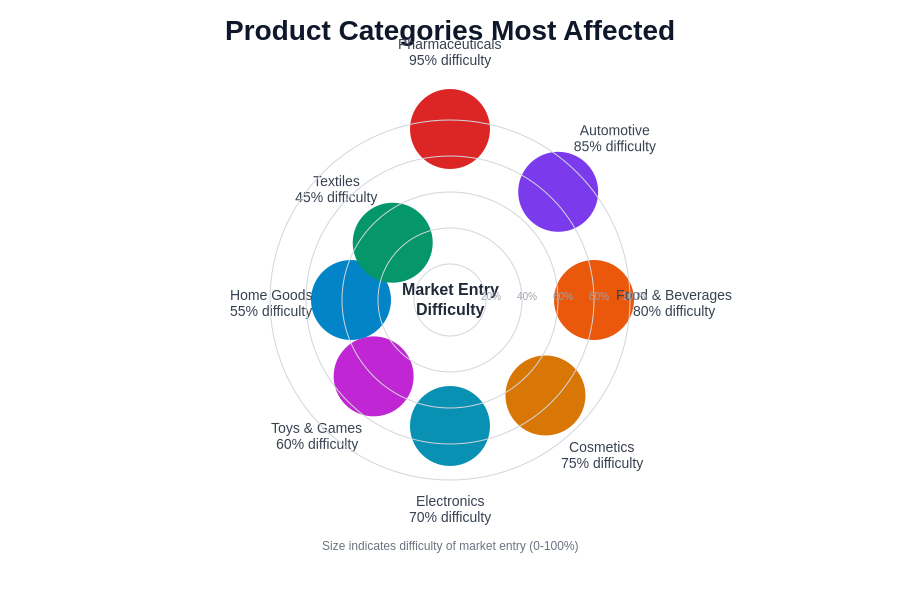
Different product categories face unique obstacles that prevent their availability in Japan, from pharmaceutical regulations that restrict certain medications to automotive standards that exclude specific vehicle models. The pharmaceutical sector presents particularly complex challenges, as Japan maintains separate drug approval processes that often require extensive clinical trials conducted specifically with Japanese populations, creating years-long delays and substantial costs that pharmaceutical companies may choose to avoid.
Technology products encounter compatibility issues with Japanese infrastructure standards, from different cellular network frequencies to unique payment systems and software requirements that necessitate substantial modifications for local use. Why some payment methods aren’t accepted demonstrates how technological incompatibilities can prevent access to international products and services.
Cosmetics and personal care products face ingredient restrictions based on Japanese safety standards that may prohibit components commonly used in other countries, requiring reformulation or complete product redesign for the Japanese market. These modifications often prove too expensive for manufacturers with limited Japanese market share expectations, leading them to exclude Japan from their distribution strategies entirely.
Food and beverage products encounter multiple barriers simultaneously, including ingredient restrictions, labeling requirements, cultural taste preferences, and competition from established local alternatives. Why some ingredients disappear mysteriously highlights the complex supply chain issues that can affect food product availability in Japan.
Alternative Solutions and Workarounds
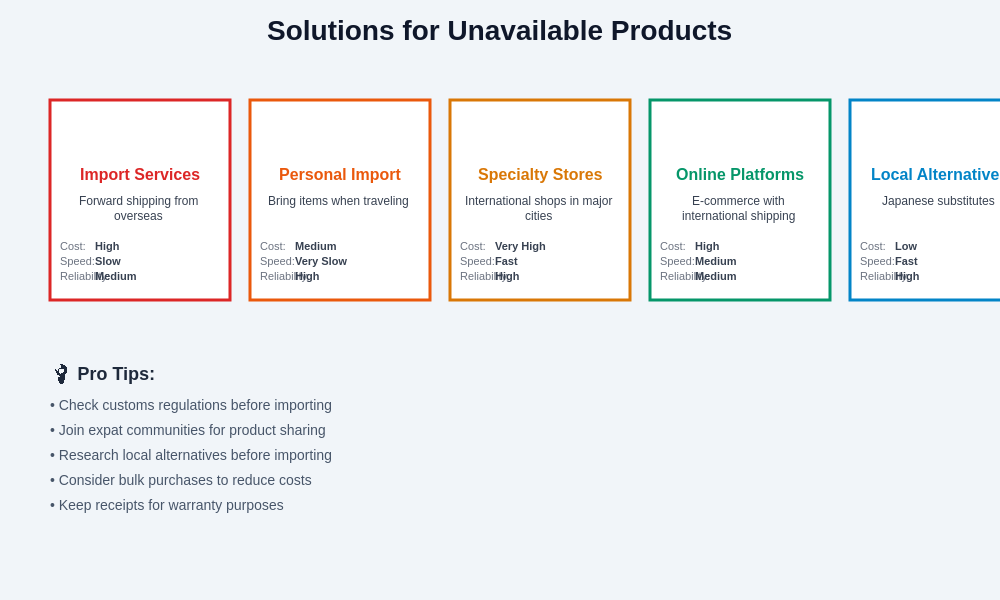
International residents in Japan have developed various strategies for accessing unavailable products, from online importation services to personal shopping networks that help circumvent market barriers. Import forwarding services allow individuals to purchase products from foreign retailers and ship them to Japan through intermediary addresses, though these services often involve additional costs, longer delivery times, and potential customs complications.
Personal importation for individual use typically faces fewer regulatory barriers than commercial imports, allowing residents to bring in small quantities of products for personal consumption that might not be available through official retail channels. Why some residents hoard bargain purchases shows how availability concerns influence purchasing behaviors among international residents.
Specialty importers and international food stores in major Japanese cities often stock limited selections of foreign products, though at premium prices that reflect the additional costs and complexities of bringing these items to Japan. Why some areas have poor public transit access demonstrates how location affects access to various resources, including specialized retailers that carry international products.
Substitute products and local alternatives often provide functional equivalents to unavailable foreign items, though finding suitable replacements requires research, experimentation, and adaptation to different formulations or designs. Japanese manufacturers frequently produce high-quality alternatives that serve similar purposes, even if they don’t exactly match the specifications or characteristics of familiar foreign products.
Impact on Daily Life and Adaptation
The unavailability of familiar products affects different aspects of daily life for international residents, from basic necessities like specific medications or dietary supplements to comfort items that provide psychological connections to home countries. Why some residents feel excluded from conversations explores how various factors can impact the international resident experience, including limitations in accessing familiar products and brands.
Dietary restrictions and health conditions can create particular challenges when specific products required for medical or nutritional needs cannot be obtained through normal retail channels. Why some medications need refrigeration space highlights how health-related product needs can complicate daily life for international residents.
Professional requirements may necessitate specific tools, equipment, or materials that aren’t available in Japan, forcing residents to either import these items individually or find creative alternatives that may not perfectly match their professional standards. Why some jobs require stable address history shows how various requirements can complicate professional life for international residents.
Cultural adaptation often involves gradually replacing familiar products with Japanese alternatives, a process that can take years and may never completely satisfy preferences developed in different cultural contexts. Why some residents become more open-minded demonstrates how living in Japan encourages flexibility and adaptation to local alternatives.
Future Trends and Market Evolution
The Japanese market continues evolving in response to globalization pressures, demographic changes, and international trade developments that may gradually increase product availability over time. E-commerce growth and direct-to-consumer shipping options are creating new pathways for international products to reach Japanese consumers, though regulatory and cultural barriers remain significant obstacles.
Demographic shifts, particularly the growing international resident population and increasing overseas travel by Japanese consumers, are creating demand for previously unavailable products and encouraging retailers to expand their international product selections. Why some areas have higher vacancy rates shows how demographic changes influence various market sectors in Japan.
Trade agreement negotiations and regulatory harmonization efforts may eventually reduce some barriers to product availability, though such changes typically occur gradually and face resistance from domestic industries that benefit from current protection levels. International pressure and consumer demand may accelerate these changes, particularly for products that enhance quality of life or serve specialized needs that domestic alternatives cannot adequately address.
The ongoing digital transformation of Japanese retail and consumer behavior may create opportunities for innovative distribution methods and direct importation services that bypass traditional market entry barriers. Why some residents become transportation experts illustrates how residents adapt to local systems and find creative solutions to access needed resources and services.
Understanding why certain products remain unavailable in Japan provides valuable perspective on the complex interplay between regulation, culture, economics, and consumer behavior that shapes modern Japanese society. While these limitations can create frustrations for international residents accustomed to different product selections, they also reflect the unique characteristics and priorities that make Japan a distinctive and fascinating place to live. Successful adaptation involves developing appreciation for Japanese alternatives while maintaining connections to home country products through creative importation strategies and specialty retailers.
Disclaimer
This article is for informational purposes only and does not constitute legal or professional advice regarding product importation or regulatory compliance. Product availability and import regulations in Japan may change over time, and specific requirements may vary by product category and country of origin. Readers should consult with relevant authorities and professionals when attempting to import products for personal or commercial use. The effectiveness of alternative solutions may vary depending on individual circumstances and changing market conditions.