The phenomenon of international residents avoiding Japanese conversation in sharehouses represents one of the most counterintuitive aspects of living in Japan, where daily immersion should theoretically accelerate language acquisition and cultural integration. Despite being surrounded by native speakers and countless opportunities for natural conversation practice, many foreign residents retreat into English-speaking bubbles that ultimately limit their linguistic progress and cultural understanding. This complex behavioral pattern stems from deep-rooted psychological, social, and cultural factors that create seemingly insurmountable barriers to meaningful Japanese communication.
Understanding these avoidance patterns becomes crucial for both individual residents seeking to maximize their Japanese learning experience and sharehouse communities working to create inclusive environments that encourage cross-cultural communication. The reluctance to engage in Japanese conversation often reflects broader challenges related to identity, self-confidence, and cultural adaptation that extend far beyond simple language proficiency issues.
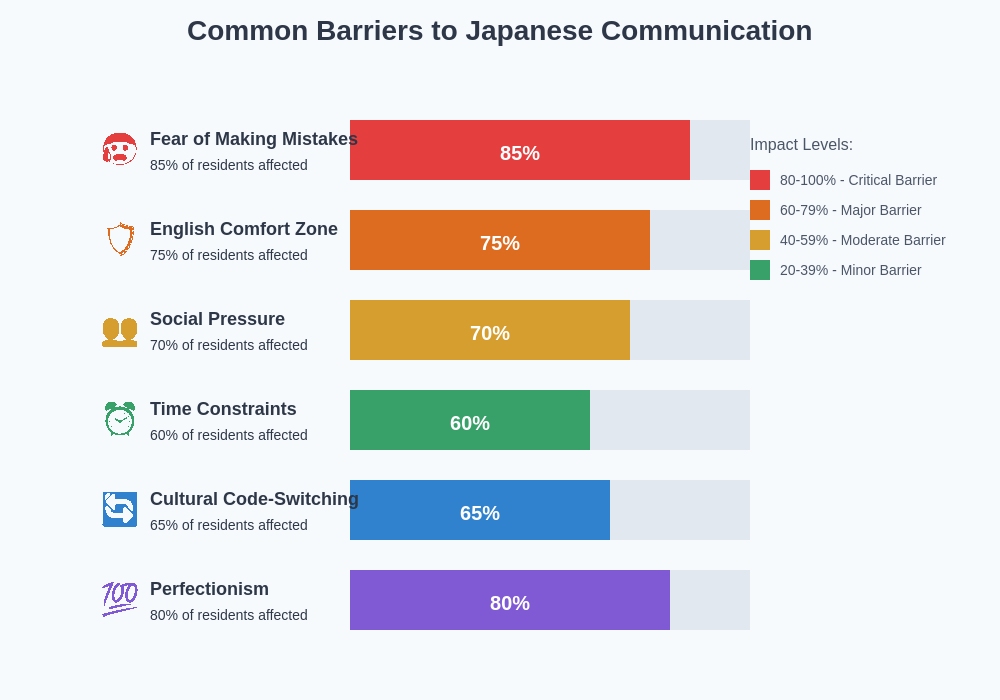
Fear of Making Mistakes and Losing Face
The cultural concept of avoiding embarrassment runs particularly deep in Japanese society, and many international residents unconsciously adopt these same anxieties about making linguistic mistakes in front of native speakers. The fear of mispronouncing words, using incorrect grammar structures, or completely misunderstanding conversations creates paralyzing anxiety that prevents residents from attempting Japanese communication even in low-stakes social situations.
This perfectionist mindset often develops from educational backgrounds where accuracy was prioritized over communication effectiveness, leading residents to believe that imperfect Japanese is worse than no Japanese at all. Living with Japanese roommates in Tokyo sharehouses highlights how these cultural expectations can create communication barriers that affect daily interactions and relationship building.
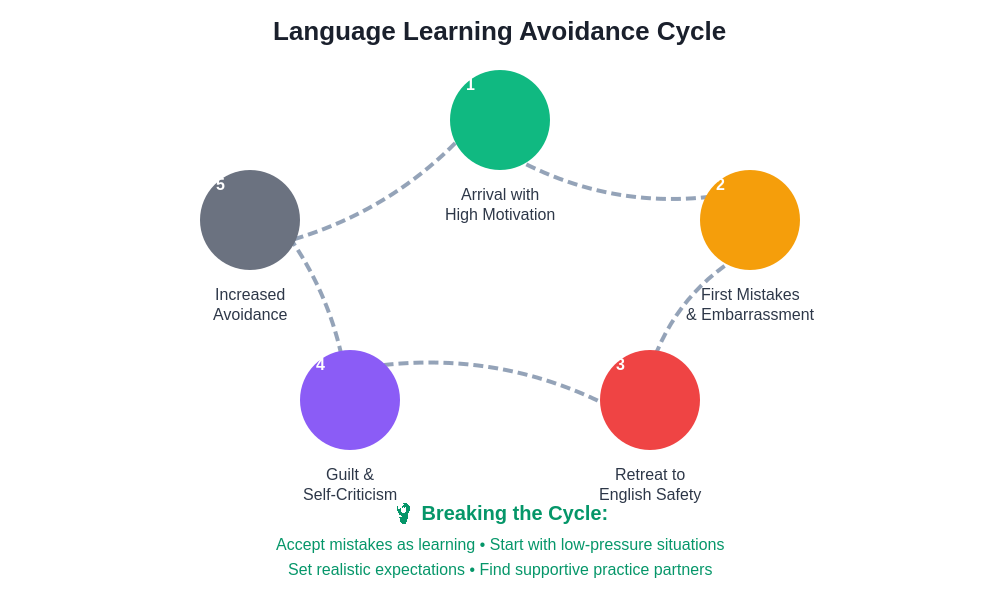
The compound effect of repeated avoidance behaviors reinforces negative self-perception about Japanese ability while simultaneously preventing the practice necessary for improvement. Each avoided conversation becomes evidence of inadequacy, creating self-fulfilling prophecies that perpetuate linguistic isolation and reduced confidence in cross-cultural communication situations.
Professional and academic contexts add additional pressure layers, as residents worry that poor Japanese communication might affect career opportunities, academic performance, or social standing within their broader Japanese communities. These high-stakes considerations often translate into complete communication avoidance rather than accepting the natural learning process that includes inevitable mistakes and gradual improvement.
Comfort Zone Preservation and English Dependency
Many international residents arrive in Tokyo with sufficient English skills to navigate daily life through translation apps, English-speaking services, and international communities that function entirely in English. This linguistic comfort zone provides immediate practical solutions while inadvertently removing the necessity that drives natural language acquisition and cultural adaptation.
English-speaking sharehouses in Tokyo for foreigners demonstrates how specialized housing options can both facilitate initial adjustment and potentially hinder long-term integration by reducing exposure to authentic Japanese communication environments.
The availability of English-language entertainment, international social groups, and global business environments in Tokyo enables residents to maintain their pre-arrival linguistic habits without experiencing the discomfort that typically motivates language learning efforts. This comfort zone preservation becomes particularly pronounced in sharehouses with high concentrations of English-speaking residents who naturally gravitate toward familiar communication patterns.
Digital communication tools and translation technologies provide additional escape routes from Japanese conversation requirements, allowing residents to maintain social connections and practical functionality without engaging in the challenging process of real-time Japanese communication. These technological solutions, while practically helpful, can delay or prevent the development of authentic linguistic confidence and cultural integration.
Social Hierarchy and Power Dynamics
Japanese language proficiency often correlates with perceived social status and competence within sharehouse communities, creating informal hierarchies that can intimidate residents with limited Japanese skills. Advanced speakers may unconsciously dominate conversations, make language-related jokes, or demonstrate frustration with slower communication that discourages participation from less confident speakers.
The intersection of language ability with nationality, education level, and cultural background creates complex social dynamics where residents may feel judged or excluded based on their Japanese proficiency rather than their individual qualities or contributions to house community. How cultural differences affect friendship building explores how these dynamics influence relationship formation and social integration.
Age-related considerations add another layer of complexity, as younger residents may feel more comfortable making mistakes while older professionals worry that language errors might undermine their perceived competence or authority in work and social situations. These generational differences in language learning approaches can create additional barriers to natural conversation practice.
The presence of native Japanese speakers or highly proficient foreign residents can trigger comparison anxieties that prevent natural conversation attempts. Rather than viewing these residents as learning resources, less confident speakers may perceive them as judges or critics whose presence makes authentic communication feel impossible or embarrassing.
Time Constraints and Opportunity Costs
Busy schedules filled with work obligations, study requirements, and social commitments often leave limited mental energy for the cognitive demands of Japanese conversation practice. The mental fatigue associated with constant translation, grammar consideration, and cultural code-switching makes English communication seem far more efficient and less exhausting for daily interactions.
How commute times impact your quality of life illustrates how time pressures can affect lifestyle choices and communication preferences in ways that prioritize efficiency over learning opportunities.
The opportunity cost perception suggests that time spent struggling through Japanese conversations could be more productively used for work, study, or other goal-oriented activities. This utilitarian approach to time management inadvertently sabotages long-term integration goals by prioritizing short-term efficiency over sustainable cultural adaptation.
Professional deadline pressures and academic requirements often consume mental resources that would otherwise be available for language practice, creating cycles where increased stress leads to decreased Japanese usage, which subsequently increases isolation and cultural distance from the broader Japanese community.
Cultural Code-Switching Anxiety
The psychological demands of cultural code-switching extend far beyond vocabulary and grammar to include fundamental changes in communication style, emotional expression, and social behavior that can feel inauthentic or exhausting for many international residents. Japanese communication patterns often require different levels of formality, indirectness, and emotional restraint that conflict with residents’ natural personality expression and cultural backgrounds.
How cultural communication styles create misunderstandings examines how these differences can create communication barriers that extend beyond simple language proficiency issues.
The effort required to constantly monitor tone, formality levels, and cultural appropriateness while simultaneously managing vocabulary and grammar creates cognitive overload that makes English communication feel significantly easier and more authentic. This mental burden often outweighs the perceived benefits of Japanese practice, especially during stressful periods or emotionally charged situations.
Identity preservation concerns arise when residents feel that adopting Japanese communication styles requires suppressing aspects of their personality or cultural identity that feel essential to their self-concept. The fear of losing authentic self-expression through cultural conformity can create resistance to deeper Japanese language engagement.
Social Group Formation and Linguistic Segregation
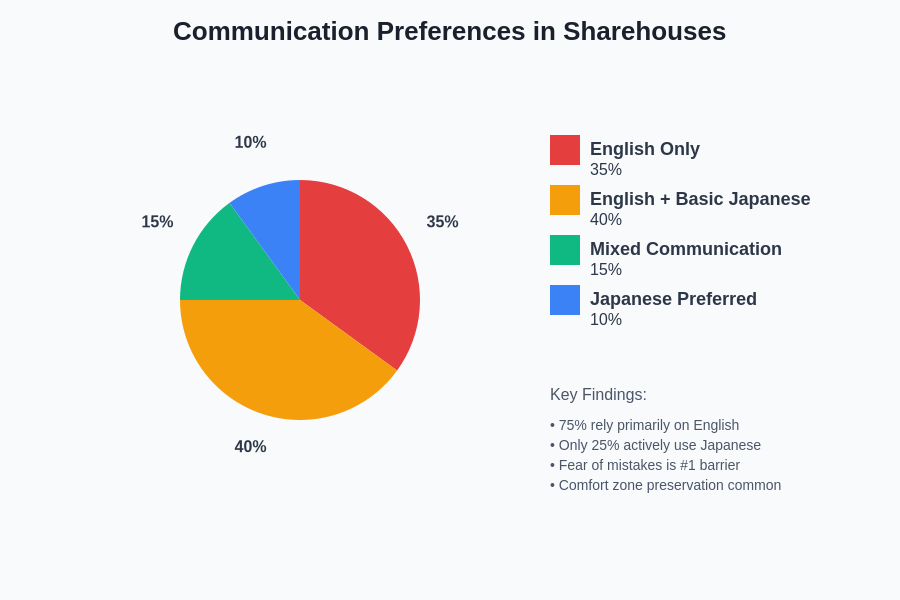
Natural social group formation within sharehouses often follows linguistic lines, with English speakers gravitating toward each other for easy communication while inadvertently excluding Japanese speakers or creating separate social circles that reduce cross-cultural interaction opportunities. These informal segregation patterns become self-reinforcing as residents develop stronger relationships within their linguistic comfort groups.
Making friends through Tokyo sharehouse communities explores how language preferences can influence friendship formation and community integration in shared living environments.
Entertainment preferences and cultural references often align with linguistic abilities, as residents with limited Japanese may struggle to participate in Japanese media consumption, cultural discussions, or humor that requires deeper cultural and linguistic understanding. These participation barriers can lead to feeling excluded from significant aspects of house social life.
Professional networking opportunities may seem more accessible through international business communities where English dominates, creating incentive structures that reward English maintenance over Japanese development. This professional consideration often overrides personal integration goals, especially for career-focused residents with limited time in Japan.
Shame Cycles and Learned Helplessness
Extended periods of Japanese avoidance create shame cycles where residents feel increasingly guilty about their lack of progress while simultaneously feeling more intimidated about breaking their established communication patterns. The longer avoidance continues, the more overwhelming the prospect of beginning Japanese conversation becomes, creating learned helplessness that perpetuates linguistic isolation.
How language barriers prevent deep friendships demonstrates how communication limitations can affect relationship quality and personal satisfaction with sharehouse living experiences.
Self-fulfilling prophecy effects occur when residents convince themselves that they are “bad at languages” or “not suited for Japanese,” using these beliefs to justify continued avoidance while preventing the practice necessary for improvement. These negative self-concepts become increasingly entrenched through repeated avoidance behaviors.
The comparison trap intensifies when residents observe other foreigners speaking fluent Japanese, leading to assumptions about natural talent or favorable circumstances that excuse their own lack of progress. These comparisons often ignore the time, effort, and mistakes that successful learners experienced during their development process.
Breaking Through Communication Barriers
Overcoming Japanese avoidance patterns requires systematic approaches that address both practical skill development and underlying psychological barriers that prevent natural conversation engagement. Language exchange programs work in sharehouses provides frameworks for structured practice that can ease residents into more comfortable Japanese communication.
Starting with low-pressure situations such as basic greetings, simple requests, or structured activities removes the performance anxiety associated with complex conversations while building confidence through successful interactions. Gradual exposure approaches allow residents to expand their comfort zones without overwhelming cognitive or emotional resources.
Setting realistic expectations about language learning timelines and accepting mistakes as necessary components of the learning process helps residents develop healthier relationships with Japanese practice. Understanding that native speakers appreciate effort more than accuracy can reduce perfectionist anxieties that prevent communication attempts.
Creating structured practice opportunities through house activities, cultural exchanges, or shared projects provides natural contexts for Japanese usage while reducing the artificial pressure of forced conversation practice. These organic interaction opportunities often feel more authentic and sustainable than formal language exchange arrangements.
Building Supportive Language Learning Communities
Successful sharehouse language integration requires community-wide commitment to creating supportive environments where mistakes are normalized, effort is celebrated, and cross-cultural communication becomes a shared value rather than an individual responsibility. How empathy grows through cultural exposure explores how understanding and patience from all residents contribute to positive language learning environments.
Establishing house policies or cultural norms that encourage multilingual interaction while maintaining respect for communication preferences can create balanced environments where Japanese practice feels welcomed rather than mandatory. These community agreements help prevent linguistic discrimination while encouraging cultural exchange.
Japanese residents and advanced speakers can play crucial mentorship roles by actively creating inclusive conversation opportunities, demonstrating patience with language learners, and sharing their own language learning experiences to normalize the struggle and error-filled process of linguistic development.
The long-term benefits of overcoming Japanese avoidance extend far beyond language skills to include deeper cultural understanding, expanded professional opportunities, and more meaningful relationships with Japanese community members. Breaking through communication barriers ultimately enriches the entire sharehouse experience while providing valuable life skills that benefit residents throughout their time in Japan and beyond.
Understanding why residents avoid Japanese conversation represents the first step toward creating more inclusive, supportive sharehouse communities where cross-cultural communication flourishes and language learning becomes a shared journey rather than an individual struggle filled with anxiety and self-doubt.
Disclaimer
This article is for informational purposes only and reflects observations about language learning challenges in multicultural living environments. Individual experiences may vary significantly based on personal background, motivation levels, and specific sharehouse communities. Readers should seek appropriate language learning resources and support when working to improve their Japanese communication skills.