The phenomenon of social isolation within Tokyo sharehouses represents one of the most challenging and psychologically damaging aspects of communal living that affects residents across all demographics and backgrounds. While sharehouses are designed to foster community connections and cultural exchange, the reality is that certain individuals inevitably find themselves on the periphery of house social structures, experiencing varying degrees of exclusion that can profoundly impact their mental health, personal development, and overall quality of life in Japan.
Understanding why some residents become social outcasts requires examining the complex interplay of cultural factors, personality differences, communication barriers, and systemic issues that create invisible hierarchies within seemingly egalitarian living environments. The consequences of social isolation in sharehouses extend far beyond simple loneliness, affecting career prospects, language learning opportunities, and the fundamental human need for belonging that drives people to choose communal living arrangements in the first place.
The Formation of Social Hierarchies in Sharehouses
Tokyo sharehouses, despite their promotional emphasis on inclusive international communities, naturally develop complex social hierarchies that determine resident status, influence, and access to social opportunities within the house ecosystem. These hierarchies emerge through subtle mechanisms that favor certain personality types, cultural backgrounds, and social skills while inadvertently marginalizing others who may struggle to navigate unspoken social rules and expectations.
The establishment of social hierarchies typically begins within the first few weeks of residence, as early arrivals establish territorial claims over common spaces, form initial friendship groups, and create informal but powerful social norms that subsequent residents must either adapt to or risk exclusion from. Understanding how cultural differences affect friendship building reveals how these early dynamics shape long-term social structures within shared living environments.
Language proficiency, particularly in Japanese and English, plays a crucial role in determining social positioning within international sharehouses. Residents with strong communication skills in the dominant house languages naturally assume informal leadership roles, control conversation topics, and influence group activities, while those with limited linguistic abilities often find themselves relegated to observer status despite potentially having valuable contributions to make to the community.
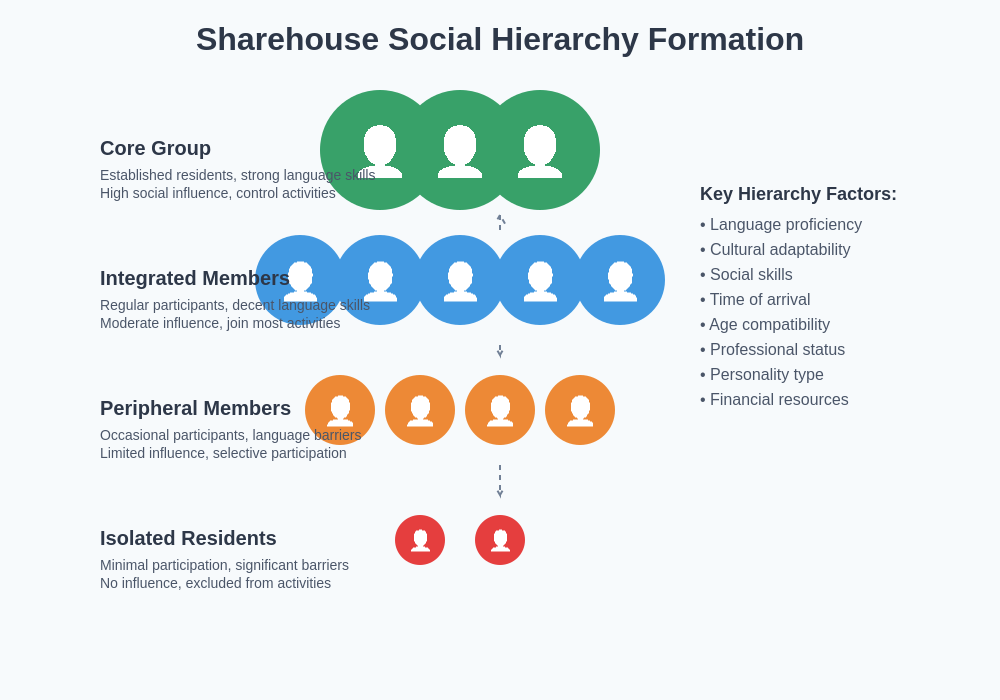
Physical attractiveness, age, professional status, and perceived social value also contribute to hierarchy formation in ways that residents rarely acknowledge explicitly but that significantly impact daily interactions and inclusion levels. These factors combine with cultural biases and unconscious preferences to create invisible barriers that prevent certain residents from accessing the full social benefits that motivated their choice to live in a sharehouse community.
Cultural Misunderstandings and Communication Barriers
The intersection of multiple cultures within Tokyo sharehouses creates fertile ground for misunderstandings that can quickly escalate into social exclusion situations. Communication styles that are considered normal or polite in one culture may be perceived as rude, aggressive, or strange in another, leading to negative first impressions that become difficult to overcome once established within the tight-knit confines of shared living spaces.
Japanese cultural concepts such as reading the atmosphere, indirect communication, and group harmony expectations can be particularly challenging for international residents who come from more direct communication cultures. Living with Japanese roommates in Tokyo sharehouses explores how these cultural differences create friction that often results in misunderstood residents being labeled as difficult or antisocial when they are simply operating according to different cultural programming.
Religious practices, dietary restrictions, and lifestyle choices that differ from house norms can also contribute to social isolation as residents struggle to participate in group activities or feel comfortable in common spaces. The challenge is particularly acute for residents whose cultural backgrounds include practices that are unfamiliar or uncomfortable for other housemates, creating awkward situations that gradually lead to reduced social interaction and eventual exclusion from group activities.
Language barriers extend beyond basic communication difficulties to include cultural context, humor appreciation, and the ability to engage in the casual conversations that build friendships and social bonds. How language barriers prevent deep friendships demonstrates how linguistic limitations create cumulative disadvantages that compound over time, making it increasingly difficult for affected residents to integrate into established social groups.
Personality Conflicts and Incompatible Living Styles
Individual personality traits and lifestyle preferences play significant roles in determining social compatibility within sharehouse environments, with certain combinations creating inevitable conflicts that result in some residents being systematically excluded from community activities and social interactions. Introverted residents often struggle in sharehouses that develop extroverted social cultures, while those with different sleep schedules, cleanliness standards, or entertainment preferences may find themselves at odds with prevailing house norms.
Mental health conditions such as social anxiety, depression, or autism spectrum disorders can create additional barriers to social integration that other residents may not understand or accommodate appropriately. How mental health support varies in sharehouses highlights how the lack of proper support systems and understanding can exacerbate existing challenges and push vulnerable residents toward isolation.
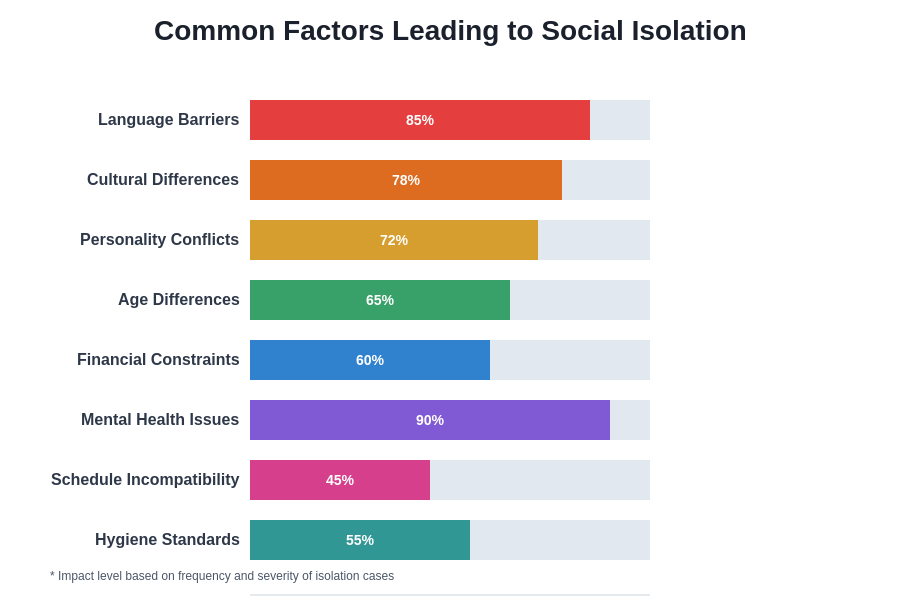
Conflicting values regarding privacy, personal space, sharing resources, and appropriate behavior in common areas can create ongoing tension that gradually erodes relationships and social standing within the house community. Residents who prioritize cleanliness may clash with more relaxed housemates, while those seeking quiet study environments may conflict with socially active residents who prefer lively common areas for entertainment and socializing.
Financial differences among residents can also contribute to social exclusion as those with limited budgets find themselves unable to participate in group dining, entertainment activities, or social outings that require additional spending beyond basic housing costs. How to budget realistically for sharehouse living addresses how financial constraints can impact social participation and community integration opportunities.
The Role of House Management and Leadership Dynamics
House management approaches and the emergence of informal resident leadership significantly influence social dynamics and can either prevent or contribute to the formation of outcast situations. Properties with absent or ineffective management often develop power vacuums that are filled by dominant personalities who may use their influence to exclude residents they personally dislike or find incompatible with their vision of ideal house culture.
The establishment of cliques and inner circles within sharehouses creates exclusive social structures that make it increasingly difficult for new residents or those who don’t fit established group dynamics to gain acceptance and social integration. How friend groups form and exclude others examines how these informal social structures become self-perpetuating and resistant to change even when they clearly harm community cohesion and individual wellbeing.
House rules and their enforcement can also contribute to social exclusion when they are applied inconsistently or used as tools to target specific residents rather than maintain genuine community standards. The subjective nature of many sharehouse rules regarding cleanliness, noise, and common area usage creates opportunities for discriminatory enforcement that can systematically disadvantage certain residents while protecting others who are better integrated into dominant social groups.
Leadership transitions and changes in house demographic composition can suddenly alter established social dynamics, potentially elevating previously marginalized residents while displacing those who were previously well-integrated. These shifts demonstrate how precarious social positioning can be within sharehouse environments and how quickly residents can find themselves excluded from communities they once considered supportive and welcoming.
Economic and Professional Status Impacts
Professional status, career trajectory, and economic positioning significantly influence social standing within Tokyo sharehouses, particularly those housing international professionals and students. Residents in prestigious careers or high-paying positions often receive more social attention and inclusion opportunities, while those in service jobs, struggling with employment, or facing visa-related work restrictions may find themselves marginalized within house social hierarchies.
The intersection of professional networking and social relationships within sharehouses can create additional pressure for residents whose careers or educational pursuits don’t align with dominant house demographics. How networking opportunities emerge naturally illustrates how professional connections often determine social inclusion levels, leaving those outside relevant networks feeling excluded from both career advancement opportunities and social activities.
Educational background differences can also contribute to social stratification, particularly in sharehouses with significant populations of university students or graduates. Residents without higher education credentials or those from different educational systems may experience subtle but persistent exclusion from conversations, activities, and social opportunities that assume shared educational experiences and cultural references.
Economic stress and job insecurity can compound social isolation as affected residents withdraw from expensive social activities, become preoccupied with survival concerns, and struggle to maintain the emotional availability required for building and maintaining friendships. How career changes affect sharehouse eligibility demonstrates how professional instability can create cascading effects that impact social integration and community belonging.
Age-Related Social Dynamics and Generation Gaps
Age differences within sharehouses create complex social dynamics that can result in systematic exclusion of residents who fall outside the dominant age demographic. Older residents in houses primarily populated by young adults often struggle to connect with housemates whose life experiences, cultural references, and social priorities differ significantly from their own, leading to gradual social isolation despite initial attempts at integration.
The energy levels, social schedules, and lifestyle preferences associated with different age groups can create natural barriers to social integration that compound over time. How age differences impact sharehouse compatibility explores how generational gaps in technology usage, communication styles, and entertainment preferences contribute to social exclusion patterns.
Younger residents may unintentionally exclude older housemates from social activities, conversations, and cultural experiences that assume shared generational knowledge and preferences. Similarly, older residents may struggle to adapt to social norms and communication patterns established by younger demographics, creating mutual misunderstanding and gradual social separation.
Career stage differences associated with age can also contribute to social incompatibility as residents in different life phases struggle to relate to each other’s priorities, challenges, and social needs. Students may find it difficult to connect with working professionals, while established career professionals may struggle to relate to the concerns and lifestyles of those just beginning their careers or educational journeys in Japan.
The Amplifying Effects of Social Media and Digital Exclusion
Modern sharehouse social dynamics increasingly play out across digital platforms and social media channels that can amplify exclusion effects and create additional barriers to social integration. House-specific social media groups, messaging platforms, and digital communication channels often become exclusive spaces where certain residents receive more attention, inclusion, and social validation while others are ignored or actively excluded from online community activities.
The documentation and sharing of social activities through social media creates visible evidence of exclusion that can be particularly painful for isolated residents who see constant reminders of social activities from which they were excluded. How social media impacts real-life relationships examines how digital communication patterns mirror and reinforce existing social hierarchies within physical living spaces.
Digital communication preferences and platform familiarity can also contribute to exclusion as residents who are less comfortable with specific social media platforms or communication technologies may miss important social information, invitations, and community updates that are shared exclusively through digital channels. This creates a self-reinforcing cycle where digital exclusion leads to social exclusion and vice versa.
The pressure to maintain an attractive online presence and participate in digital social activities can be overwhelming for residents who struggle with social media engagement or who prefer more private, personal interaction styles. This digital dimension of sharehouse life creates additional opportunities for exclusion and social comparison that can significantly impact mental health and community integration success.
Long-term Psychological and Development Consequences
The experience of becoming a social outcast within a sharehouse environment creates lasting psychological impacts that extend far beyond the immediate living situation. Residents who experience persistent exclusion often develop negative self-perceptions, social anxiety, and reduced confidence in their ability to form meaningful relationships that can affect their future social and professional interactions both within Japan and after returning to their home countries.
The isolation experienced in sharehouses can be particularly damaging because it occurs within environments specifically chosen for their promise of community and social connection. This betrayal of expectations can create deep disappointment and cynicism about communal living arrangements and cross-cultural friendship possibilities that influence future housing and social choices.
Mental health impacts including depression, anxiety, and social withdrawal behaviors often develop as residents struggle to cope with persistent exclusion and the stress of living in environments where they feel unwelcome or uncomfortable. How homesickness hits differently in shared spaces addresses how social isolation compounds other adjustment challenges faced by international residents in Tokyo.
The missed opportunities for language learning, cultural exchange, and personal growth that result from social exclusion represent significant losses that can impact long-term career prospects and personal development goals that motivated the original decision to live in Japan. These developmental impacts often continue to influence residents’ lives long after they have moved out of problematic sharehouse situations.
Intervention Strategies and Prevention Approaches
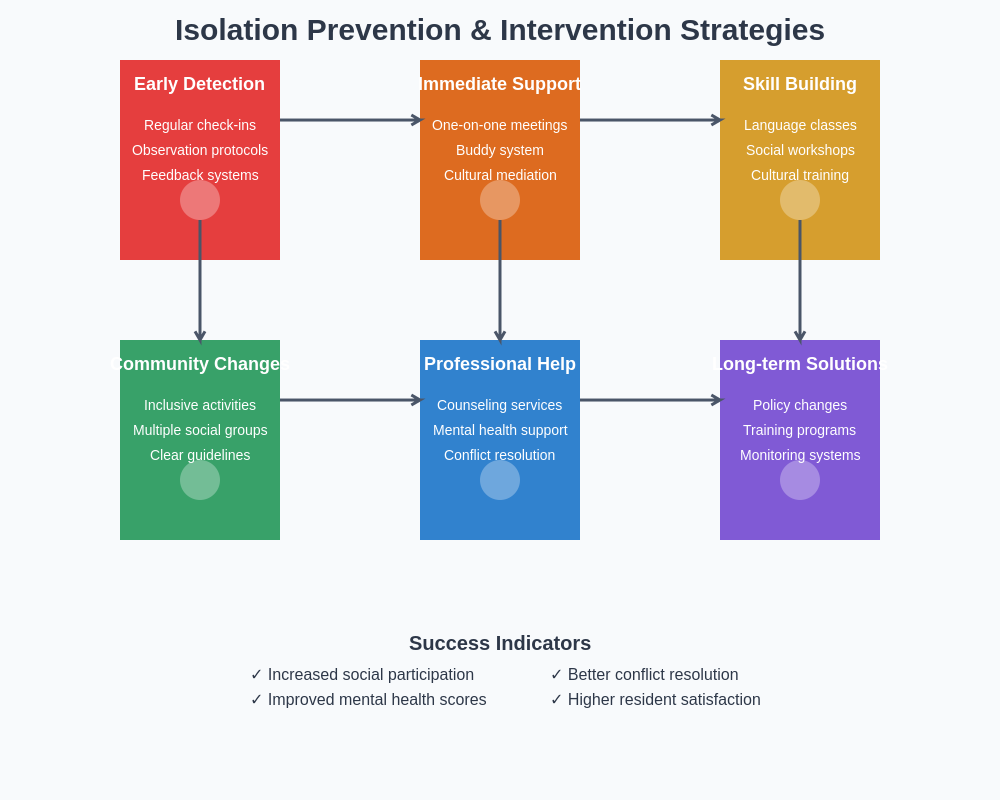
Effective intervention strategies for addressing social outcast situations require early identification of exclusion patterns and proactive measures to promote inclusive community dynamics. House managers and resident leaders can implement structured social activities, mentorship programs, and conflict resolution processes that address exclusion issues before they become entrenched within house culture.
Regular community meetings, feedback mechanisms, and social integration workshops can help identify residents who are struggling with isolation and provide targeted support to improve their social connectivity and community participation. How to handle roommate conflicts without moving out offers practical strategies for addressing interpersonal issues that contribute to exclusion dynamics.
Creating multiple social circles and activity groups within larger sharehouses can provide alternative pathways for social connection that don’t depend on integration into a single dominant social group. This approach recognizes that not all residents will be compatible while still ensuring that everyone has opportunities for meaningful social interaction and community participation.
Professional counseling resources, cultural orientation programs, and ongoing support services can help both isolated residents and the broader community develop better strategies for inclusive living and cross-cultural understanding that prevent exclusion situations from developing or becoming severe.
Building More Inclusive Sharehouse Communities
The development of truly inclusive sharehouse communities requires intentional effort from management companies, resident leaders, and individual community members to create environments where diverse personalities, cultures, and backgrounds can coexist successfully. This involves establishing clear expectations for respectful behavior, implementing fair conflict resolution processes, and maintaining zero-tolerance policies for discriminatory or exclusionary behavior.
Training programs for house managers and resident leaders can provide tools and strategies for recognizing early signs of social exclusion and implementing effective interventions that protect vulnerable residents while maintaining positive community dynamics. Making friends through Tokyo sharehouse communities demonstrates how structured approaches to community building can create more inclusive and supportive living environments.
Regular assessment of house social dynamics, resident satisfaction surveys, and exit interviews can provide valuable data for identifying patterns of exclusion and implementing systemic changes that improve overall community health and inclusivity. This data-driven approach enables continuous improvement of social integration strategies and exclusion prevention measures.
The cultivation of empathy, cultural sensitivity, and inclusive leadership skills among residents creates a foundation for sustainable community health that can adapt to changing demographics and resident needs while maintaining commitment to ensuring that all community members have opportunities for meaningful social connection and personal growth.
Understanding why some residents become social outcasts in Tokyo sharehouses reveals the complex interplay of cultural, psychological, and structural factors that can transform intended communities of support into sources of isolation and distress. Addressing these challenges requires sustained commitment from all stakeholders to create genuinely inclusive environments where diversity of background, personality, and lifestyle can be celebrated rather than becoming sources of division and exclusion.
Disclaimer
This article is for informational purposes only and does not constitute professional psychological or social advice. The experiences described reflect general patterns observed in sharehouse environments and may not apply to all situations. Readers experiencing serious social isolation or mental health challenges should seek appropriate professional support. Individual experiences may vary significantly based on specific circumstances, cultural backgrounds, and personal factors.