Within the intricate social ecosystem of Tokyo sharehouses, certain residents inevitably emerge as unofficial leaders who coordinate activities, resolve conflicts, and shape the overall community atmosphere. This phenomenon occurs naturally across cultures and living situations, yet the unique multicultural environment of Japanese sharehouses creates particularly interesting dynamics around leadership emergence. Understanding why some residents naturally gravitate toward leadership roles while others remain passive participants reveals fundamental truths about human social organization and community formation.
The emergence of unofficial leaders in sharehouses represents a fascinating intersection of personality psychology, cultural dynamics, and situational factors that combine to create natural hierarchies within supposedly egalitarian living arrangements. These leadership patterns often develop within the first few weeks of residency and can significantly influence the quality of life for all residents throughout their tenure in the community.
The Psychology of Natural Leadership Emergence
Natural leadership in sharehouse environments stems from a complex interplay of personality traits, cultural backgrounds, and situational factors that create opportunities for certain individuals to step forward when communities need guidance or coordination. Making friends through Tokyo sharehouse communities demonstrates how social connections often form around individuals who take initiative in organizing activities and facilitating introductions between residents.
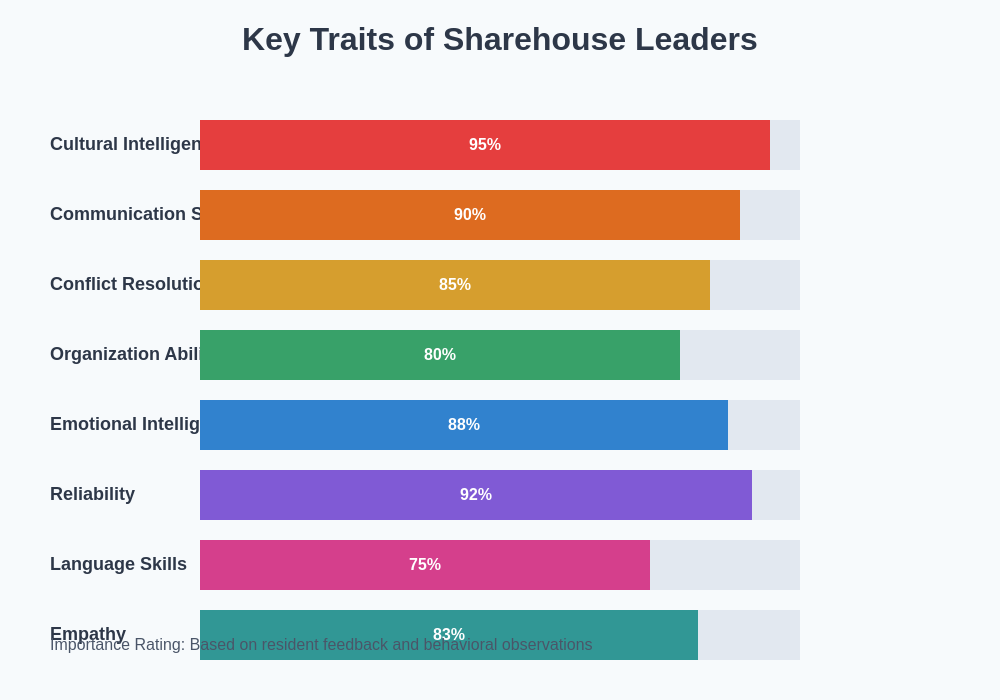
The psychological profile of emerging sharehouse leaders typically includes high levels of emotional intelligence, cultural adaptability, and communication skills that enable them to navigate the complex multicultural dynamics inherent in international living situations. These individuals often possess natural problem-solving abilities and demonstrate comfort with ambiguity that serves them well in environments where formal authority structures are absent.
Extroversion alone does not guarantee leadership emergence, as many successful sharehouse leaders exhibit more subtle forms of social influence through consistent helpfulness, reliability, and cultural bridging rather than dominant personality characteristics. The most effective informal leaders often display servant leadership qualities, focusing on community benefit rather than personal recognition or control over others.
Research in social psychology suggests that leadership emergence in informal settings depends heavily on perceived competence, trustworthiness, and willingness to accept responsibility for group outcomes. In sharehouse contexts, these perceptions develop through daily interactions around shared responsibilities, conflict resolution, and community building activities that reveal individual character traits and leadership potential.
Cultural Factors Influencing Leadership Dynamics
The multicultural nature of Tokyo sharehouses creates unique leadership challenges and opportunities that differ significantly from monocultural living arrangements. Living with Japanese roommates in Tokyo sharehouses illustrates how cultural differences in communication styles, hierarchy expectations, and conflict resolution approaches can influence who emerges as natural mediators and community coordinators.
Japanese cultural concepts such as “wa” (harmony) and collective decision-making often clash with more individualistic Western approaches to leadership and problem-solving, creating space for residents who can navigate these cultural tensions to emerge as bridge-builders and informal coordinators. Those who understand and respect Japanese social norms while maintaining ability to communicate across cultural boundaries frequently find themselves in natural leadership positions.
Language proficiency plays a crucial role in leadership emergence, as residents who can communicate effectively in both English and Japanese often become natural translators and cultural interpreters for their communities. This linguistic advantage creates opportunities for leadership that extend beyond personality traits to include practical communication abilities that benefit the entire household.
The hierarchical nature of Japanese society influences expectations around age, gender, and professional status that can either facilitate or hinder leadership emergence depending on how well individual residents understand and navigate these cultural expectations. Residents who can balance respect for traditional hierarchies with progressive international perspectives often find themselves uniquely positioned to lead diverse communities.
Situational Catalysts for Leadership Development
Specific situations and challenges within sharehouse environments create natural opportunities for leadership emergence that reveal individual capabilities and willingness to take responsibility for community welfare. How to handle roommate conflicts without moving out demonstrates how conflict situations often serve as crucibles for identifying residents with natural mediation skills and community-focused problem-solving approaches.
Crisis situations such as maintenance emergencies, interpersonal conflicts, or cultural misunderstandings create immediate needs for coordination and decision-making that often reveal which residents possess both the skills and motivation to step forward as problem-solvers. These high-stakes situations provide clear demonstrations of leadership capability that establish credibility for future community coordination roles.
Routine organizational needs such as shared meal planning, cleaning schedule coordination, and social event organization provide ongoing opportunities for residents to demonstrate leadership through consistent follow-through and attention to community needs. These less dramatic but equally important contributions often establish the foundation for broader leadership recognition within the household.
The absence of formal authority structures in sharehouses means that leadership emerges organically through demonstrated competence and community contribution rather than appointed positions or hierarchical relationships. This organic development process often takes several weeks or months to fully establish, with leadership roles crystallizing as residents observe consistent patterns of helpful behavior and reliable problem-solving from certain individuals.
Communication Skills and Cultural Bridge-Building
Effective sharehouse leaders typically excel at cross-cultural communication and demonstrate ability to translate not just languages but cultural concepts, expectations, and social norms that enable smoother community functioning. Japanese sharehouse rules every foreigner should know highlights how residents who understand and can explain cultural expectations often become natural educators and guides for other international residents.
The ability to communicate complex ideas simply and diplomatically proves essential for addressing sensitive issues around cultural differences, personal boundaries, and shared responsibilities that frequently arise in multicultural living situations. Leaders who can frame discussions in ways that respect diverse perspectives while working toward practical solutions often find themselves repeatedly called upon to facilitate difficult conversations.
Non-verbal communication skills become particularly important in sharehouse leadership, as residents from different cultural backgrounds may interpret facial expressions, body language, and spatial relationships differently. Leaders who can adapt their communication styles to match cultural expectations while maintaining authentic relationships tend to be more effective at building trust and credibility across diverse communities.
Language learning and teaching often become informal leadership activities, with residents who are further along in Japanese language acquisition naturally becoming mentors and resources for newer arrivals. This educational role creates opportunities for leadership development while providing valuable community benefits that strengthen social bonds and mutual support systems.
Responsibility Distribution and Community Coordination
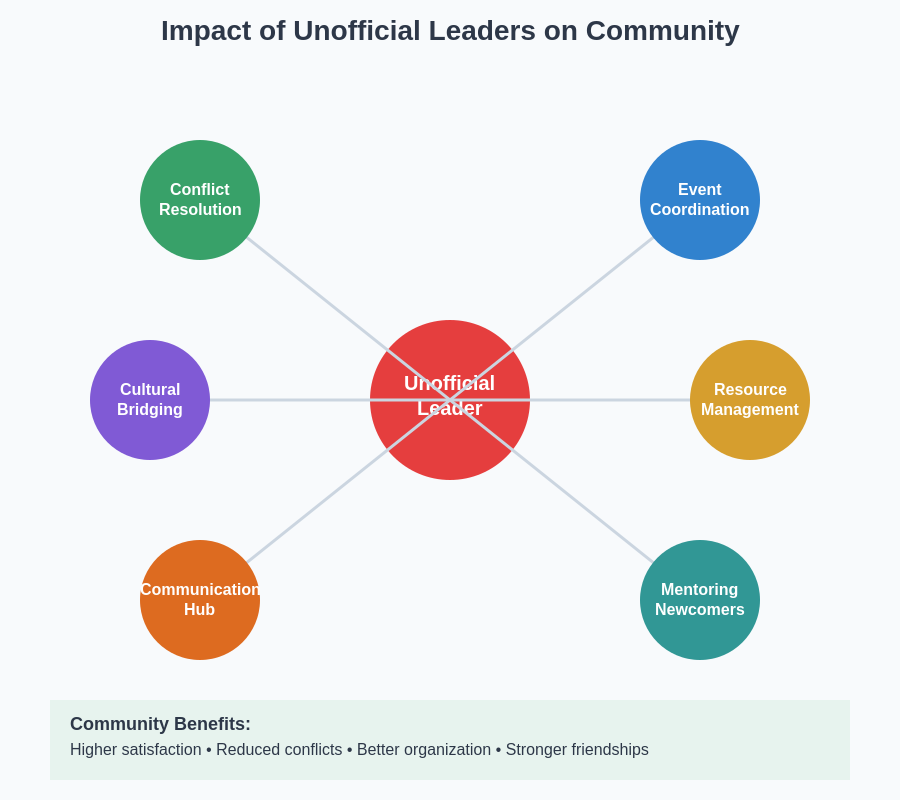
Natural leaders in sharehouses often emerge through their willingness to take on coordination responsibilities that others avoid or overlook, gradually becoming the default organizers for household activities and problem-solving initiatives. How kitchen politics actually work in Japanese sharehouses illustrates how residents who take initiative in managing shared spaces and resources often develop broader leadership credibility throughout the community.
The delegation of informal responsibilities typically develops organically as community members recognize certain individuals’ competence and reliability in handling shared concerns. These emerging leaders often find themselves managing communication with landlords, coordinating maintenance requests, and serving as primary contacts for household-related issues that require external interaction.
Event organization and social activity coordination frequently become signature leadership activities for residents who enjoy bringing people together and creating community experiences. These social leadership roles can be just as influential as practical coordination roles in shaping household culture and resident satisfaction levels throughout the community.
Financial coordination for shared expenses, group purchases, and utility bill management often falls to residents who demonstrate mathematical competence and trustworthiness in handling money-related responsibilities. This financial leadership role creates significant influence over household operations and requires high levels of trust from community members.
Conflict Resolution and Mediation Abilities
The multicultural environment of Tokyo sharehouses creates frequent opportunities for misunderstandings and conflicts that require skilled mediation and diplomatic problem-solving approaches. How conflict resolution styles differ by culture demonstrates how residents who can navigate different cultural approaches to disagreement and problem-solving often become natural mediators for household disputes.
Effective conflict resolution in sharehouse settings requires understanding of both direct and indirect communication styles, cultural attitudes toward confrontation, and appropriate methods for addressing sensitive issues without causing loss of face or dignity for involved parties. Leaders who master these skills often find themselves serving as unofficial counselors and dispute resolution specialists for their communities.
The ability to remain neutral and fair-minded during conflicts while working toward solutions that address underlying needs rather than just surface disagreements distinguishes effective leaders from residents who may have good intentions but lack the diplomatic skills necessary for successful mediation. These advanced conflict resolution abilities often develop through experience and cultural learning over time.
De-escalation techniques and emotional regulation skills become essential tools for sharehouse leaders who find themselves managing heated disagreements between residents from different cultural backgrounds with varying expectations around appropriate behavior and communication styles. Leaders who can maintain calm and perspective during tense situations often become trusted figures for community problem-solving.
Long-term Community Impact and Legacy
The influence of unofficial leaders extends far beyond their immediate tenure in sharehouses, as their approaches to community building and conflict resolution often establish cultural norms and expectations that persist long after their departure. Real stories from Tokyo sharehouse residents reveals how memorable leaders shape household cultures in ways that influence subsequent residents and community development patterns.
Succession planning and leadership development often occur naturally as established leaders mentor newer residents and gradually transfer responsibilities to emerging community members who demonstrate similar commitment to household welfare and coordination abilities. This organic succession process helps maintain community stability and continuity despite regular resident turnover.
The networking and relationship-building skills that develop through sharehouse leadership often provide significant career and personal development benefits that extend well beyond the immediate living situation. Many former sharehouse leaders report that their community coordination experience proved valuable for professional development and cross-cultural competence in subsequent career opportunities.
Alumni networks and ongoing friendships frequently develop around former sharehouse leaders who maintain connections with diverse international communities built during their shared living experiences. These extended networks often provide ongoing personal and professional benefits that justify the time and energy invested in community leadership during sharehouse residency.
Recognition and Informal Authority Development
The gradual recognition of leadership contributions develops through consistent demonstration of reliability, fairness, and genuine concern for community welfare rather than through dramatic gestures or self-promotion efforts. Why some residents feel constantly judged contrasts with the experience of natural leaders who earn respect through service-oriented behavior and authentic relationship building with fellow residents.
Informal authority in sharehouses operates through influence and persuasion rather than formal power structures, requiring leaders to maintain credibility through ongoing positive contributions and fair treatment of all community members regardless of cultural background or personal compatibility. This influence-based leadership model demands high levels of emotional intelligence and cultural sensitivity.
The balance between providing helpful guidance and avoiding authoritarian behavior requires careful navigation, as sharehouse residents generally resist heavy-handed leadership approaches while appreciating coordination and problem-solving assistance from trusted community members. Successful leaders learn to offer suggestions and facilitate discussions rather than imposing decisions on autonomous adults.
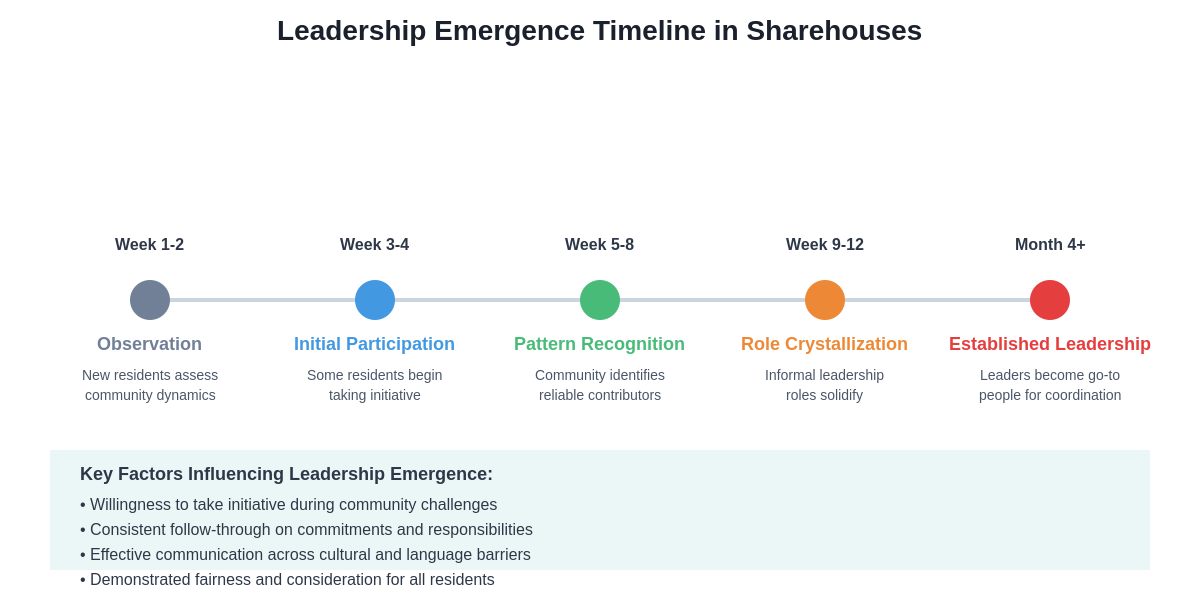
Peer feedback and community recognition typically develop gradually as residents observe consistent patterns of helpful behavior and effective problem-solving from emerging leaders. This recognition process often includes both explicit appreciation and implicit deference to leadership suggestions during community discussions and decision-making processes.
Personal Development Through Leadership Experience
The leadership skills developed through sharehouse community coordination often provide significant personal growth opportunities that enhance cross-cultural competence, communication abilities, and problem-solving confidence in diverse social situations. Why some residents become more confident explores how taking initiative in community settings can build self-efficacy and social skills that benefit individuals throughout their lives.
Cultural intelligence and adaptability skills that develop through managing diverse international communities provide valuable experience for global career opportunities and cross-cultural relationship building in professional and personal contexts. These competencies often prove more valuable than formal education or training in preparing individuals for international work and collaboration opportunities.
Emotional regulation and stress management abilities that develop through navigating complex social dynamics and conflict resolution situations often transfer to other challenging life circumstances and provide resilience-building experiences that enhance overall psychological well-being and leadership capacity.
The networking and relationship-building opportunities created through sharehouse leadership often result in lasting international friendships and professional connections that provide ongoing personal and career benefits long after the shared living experience concludes. These relationship-building skills often prove invaluable for future community involvement and professional networking activities.
Understanding why some residents naturally emerge as unofficial leaders in Tokyo sharehouses reveals fundamental insights into human social organization, cross-cultural communication, and community building that extend far beyond shared living situations. The leadership development that occurs through these informal community coordination experiences often provides lasting personal and professional benefits while contributing to more harmonious and functional shared living environments for all residents.
Disclaimer
This article is for informational purposes only and reflects observations about social dynamics in shared living environments. Individual experiences may vary significantly based on personality, cultural background, and specific household circumstances. The development of leadership skills and community relationships depends on many factors beyond those discussed in this article, and readers should approach community involvement based on their own comfort levels and personal goals.