The transformation of communication abilities among sharehouse residents represents one of the most profound and lasting benefits of international co-living experiences in Japan. While every resident enters their sharehouse journey with varying levels of linguistic competence and social confidence, certain individuals emerge from these environments with dramatically enhanced communication skills that serve them throughout their personal and professional lives. Understanding the factors that contribute to this differential development reveals fascinating insights into human adaptability, cultural learning, and the psychology of skill acquisition in multicultural environments.
The sharehouse environment creates a unique laboratory for communication development, where residents must navigate complex social dynamics, cultural differences, and practical necessities through constant interaction with housemates from diverse backgrounds. This intensive exposure to multilingual communication challenges accelerates skill development in ways that traditional classroom settings or casual social interactions simply cannot replicate, leading to remarkable variations in individual growth trajectories.
The Immersive Communication Environment
Sharehouse living fundamentally differs from other accommodation types by creating unavoidable communication scenarios that require residents to engage with others for basic daily functions and social harmony. Unlike apartments where residents can maintain isolation, sharehouses demand continuous interaction for everything from kitchen scheduling to conflict resolution, creating natural pressure for communication improvement.
The multicultural composition of most Tokyo sharehouses exposes residents to diverse communication styles, accents, and cultural approaches to conversation that expand their adaptive abilities far beyond what single-culture environments provide. Living with Japanese roommates in Tokyo sharehouses creates particularly rich learning opportunities where residents must bridge significant cultural and linguistic gaps through creative communication strategies.
Daily interactions encompass both high-stakes situations such as addressing conflicts or discussing house rules, and low-pressure social exchanges during meal preparation or evening relaxation. This varied exposure helps residents develop communication competence across different contexts and emotional registers, building comprehensive skills that transfer to professional and personal relationships outside the sharehouse.
The necessity of real-time problem-solving in shared living situations forces residents to develop quick thinking and clear expression under pressure. Unlike academic or workplace communication where preparation time is often available, sharehouse interactions require immediate responses to unexpected situations, building spontaneous communication abilities that prove invaluable in professional settings.
Individual Motivation and Learning Orientation
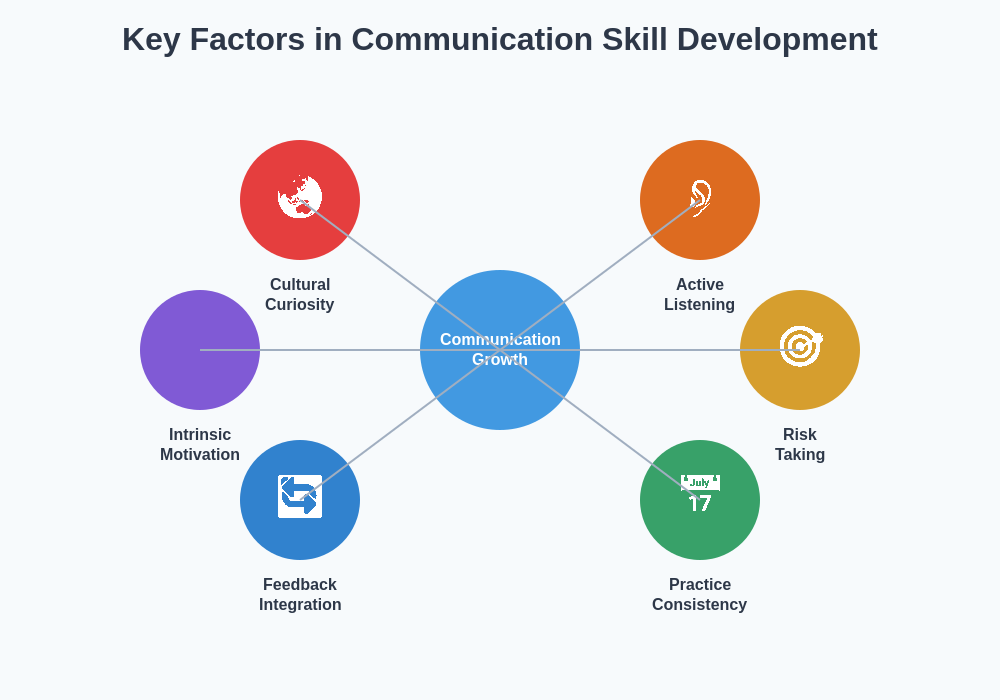
Residents who demonstrate the most significant communication improvements typically arrive with strong intrinsic motivation to connect with others and explicit goals for personal development during their sharehouse experience. These individuals view communication challenges as opportunities rather than obstacles, approaching linguistic mistakes and cultural misunderstandings with curiosity rather than embarrassment or frustration.
The willingness to engage in uncomfortable conversations and persist through communication failures distinguishes successful communicators from those who plateau early in their development. Making friends through Tokyo sharehouse communities requires active participation in social dynamics that many residents find challenging, but those who embrace these difficulties experience the most dramatic skill improvements.
Goal-oriented residents often establish specific communication objectives such as achieving conversational fluency in Japanese, developing confidence in public speaking, or learning to navigate cross-cultural conflicts effectively. This intentional approach to skill development creates accountability and provides measurable progress indicators that maintain motivation during difficult learning periods.
Self-reflection abilities also correlate strongly with communication growth, as residents who regularly analyze their interactions, identify communication breakdowns, and consciously modify their approaches demonstrate faster improvement than those who rely solely on unconscious absorption of communication patterns.
Cultural Curiosity and Openness
Residents who develop superior communication skills typically exhibit high levels of cultural curiosity and genuine interest in understanding different perspectives, communication styles, and social norms. This intellectual curiosity drives them to ask questions, seek clarification during misunderstandings, and actively learn about their housemates’ cultural backgrounds rather than making assumptions or avoiding difficult conversations.
The ability to suspend judgment during cultural encounters allows these residents to observe and absorb communication nuances without becoming defensive or dismissive when approaches differ from their own cultural norms. Cultural sensitivity developing through daily interaction demonstrates how openness to different communication styles accelerates skill acquisition and relationship building.
Residents who actively seek out opportunities to participate in cultural exchanges, attend community events, and engage with local customs expose themselves to broader communication contexts that reinforce and expand skills developed within the sharehouse environment. This extended practice across multiple social situations builds confidence and versatility in communication abilities.
The willingness to make cultural mistakes and learn from them rather than avoiding potentially embarrassing situations distinguishes successful communicators from those who remain within comfortable but limiting social boundaries. This tolerance for temporary discomfort enables accelerated learning through direct experience rather than passive observation.
Active Listening and Observational Skills
Superior communicators in sharehouse environments demonstrate exceptional listening abilities that extend beyond simply hearing words to understanding emotional subtext, cultural implications, and unspoken communication elements. These residents pay attention to body language, tone variations, and contextual cues that provide rich information about their housemates’ communication patterns and preferences.
The practice of active listening in multilingual environments requires heightened concentration and patience, as residents must often piece together meaning from limited vocabulary, unfamiliar accents, and cultural references they don’t immediately understand. This intensive listening practice develops auditory processing skills that benefit all forms of communication, including professional presentations and academic discussions.
Observational learning plays a crucial role in communication development, as residents who carefully watch successful interactions between other housemates can identify effective communication strategies and adapt them to their own style. How body language differs between cultures provides insights that observant residents incorporate into their own communication repertoire.
The ability to recognize and respond appropriately to different communication preferences among housemates demonstrates sophisticated social awareness that transfers to professional networking and relationship building in various contexts throughout residents’ lives.
Risk-Taking and Resilience in Communication
Residents who achieve significant communication improvements typically demonstrate willingness to take linguistic and social risks that less successful communicators avoid. This includes attempting conversations in languages where they lack confidence, initiating discussions about sensitive topics, and volunteering for leadership roles in house activities despite potential communication challenges.
The resilience to recover from communication failures and misunderstandings without losing confidence or motivation distinguishes highly successful residents from those who become discouraged and withdraw from challenging interactions. How to handle roommate conflicts without moving out requires communication courage that many residents initially lack but can develop through practice and positive experiences.
Risk-taking in communication extends to experimenting with different communication styles, humor approaches, and levels of directness or indirectness depending on cultural contexts and individual personalities. This flexibility allows residents to develop versatile communication abilities that adapt to various social and professional situations.
The ability to laugh at one’s own mistakes and maintain perspective during embarrassing communication failures creates psychological safety that encourages continued risk-taking and learning. Residents who can find humor in linguistic errors and cultural misunderstandings maintain motivation for continued improvement while building rapport with housemates through shared laughter.
Practice Consistency and Feedback Integration
Daily communication practice in authentic social contexts provides residents with immediate feedback on their communication effectiveness, allowing for rapid adjustment and improvement in ways that classroom learning cannot replicate. Successful residents actively seek feedback from housemates about their communication style and implement suggestions for improvement rather than taking criticism personally.
The consistency of sharehouse interaction schedules creates regular practice opportunities that compound over time, as residents engage in similar types of conversations repeatedly while gradually increasing their sophistication and effectiveness. This repetitive practice with slight variations builds communication muscle memory that becomes automatic over time.
Integration of feedback requires emotional maturity and growth mindset orientation, as residents must accept constructive criticism about their communication style without becoming defensive or discouraged. How patience levels get tested daily in sharehouse environments builds the emotional resilience necessary for incorporating feedback effectively.
Successful residents often establish informal mentoring relationships with more experienced housemates who provide ongoing guidance and encouragement during challenging communication situations, creating support systems that accelerate learning and maintain motivation during difficult periods.
Language Learning Acceleration
Residents living in Japanese sharehouses experience accelerated language acquisition through constant exposure to natural conversation patterns, slang usage, and contextual language applications that textbooks and language schools cannot provide. The necessity of using Japanese for practical daily functions creates motivation and practice opportunities that purely academic study lacks.
The multi-level language exposure in diverse sharehouses allows residents to practice with both native speakers and other learners, providing opportunities to build confidence with peers while learning from more advanced speakers. English-speaking sharehouses in Tokyo for foreigners may provide comfort but often limit language development compared to mixed-language environments.
Code-switching abilities develop naturally as residents learn to adjust their language choice and complexity based on their audience’s abilities and preferences, building sophisticated communication skills that prove valuable in international business and academic settings. This linguistic flexibility demonstrates advanced communication competence that extends far beyond basic conversational ability.
Error correction in natural conversation contexts helps residents identify and address communication problems immediately rather than reinforcing mistakes through extended practice, leading to more accurate and effective communication development over time.
Social Confidence Building
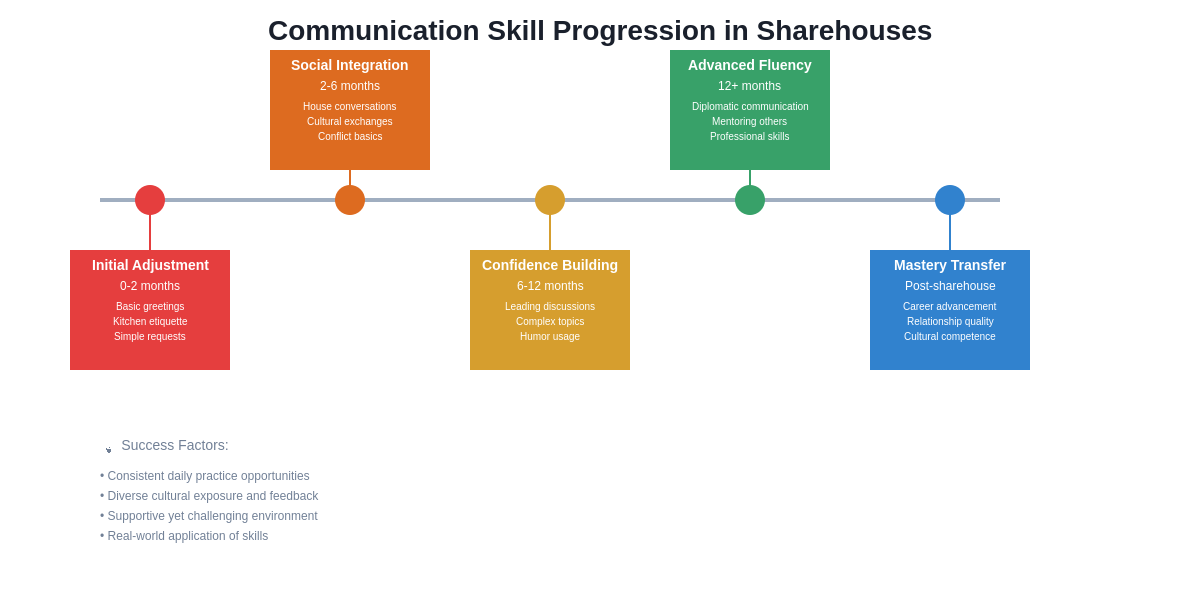
The supportive yet challenging environment of sharehouse living provides ideal conditions for building social confidence through gradual exposure to increasingly complex communication situations. Residents begin with basic interactions around shared facilities and gradually progress to deeper conversations about personal experiences, cultural differences, and future goals.
Success in navigating early communication challenges builds confidence for tackling more difficult situations, creating positive feedback loops that accelerate skill development and social engagement. How independence skills develop in shared living includes communication independence that transfers to professional and academic settings.
The diverse audience available in sharehouses allows residents to practice different communication approaches and receive varied feedback, helping them identify their communication strengths and areas for improvement across different personality types and cultural backgrounds.
Group communication skills develop through participation in house meetings, social events, and collaborative projects that require residents to contribute effectively to group discussions and decision-making processes. These skills prove invaluable in professional team environments and academic group work situations.
Professional Communication Transfer
The communication skills developed in sharehouse environments transfer remarkably well to professional settings, as residents learn to navigate cultural differences, manage conflicts diplomatically, and communicate effectively across language barriers. These abilities prove particularly valuable in international business environments and multicultural workplaces.
Presentation skills often improve dramatically as residents gain confidence speaking in front of diverse audiences and learn to adjust their communication style for different cultural contexts and language abilities. How networking abilities improve through diverse contacts demonstrates the professional benefits of sharehouse communication development.
Email and written communication skills benefit from exposure to different writing styles and cultural approaches to formal communication, as residents observe and learn from housemates with varied professional backgrounds and communication training.
Meeting facilitation and group leadership abilities develop through informal leadership roles in house activities and conflict resolution situations, building skills that prove valuable in professional project management and team leadership positions.
Long-term Communication Benefits
The communication skills developed during sharehouse living create lasting advantages that continue benefiting residents long after they move to independent housing arrangements. The cultural sensitivity, linguistic flexibility, and social confidence gained through intensive multicultural interaction enhance personal relationships, career opportunities, and travel experiences throughout residents’ lives.
Advanced communication abilities contribute to career advancement opportunities, particularly in international organizations or roles requiring cross-cultural interaction and management. The practical experience of navigating complex multicultural environments provides credibility and confidence that purely academic or theoretical training cannot match.
Personal relationship quality improves significantly as residents develop empathy, active listening abilities, and conflict resolution skills that enhance romantic relationships, friendships, and family interactions. The communication tools learned in challenging sharehouse situations often prove invaluable during personal relationship difficulties or major life transitions.
Travel confidence increases dramatically as residents develop the communication skills and cultural adaptability necessary for navigating unfamiliar environments and building connections with people from different backgrounds, enabling more meaningful and adventurous travel experiences throughout their lives.
The foundation of excellent communication skills established during sharehouse living continues expanding through subsequent challenges and experiences, as residents maintain the learning orientation and risk-taking attitudes that enabled their initial rapid development in multicultural living environments.
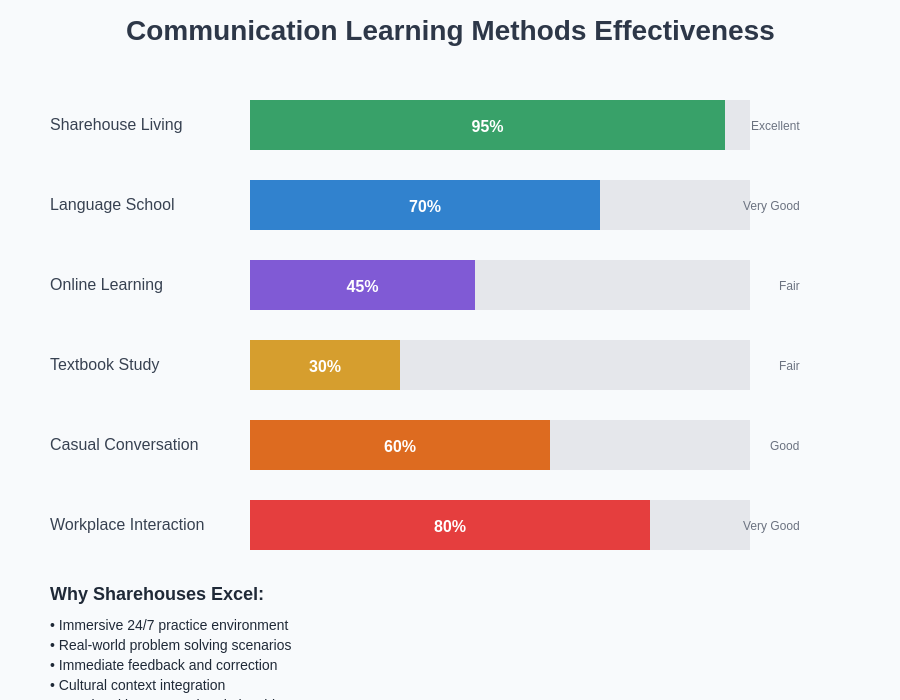
The superior effectiveness of sharehouse communication learning compared to traditional methods demonstrates why residents who fully embrace the sharehouse experience develop such remarkable communication abilities that serve them throughout their personal and professional lives.
Disclaimer
This article is for informational purposes only and reflects general observations about communication skill development in sharehouse environments. Individual experiences may vary significantly based on personal factors, specific house dynamics, and individual learning approaches. The development of communication skills depends on numerous variables including motivation, cultural background, and specific sharehouse community characteristics.