The phenomenon of feeling constantly judged represents one of the most psychologically challenging aspects of sharehouse living that can transform what should be an enriching cultural experience into a source of persistent anxiety and social withdrawal. This pervasive sense of scrutiny affects residents across all demographics but manifests particularly intensely among international residents navigating the complex intersection of cultural expectations, language barriers, and the inherent vulnerabilities of shared living spaces.
The roots of feeling judged in sharehouses extend far beyond simple personality conflicts or cultural misunderstandings, encompassing deep psychological mechanisms that emerge when individuals find themselves constantly observed and evaluated by their living companions. Understanding these underlying dynamics provides essential insights for both those experiencing these feelings and their housemates who may unknowingly contribute to creating judgmental atmospheres that undermine community harmony and individual wellbeing.
The Psychology of Constant Observation
Living in close quarters with multiple individuals creates an environment where privacy becomes a luxury and personal behaviors face continuous, albeit often unintentional, scrutiny from housemates. This state of perpetual visibility triggers psychological responses rooted in evolutionary survival mechanisms that interpret constant observation as potential social threat assessment, leading to heightened self-consciousness and defensive behavioral patterns that can persist long after initial adjustment periods.
The psychological impact of feeling watched extends beyond momentary discomfort to influence fundamental aspects of personality expression and authentic self-representation. How personal space boundaries are constantly tested reveals how the lack of private retreat spaces amplifies feelings of exposure and vulnerability, creating conditions where residents feel compelled to maintain performative personas that may conflict with their authentic selves.
Modern sharehouse environments often lack adequate soundproofing and physical barriers that would normally provide psychological buffers between individuals, meaning that conversations, habits, and daily routines become involuntary subjects of observation and potential commentary. The cumulative effect of this exposure creates a fishbowl existence where residents develop hyperawareness of their own behaviors while simultaneously becoming more attuned to the perceived judgments and reactions of their living companions.
Cultural Expectations and Performance Pressure
The intersection of different cultural backgrounds within Tokyo sharehouses creates complex webs of unspoken expectations and behavioral norms that residents must navigate without explicit guidance or cultural translation. International residents often find themselves caught between their natural behavioral patterns and perceived expectations of how they should act within Japanese social contexts, creating persistent anxiety about whether their actions align with acceptable standards.
Japanese cultural concepts such as reading the atmosphere (kuuki wo yomu) and avoiding trouble for others (meiwaku wo kakenai) establish implicit behavioral frameworks that may be unfamiliar to international residents yet form the foundation for social judgment within many sharehouses. Japanese sharehouse rules every foreigner should know provides context for these cultural expectations, but the emotional impact of feeling constantly evaluated against these standards often persists despite intellectual understanding.
The pressure to conform to perceived cultural expectations while maintaining personal authenticity creates internal conflicts that manifest as chronic stress and social anxiety. Residents may find themselves second-guessing natural behaviors, modifying communication styles, and suppressing aspects of their personality that they fear might be viewed negatively by housemates from different cultural backgrounds.
Cultural performance pressure intensifies during social interactions where residents feel obligated to represent their entire nationality or cultural group rather than simply being accepted as individuals. This representative burden creates additional layers of self-consciousness as residents become hyperaware of how their behaviors might reflect upon others from their cultural background, amplifying the stakes of every social interaction within the sharehouse environment.
Language Barriers and Misinterpretation
Communication difficulties stemming from language barriers create fertile ground for misunderstandings that can be interpreted as judgment when they may simply reflect linguistic limitations or cultural communication style differences. International residents often experience frustration when their intended messages are misunderstood or when they cannot adequately express complex thoughts and emotions in their non-native language, leading to feelings of inadequacy and social isolation.
The gap between internal thought complexity and external expression capabilities creates situations where residents feel intellectually diminished or socially awkward, particularly when housemates default to simpler language or exclude them from conversations that require advanced linguistic proficiency. How language barriers prevent deep friendships explores how these communication challenges can create cycles of social withdrawal and perceived rejection.
Non-verbal communication patterns vary dramatically across cultures, meaning that facial expressions, body language, and social cues intended as neutral or friendly may be interpreted as judgmental or dismissive by residents from different cultural backgrounds. These misinterpretations accumulate over time, creating persistent impressions of social disapproval even when no actual judgment exists.
The cognitive load required for constant translation and cultural code-switching exhausts mental resources that would otherwise be available for natural social interaction and relationship building. This mental fatigue contributes to social withdrawal and heightened sensitivity to perceived criticism, as residents lack the emotional bandwidth necessary for resilient social engagement and positive interpretation of ambiguous social signals.
Social Hierarchies and Power Dynamics
Sharehouses inadvertently develop internal social hierarchies based on factors such as length of residence, language proficiency, cultural familiarity, age, and social connectivity that can create atmospheres where certain residents feel perpetually positioned as outsiders or junior members requiring approval from more established community members. How social hierarchies develop naturally examines how these power structures emerge and influence daily interactions.
Long-term residents often assume informal leadership roles that include evaluating and commenting upon newcomer behaviors, creating dynamics where newer residents feel subject to constant assessment and must prove their worthiness for full community acceptance. This probationary period can extend indefinitely when residents fail to meet unspoken standards or struggle with cultural adaptation, leading to persistent feelings of being judged and found wanting.
Economic disparities between residents can create additional judgment dynamics where spending habits, lifestyle choices, and social activities become subjects of scrutiny and commentary that may be intended as casual observation but perceived as criticism of personal values or financial management. The visibility of consumption patterns in shared living spaces makes economic differences impossible to hide, potentially creating shame and defensiveness among residents with more limited resources.
Professional status and career achievements often become informal ranking systems within sharehouse communities, where residents feel pressure to justify their worth through accomplishments and future prospects rather than being valued for their personal qualities and community contributions. This achievement-based evaluation system can create chronic stress for residents experiencing career uncertainties or pursuing non-traditional paths.
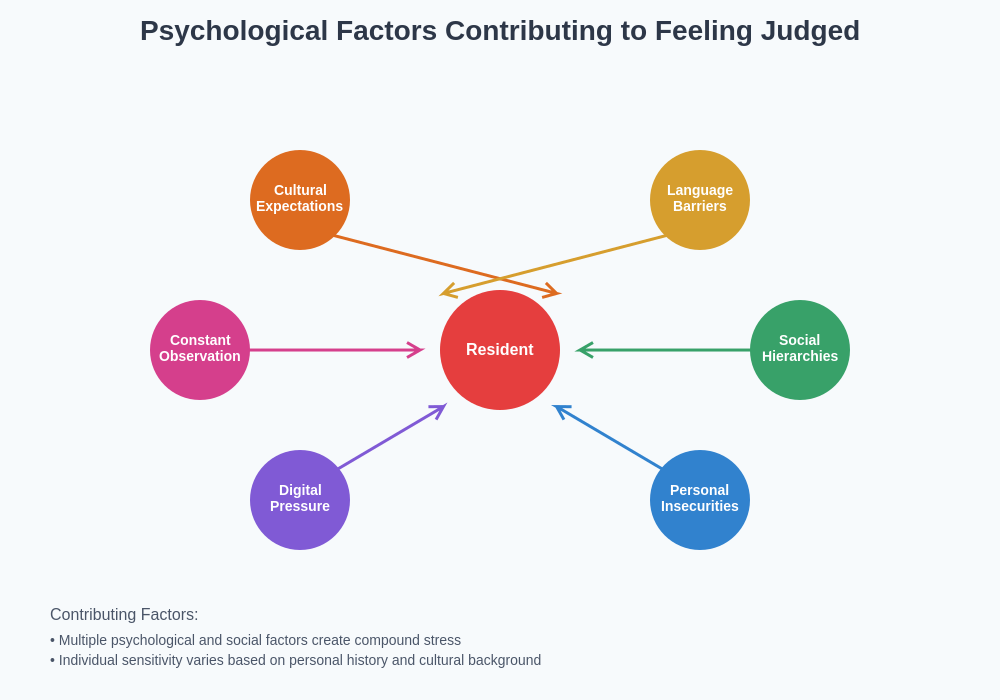
The interconnected nature of these psychological and social factors creates compound effects that can overwhelm individual coping mechanisms and transform minor social anxieties into persistent patterns of perceived judgment and social withdrawal.
Personal Insecurities and Projection
Individual psychological factors play crucial roles in determining which residents develop persistent feelings of being judged, as personal insecurities and past experiences with rejection or criticism create interpretive filters that transform neutral interactions into perceived attacks or disapproval. Why some residents always feel like outsiders explores how internal psychological patterns contribute to social isolation experiences.
Residents with histories of social anxiety, perfectionism, or rejection sensitivity may interpret ambiguous social signals as confirmation of their worst fears about social acceptance and personal adequacy. These interpretive biases create self-fulfilling prophecies where defensive behaviors and social withdrawal actually generate the rejection and criticism that residents initially feared, perpetuating cycles of negative social interaction.
The comparison culture inherent in shared living environments triggers competitive dynamics and social comparison processes that can exacerbate existing insecurities about personal worth, attractiveness, social skills, or life achievements. Residents may find themselves constantly measuring their behaviors, appearances, and accomplishments against housemates, creating internal pressure and external sensitivity that manifests as feeling judged.
Imposter syndrome affects many international residents who question whether they truly belong in their chosen communities or deserve the opportunities and relationships available to them in Tokyo. This self-doubt creates hypervigilance for signs of rejection or criticism that confirms internal narratives about inadequacy, leading to persistent feelings of being evaluated and found lacking by their living companions.
The Impact of Social Media and Digital Presence
Modern sharehouse dynamics extend beyond physical interactions to include digital relationships and social media representations that create additional opportunities for judgment and comparison. Residents often feel pressure to curate online personas that align with their sharehouse community’s standards while maintaining authenticity in their broader social networks, creating internal conflicts about self-representation and social identity.
Social media platforms provide venues for indirect communication about sharehouse dynamics, where residents may discover discussions, photos, or comments about their behaviors or presence that they were not intended to see. These glimpses into private conversations and opinions can confirm fears about being judged while providing concrete evidence of community discussions that may have previously remained as vague suspicions.
The permanence and searchability of digital communications create lasting records of interactions and conflicts that might have been forgiven or forgotten in purely physical relationships. Residents may feel that mistakes or misunderstandings follow them indefinitely through digital channels, preventing fresh starts and perpetuating feelings of being defined by past negative interactions or cultural missteps.
Digital exclusion from group chats, social media interactions, or online community activities can create more concrete evidence of social rejection than ambiguous face-to-face interactions, providing clear confirmation of fears about community acceptance and belonging. The visibility of others’ digital relationships and activities can highlight social connections that exclude certain residents, amplifying feelings of judgment and rejection.
Coping Strategies and Mental Health Impact
The chronic stress of feeling constantly judged creates significant mental health challenges that can affect academic performance, career development, and overall life satisfaction during what should be enriching cultural exchange experiences. Understanding and addressing these psychological impacts becomes essential for maintaining wellbeing while pursuing international living opportunities in Tokyo sharehouses.
Residents experiencing persistent judgment feelings often develop avoidance behaviors that limit their participation in community activities, reduce their social interactions, and prevent them from accessing the cultural learning and friendship opportunities that motivated their sharehouse choice. How to handle roommate conflicts without moving out provides strategies for addressing these challenges constructively.
Social withdrawal and isolation compound the original problems by reducing opportunities for positive interactions that could counteract negative interpretations and build genuine friendships with housemates. This self-protective behavior often backfires by confirming other residents’ impressions that withdrawn individuals are unfriendly or uninterested in community participation, perpetuating cycles of mutual misunderstanding.
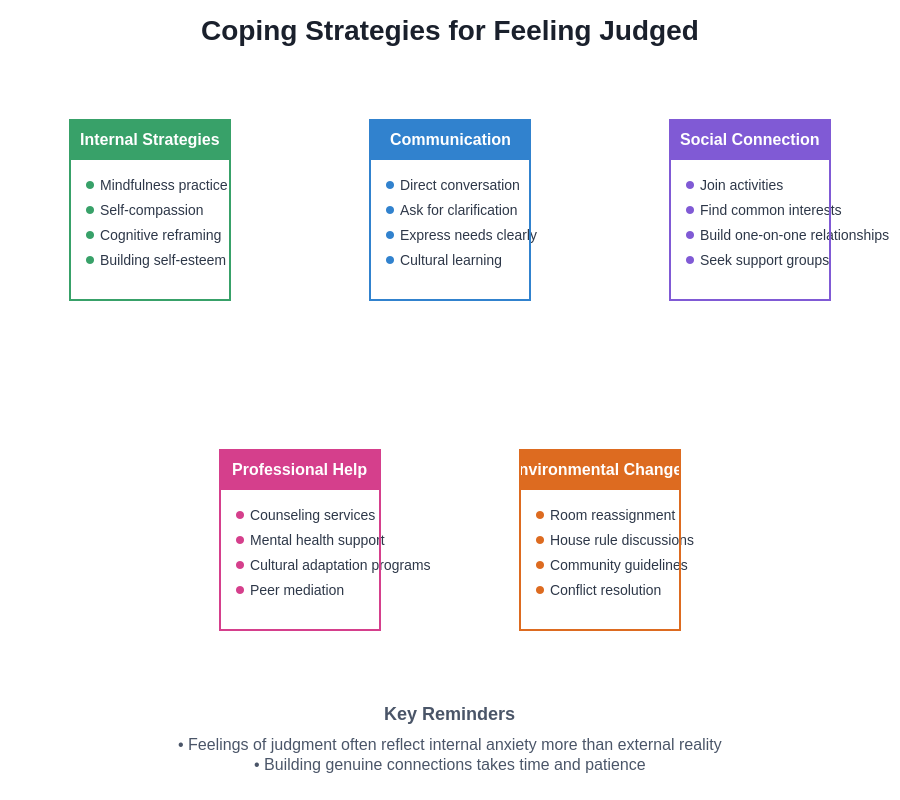
Professional counseling and mental health support become particularly important for international residents experiencing persistent social anxiety in sharehouse environments, as these feelings can indicate deeper psychological patterns that extend beyond housing situations and require therapeutic intervention for resolution. Many residents benefit from developing skills in cognitive reframing, social anxiety management, and cultural adaptation techniques.
Building Resilience and Community Connection
Overcoming persistent feelings of judgment requires active strategies that address both internal psychological patterns and external social dynamics within sharehouse communities. Developing resilience involves learning to distinguish between actual criticism and projected fears while building genuine connections that provide evidence against negative self-perceptions and social assumptions.
Communication skill development becomes crucial for residents who feel judged, as learning to express concerns directly, ask for clarification about ambiguous interactions, and advocate for their needs can transform passive suffering into active problem-solving. Making friends through Tokyo sharehouse communities offers practical approaches for building positive relationships despite initial challenges.
Cultural competency education helps residents understand the behavioral norms and communication patterns of their living companions, reducing misinterpretations and providing frameworks for navigating cultural differences with confidence rather than anxiety. This knowledge creates emotional buffers against perceived slights and provides alternative explanations for behaviors that might otherwise be interpreted as judgmental.
Mindfulness practices and self-compassion techniques help residents develop internal stability that reduces dependence on external validation and approval from housemates. Building self-acceptance and emotional regulation skills creates resilience against both actual criticism and perceived judgment while maintaining openness to genuine feedback and social connection opportunities.
Creating Judgment-Free Community Environments
Sharehouse communities benefit from establishing explicit norms and practices that discourage judgmental behaviors while promoting acceptance, curiosity, and mutual respect among residents from diverse backgrounds. Living with Japanese roommates in Tokyo sharehouses provides insights into creating inclusive community atmospheres that support all residents’ wellbeing.
Education about cultural differences and communication styles helps prevent misunderstandings that can be interpreted as judgment while providing frameworks for appreciating diversity rather than viewing differences as threats to community harmony. Regular house meetings and cultural sharing activities can transform potential sources of judgment into opportunities for learning and connection.
Conflict resolution systems and peer mediation processes provide structured approaches for addressing issues that might otherwise fester and create judgmental atmospheres. When residents have clear pathways for discussing concerns and resolving conflicts, minor issues are less likely to escalate into persistent negative dynamics that affect entire community atmospheres.
Leadership development among long-term residents can help establish welcoming environments for newcomers while preventing the development of exclusionary social hierarchies that create judgment-based community dynamics. Training established residents in inclusive practices and cultural sensitivity can transform potential sources of judgment into sources of support and community building.

The transformation from judgmental to supportive community environments requires conscious effort and awareness from all residents, but the benefits extend far beyond individual comfort to create thriving, inclusive communities that fulfill the promise of international sharehouse living.
The experience of feeling constantly judged in sharehouse environments represents a complex intersection of psychological, cultural, and social factors that require multifaceted approaches for resolution. Understanding these dynamics empowers both affected residents and their communities to create more supportive, inclusive living environments that fulfill the promise of international sharehouses as spaces for cultural exchange, personal growth, and meaningful friendship development across cultural boundaries.
Disclaimer
This article is for informational purposes only and does not constitute professional mental health advice. Residents experiencing persistent social anxiety, depression, or other mental health concerns should consult qualified healthcare professionals. The experiences described may vary significantly between individuals and sharehouse communities, and specific situations may require personalized approaches for resolution.