The sense of security within sharehouses varies dramatically during nighttime hours, with many residents experiencing heightened anxiety and vulnerability that can significantly impact their quality of life and overall satisfaction with shared living arrangements. These concerns stem from a complex interplay of architectural limitations, inadequate security measures, neighborhood characteristics, and social dynamics that create environments where personal safety feels compromised during the most vulnerable hours of the day.
Understanding why certain residents feel unsafe at night requires examining the multifaceted nature of security concerns that extend beyond simple crime statistics to encompass psychological comfort, environmental design, and the unique challenges presented by shared living spaces where strangers cohabitate in close proximity. The implications of these safety concerns reach far beyond momentary discomfort, affecting sleep quality, social participation, career opportunities, and long-term housing satisfaction for international residents who may already feel vulnerable in an unfamiliar cultural environment.
Inadequate Building Security Infrastructure
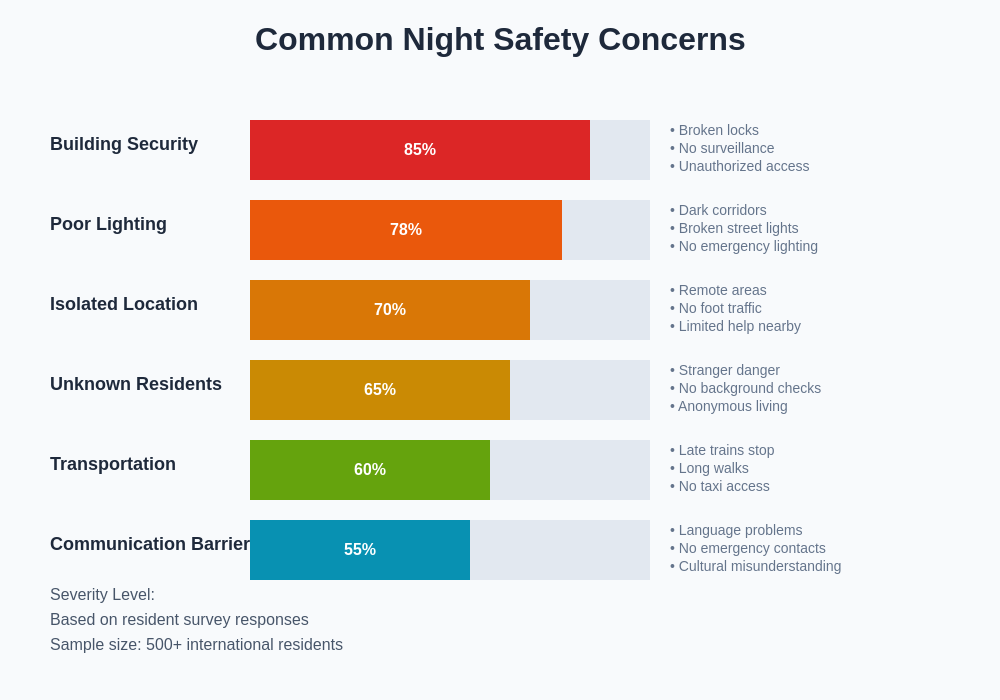
The foundation of nighttime safety concerns often lies in fundamental building security deficiencies that leave residents exposed to unauthorized access and potential threats from external sources. Many older sharehouses, particularly those converted from residential buildings not originally designed for multi-tenant occupancy, lack comprehensive security systems that would be standard in purpose-built accommodation facilities.
Entry control systems in numerous sharehouses rely on outdated key-based mechanisms that cannot track or restrict access effectively, allowing previous residents, maintenance workers, or unauthorized individuals to potentially retain building access long after their legitimate need has expired. Understanding why security deposits don’t cover theft losses becomes particularly relevant when considering how these security gaps create financial and personal safety risks for current residents.
The absence of monitored surveillance systems, secure entry vestibules, and professional security protocols means that many sharehouses operate with security standards that would be considered inadequate for single-family residences, despite housing significantly more individuals who may be unfamiliar with each other’s backgrounds, schedules, and intentions.
Lighting systems both inside and around sharehouse buildings frequently prove insufficient for maintaining safe navigation and deterring unwelcome activity during nighttime hours. Poorly lit stairwells, corridors, and building perimeters create environments where residents cannot clearly identify other individuals or potential threats, contributing to anxiety levels that affect daily routines and lifestyle choices.
Neighborhood and Environmental Factors
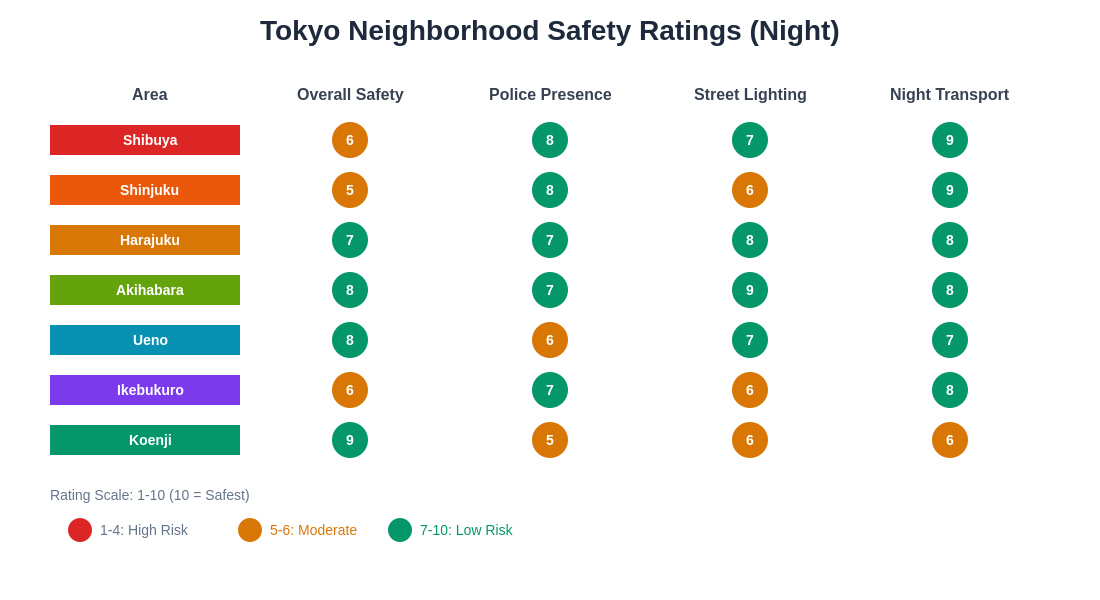
Location-specific safety challenges vary significantly across Tokyo’s diverse districts, with some areas experiencing higher rates of nighttime activity that can feel threatening to residents unfamiliar with local social dynamics and cultural norms. Understanding why some areas have higher crime rates provides context for how neighborhood selection impacts daily safety experiences and long-term comfort levels.
Transportation accessibility during late evening hours creates additional safety concerns for residents whose work, study, or social schedules require travel during times when public transportation services are reduced and walking distances to stations may expose them to poorly lit or isolated areas. How late night transportation limits social life explores how these constraints affect not only safety but also social and professional opportunities.
The proximity to entertainment districts, while potentially offering convenience and excitement, can also introduce unpredictable elements including intoxicated individuals, increased foot traffic, and activities that may feel threatening to residents seeking quiet residential environments. The cultural differences in acceptable public behavior, noise levels, and social interactions can create discomfort for international residents who may misinterpret normal local activities as potentially dangerous situations.
Urban design elements such as narrow streets, limited visibility around corners, inadequate street lighting, and the absence of regular foot patrol or community safety measures contribute to environments where residents feel exposed and vulnerable during necessary nighttime activities such as returning from work, shopping for essentials, or accessing transportation.
Social Dynamics and Resident Interactions
The anonymous nature of many sharehouse communities creates environments where residents have limited knowledge about their cohabitants’ backgrounds, daily schedules, social connections, and behavioral patterns, leading to uncertainty and anxiety about potential interactions with unfamiliar individuals during nighttime hours when social inhibitions may be reduced.
Alcohol-related incidents and behavioral changes among residents can create unpredictable social environments where individuals who seem harmless during daytime interactions may exhibit concerning behaviors during evening and nighttime hours. Why alcohol-related incidents increase on weekends examines how social drinking culture can impact community safety and comfort levels.
Gender dynamics within mixed-gender sharehouses can create specific safety concerns for female residents who may feel vulnerable to unwanted attention, inappropriate behavior, or boundary violations from male residents whose intentions and character remain unknown. How gender policies are legally enforced provides context for understanding how housing policies attempt to address these concerns, though enforcement and effectiveness vary significantly.
The lack of established community relationships and mutual accountability systems means that residents cannot rely on fellow community members for support, assistance, or intervention during situations that feel threatening or unsafe. This isolation becomes particularly pronounced during nighttime hours when help may be needed most urgently but social connections are weakest.
Architectural and Design Limitations
Physical building layouts often prioritize cost efficiency over safety considerations, resulting in room configurations, corridor designs, and common area arrangements that create blind spots, isolated spaces, and potential security vulnerabilities that become more pronounced during nighttime hours when visibility is reduced and fewer people are present to provide natural surveillance.
Sound insulation and acoustic design problems can create environments where residents cannot distinguish between normal building sounds and potentially concerning activities, leading to heightened anxiety about unknown noises, footsteps, or voices that may indicate security threats or inappropriate behavior from other residents or unauthorized individuals.
Private room security measures in many sharehouses consist of basic locks that provide minimal protection against determined intrusion attempts, while room locations relative to building exits, stairwells, and common areas can create situations where residents feel trapped or unable to quickly access help or escape routes during emergency situations.
Window security, emergency escape options, and communication systems with building management or emergency services often prove inadequate when residents need immediate assistance or feel their personal safety is compromised during nighttime hours when response times may be delayed and help may be more difficult to summon.
Cultural and Communication Barriers
Language limitations can prevent residents from effectively communicating safety concerns to building management, local authorities, or fellow residents, creating situations where problems escalate or persist because affected individuals cannot articulate their needs or obtain appropriate assistance through normal channels.
Cultural differences in personal space expectations, social interactions, and appropriate behavior can lead to misunderstandings that feel threatening to residents from different cultural backgrounds who may interpret normal local behaviors as inappropriate or potentially dangerous based on their previous life experiences and cultural norms.
Understanding of local emergency procedures, police response protocols, and community safety resources may be limited for international residents who lack familiarity with Japanese systems and may not know how to access help effectively during situations that require immediate intervention or professional assistance.
The reluctance to report concerns or seek help due to language barriers, cultural unfamiliarity, or fear of overreacting can create situations where safety issues persist and escalate because affected residents do not feel comfortable or capable of addressing problems through available channels.
Technology and Communication Gaps
Many sharehouses lack modern communication systems that would allow residents to quickly alert management, security services, or emergency responders during situations that feel threatening or require immediate assistance. How smart locks change sharehouse security explores how technological solutions can address some security concerns, though implementation remains inconsistent across properties.
Mobile phone coverage, internet connectivity, and emergency communication apps may not function reliably within certain building structures or locations, creating situations where residents cannot summon help quickly when personal safety feels compromised during nighttime hours.
The absence of internal communication systems between residents, building management, and security services means that safety concerns may not be communicated effectively or addressed promptly, allowing problems to persist or escalate unnecessarily.
Social media and online platforms that could facilitate community communication and mutual support among residents often remain underutilized or ineffective for addressing immediate safety concerns that require real-time communication and coordinated response efforts.
Economic and Management Factors
Cost-cutting measures by sharehouse operators can result in reduced security investments, inadequate lighting, minimal maintenance of safety equipment, and limited management presence during nighttime hours when residents may need assistance or intervention most urgently.
How professional security services cost too much examines the economic pressures that prevent many sharehouses from implementing comprehensive security measures that would address resident safety concerns effectively, leaving individuals to manage their own security needs with limited resources and support.
Staff availability during evening and nighttime hours may be minimal or nonexistent, creating situations where residents cannot access management assistance during the times when safety concerns are most likely to arise and immediate response may be most critical for preventing escalation of problematic situations.
The financial implications of implementing comprehensive security improvements may discourage property managers from addressing known safety deficiencies, prioritizing short-term cost savings over resident safety and long-term community stability.
Psychological and Health Impacts
Chronic anxiety about nighttime safety can significantly impact sleep quality, stress levels, and overall mental health for residents who feel vulnerable in their living environment. The inability to feel secure in one’s home environment creates persistent psychological stress that affects work performance, social relationships, and general quality of life.
Avoidance behaviors such as limiting evening activities, restricting social opportunities, or modifying daily routines to minimize nighttime exposure can reduce quality of life and limit personal and professional development opportunities for residents whose safety concerns override their desire for normal social participation.
The cumulative effect of safety anxiety can contribute to social isolation, reduced community participation, and earlier departure from sharehouses as residents seek more secure living arrangements, disrupting community stability and preventing the development of supportive social networks that could actually enhance safety through mutual awareness and assistance.
Sleep disruption caused by anxiety about security, concern about nighttime noises, or hypervigilance about potential threats can create health problems that extend far beyond immediate safety concerns, affecting immune system function, cognitive performance, and emotional well-being.
Prevention and Mitigation Strategies
Understanding building security features, neighborhood characteristics, and resident community dynamics during the sharehouse selection process can help prospective residents avoid properties where safety concerns are more likely to develop. How to find the perfect sharehouse in Tokyo provides guidance on evaluating security factors during the property search process.
Developing relationships with fellow residents, participating in community activities, and establishing communication networks can create informal safety support systems that enhance security through mutual awareness and assistance during situations where individual residents may feel vulnerable or threatened.
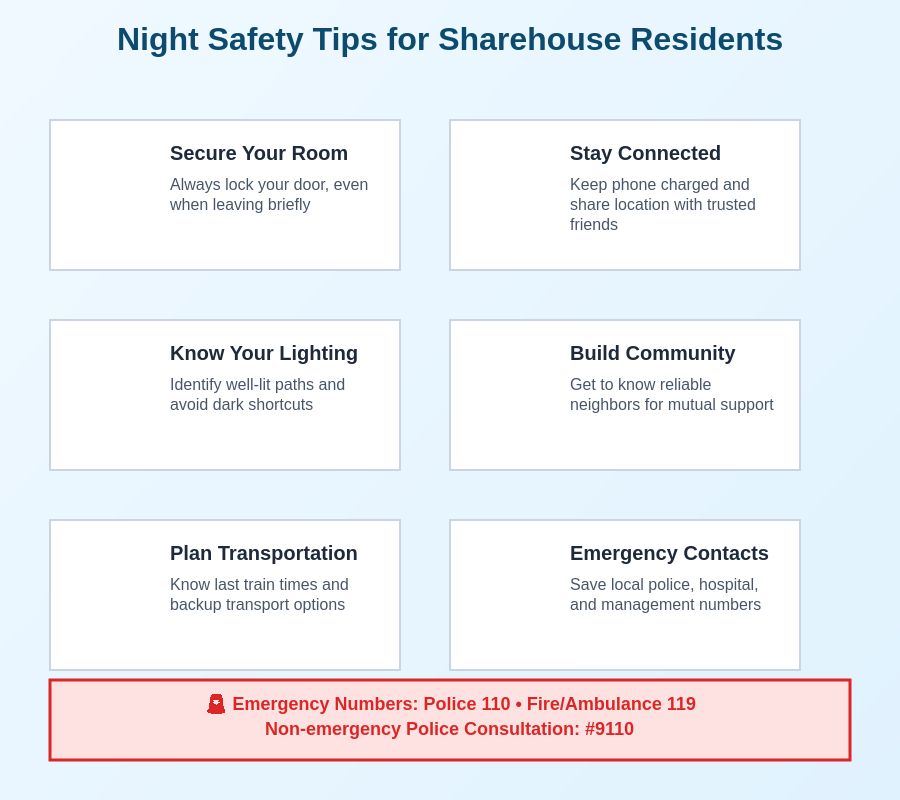
Personal safety measures such as strategic room selection, security device installation, emergency communication planning, and awareness of local emergency services can provide individual residents with greater confidence and actual protection during nighttime hours when building or management security may be inadequate.
Community advocacy for security improvements, collective communication with building management about safety concerns, and resident organization around safety issues can create pressure for meaningful improvements that address the root causes of nighttime security anxiety rather than requiring individual residents to manage these concerns independently.
The development of community safety protocols, emergency response procedures, and mutual assistance agreements among residents can create formal systems for addressing safety concerns collaboratively while building the social connections that naturally enhance security through increased awareness and accountability within the sharehouse community.
Understanding and addressing the factors that contribute to nighttime safety concerns requires comprehensive approaches that consider building infrastructure, neighborhood characteristics, social dynamics, cultural factors, and individual needs to create living environments where all residents can feel secure and comfortable during all hours of the day and night.
Disclaimer
This article is for informational purposes only and does not constitute professional security or legal advice. Safety concerns and experiences may vary significantly between different sharehouses, neighborhoods, and individual circumstances. Readers should evaluate their specific safety needs and consult with relevant professionals when making housing decisions or addressing security concerns. The information provided reflects general observations and should not replace personal safety judgment or professional security assessments.