The phenomenon of toiletry hoarding in sharehouses represents one of the most perplexing and frustrating aspects of shared living arrangements that consistently emerges across different cultures, backgrounds, and socioeconomic levels. This behavior, which involves residents accumulating excessive quantities of personal hygiene products far beyond reasonable consumption needs, creates tension within communities and reflects deeper psychological and practical concerns that extend well beyond simple resource management. Understanding the complex motivations behind this behavior provides essential insights for creating more harmonious shared living environments.
The impact of toiletry hoarding extends throughout the entire sharehouse ecosystem, affecting storage space allocation, community trust levels, and overall bathroom functionality. While some residents develop elaborate justifications for their accumulation habits, the underlying causes often stem from fundamental insecurities about resource availability, cultural conditioning around scarcity, and misunderstandings about shared living expectations that require careful examination and thoughtful intervention strategies.
The Psychology of Scarcity and Security
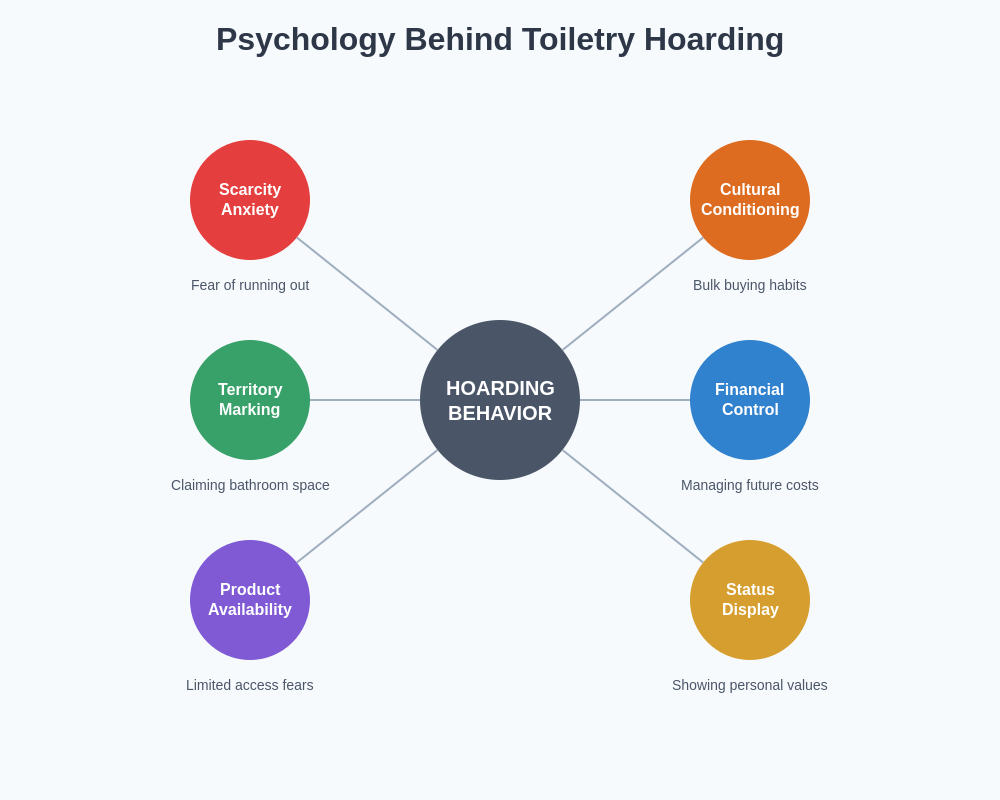
The psychological foundation of toiletry hoarding in sharehouses often traces back to deeply ingrained scarcity mindset patterns that develop during childhood or through previous experiences of resource limitation. Residents who grew up in households where basic necessities were sometimes uncertain may unconsciously apply survival strategies to their current living situation, even when objective scarcity no longer exists.
The transition to shared living environments can trigger anxiety responses in individuals who have never previously shared personal space or resources with strangers. Living with Japanese roommates in Tokyo sharehouses often involves cultural adjustment periods where residents overcompensate for perceived vulnerabilities by establishing excessive personal reserves of essential items.
Security-seeking behavior manifests differently across personality types, with some residents creating elaborate backup systems for every conceivable toiletry need while others focus intensively on specific categories such as skincare products or dental hygiene items. The psychological comfort derived from knowing that multiple months of supplies remain readily available can override rational assessment of actual consumption patterns and storage space limitations.
International residents often experience heightened anxiety about product availability, particularly when familiar brands from their home countries prove difficult or expensive to obtain in Japan. This legitimate concern about access to preferred products can evolve into compulsive purchasing behavior that extends far beyond reasonable preparation for potential supply chain disruptions.
Cultural Conditioning and Shopping Patterns
Cultural backgrounds significantly influence individual relationships with personal care products and consumption patterns that carry over into sharehouse living arrangements. Residents from cultures that emphasize bulk purchasing, seasonal stockpiling, or extended family resource management may struggle to adapt their shopping habits to the space constraints and social dynamics of shared living environments.
The Japanese cultural emphasis on cleanliness and hygiene creates additional pressure for international residents to maintain extensive personal care routines that require numerous specialized products. Japanese sharehouse rules every foreigner should know include expectations about personal hygiene standards that can drive residents to accumulate products they perceive as necessary for social acceptance.
Sale culture and promotional marketing tactics particularly affect residents who lack experience with Tokyo’s retail landscape and pricing patterns. The excitement of discovering discounted toiletries can trigger impulsive bulk purchasing decisions that ignore storage limitations and actual usage rates. Convenience store proximity and 24-hour availability create additional temptation for unnecessary accumulation when residents encounter attractive promotional offers.
Economic uncertainty and employment instability can reinforce hoarding tendencies as residents attempt to control future expenses by purchasing large quantities during periods of financial stability. Living costs in Tokyo sharehouses explained demonstrates how budget anxiety can manifest through excessive stockpiling behavior that paradoxically increases current spending while attempting to minimize future costs.
Space Competition and Territory Marking
Bathroom storage space in Tokyo sharehouses typically provides minimal allocation per resident, creating natural competition that can escalate into territorial behavior through toiletry accumulation. Residents may unconsciously use excessive product placement as a method of claiming and defending bathroom territory against perceived encroachment from other housemates.
The visibility of personal toiletries in shared spaces serves multiple psychological functions beyond mere storage convenience. Product display can communicate social status, personal values, and cultural identity while simultaneously establishing physical presence in contested territory. High-end skincare collections or specialized imported products become status symbols that residents use to differentiate themselves within the house hierarchy.
Storage anxiety often develops when residents observe other housemates expanding their bathroom footprint through gradual product accumulation. This creates competitive escalation cycles where each resident feels compelled to defend their space allocation by maintaining increasingly visible product presence. How personal space needs vary dramatically explains how bathroom territory disputes reflect broader spatial anxiety issues in shared living arrangements.
The lack of clear storage guidelines in many sharehouses contributes to confusion about appropriate product quantities and placement boundaries. Without explicit rules about shelf allocation or product limits, residents may interpret unlimited accumulation as acceptable behavior until conflicts arise with other community members.
Economic Factors and Budget Management
Financial planning strategies around toiletry purchases often become distorted in sharehouse environments where residents lack experience with Japanese pricing patterns and product availability cycles. The perception that bulk purchasing provides significant savings can drive accumulation behavior that ignores storage costs and product expiration considerations.
Currency exchange considerations for international residents create additional complexity in budgeting decisions, particularly when comparing prices between Japanese products and imported alternatives. How to budget realistically for sharehouse living includes guidance on avoiding the false economy of excessive stockpiling that ties up cash flow in unnecessary inventory.
Employment uncertainty and visa status concerns can trigger protective spending behaviors where residents attempt to minimize future expenses by purchasing large quantities of essential items during periods of stable income. This strategy often backfires when residents need to relocate quickly or face unexpected storage limitations that force wasteful disposal of accumulated products.
The psychological comfort of having controlled expenses for several months through advance purchasing can override rational analysis of opportunity costs and storage space value. Residents may feel financially responsible while actually misallocating resources that could be better utilized for experiences, education, or emergency reserves.
Social Dynamics and Community Impact
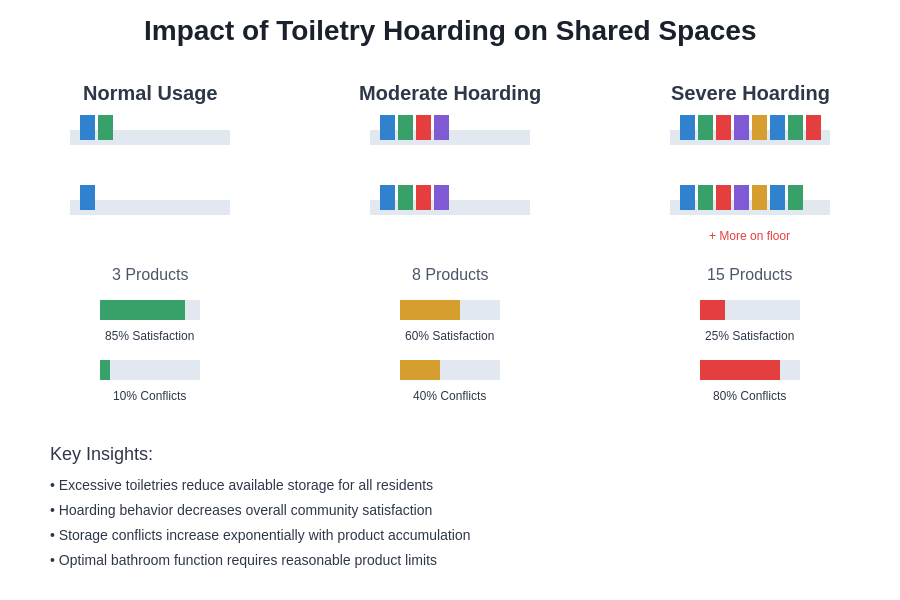
Toiletry hoarding creates ripple effects throughout sharehouse communities that extend far beyond simple storage inconvenience. Other residents often interpret excessive accumulation as selfish behavior that demonstrates lack of consideration for shared space limitations and community harmony.
The visibility of hoarding behavior can trigger competitive responses from other residents who feel pressured to defend their own access to bathroom space through similar accumulation strategies. This escalation cycle can transform initially minor storage disputes into significant community conflicts that affect overall house atmosphere and relationship quality.
Trust issues often develop when residents observe housemates stockpiling products while simultaneously using shared items or borrowing from others. This apparent contradiction between resource hoarding and community resource sharing creates confusion about individual values and commitment to communal living principles.
Making friends through Tokyo sharehouse communities becomes more challenging when hoarding behaviors create negative impressions that overshadow positive personality traits and potential friendship compatibility.
Product-Specific Hoarding Patterns
Different categories of toiletries attract distinct hoarding patterns that reflect specific anxieties and cultural conditioning around personal care routines. Skincare products often represent the most expensive accumulation category, with residents justifying large collections through complex beauty regimens that require multiple specialized products for different purposes.
Hair care products frequently become hoarding focal points for residents with specific texture or styling needs that require specialized formulations difficult to find in Japanese markets. The fear of running out of effective products for particular hair types can drive excessive stockpiling that ignores product expiration dates and storage space limitations.
Dental hygiene products often accumulate due to brand loyalty and concerns about maintaining oral health standards without access to familiar products. Electric toothbrush heads, specialized floss types, and prescription-strength mouthwashes become hoarded items when residents worry about availability and cost in Japanese retail markets.
Feminine hygiene products represent a category where cultural differences in availability, quality, and cost can drive legitimate stockpiling that may appear excessive to observers unfamiliar with individual needs and preferences. How cultural differences affect friendship building includes understanding how personal care needs vary across different backgrounds and should be respected within reason.
Health and Hygiene Rationalization
Medical conditions and dermatological sensitivities provide legitimate justification for specialized product accumulation that can appear excessive to residents without similar health concerns. Eczema, sensitive skin conditions, and allergic reactions to common ingredients require careful product selection and reliable availability that may necessitate larger reserves than typical consumption patterns suggest.
Prescription and over-the-counter medications for skin conditions, hair loss, or other personal health issues often have limited availability in Japanese pharmacies, particularly for formulations developed for different ethnic populations. The legitimate medical need for specific products can justify accumulation levels that would otherwise appear unreasonable.
Mental health considerations around routine stability and anxiety management may require consistent access to specific products that provide psychological comfort through familiar scents, textures, or application rituals. How stress management techniques become necessary in sharehouse environments includes understanding how personal care routines contribute to emotional regulation and stress reduction.
The challenge for community members lies in distinguishing between legitimate health-based accumulation and anxiety-driven hoarding that uses health concerns as rationalization for excessive stockpiling behavior.
Storage Solutions and Practical Management
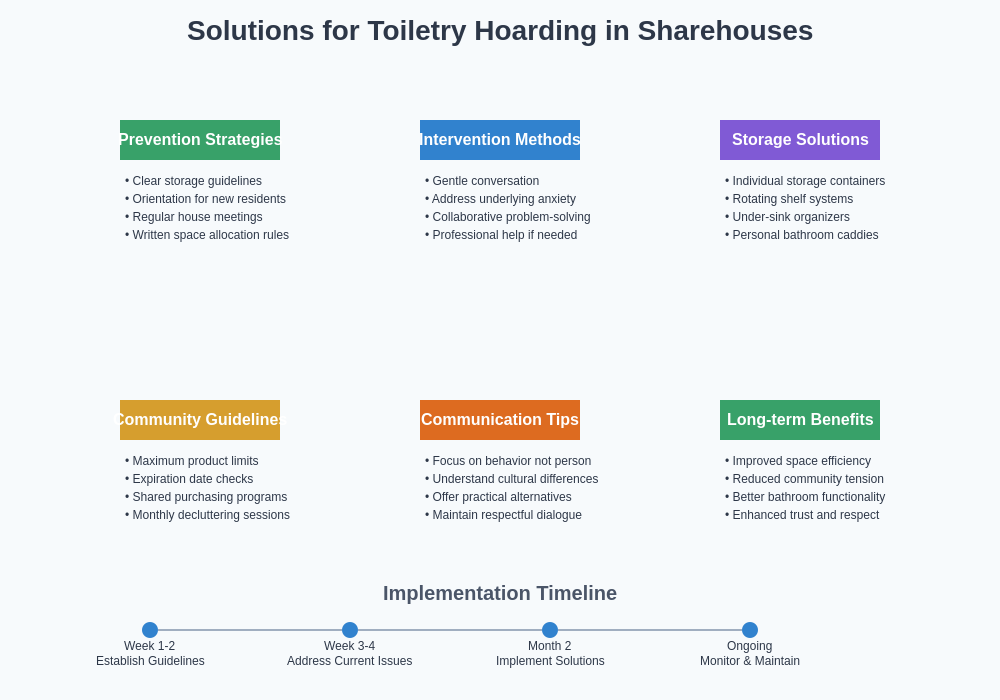
Effective toiletry management in sharehouses requires clear guidelines about storage allocation, product limits, and rotation policies that balance individual needs with community space constraints. Successful houses often implement shelf assignment systems with specific space allocations per resident that prevent gradual territorial expansion through product accumulation.
Regular decluttering schedules and expiration date monitoring help prevent the buildup of unused products that contribute to storage problems while providing opportunities for residents to reassess their actual consumption patterns versus perceived needs. How to handle roommate conflicts without moving out includes strategies for addressing storage disputes before they escalate into serious community problems.
Shared purchasing programs for common toiletries can reduce individual hoarding impulses while providing cost savings and storage efficiency. Bulk toilet paper, hand soap, and cleaning supplies benefit from group purchasing power while reducing the psychological pressure on individuals to maintain personal reserves of basic necessities.
Individual storage solutions such as hanging organizers, under-sink containers, and rotating carousel systems can maximize space efficiency while providing residents with secure storage for reasonable quantities of personal products. The key lies in establishing clear boundaries about appropriate storage volumes and enforcing these limits consistently across all residents.
Addressing Hoarding Behavior Constructively
Confronting toiletry hoarding requires delicate communication that addresses underlying anxieties while establishing necessary boundaries for community harmony. Direct accusations or demands for immediate reduction often trigger defensive responses that escalate conflicts rather than resolving storage issues.
Understanding the psychological motivations behind hoarding behavior enables more effective intervention strategies that address root causes rather than merely managing symptoms. Residents who hoard due to scarcity anxiety may respond well to reassurance about product availability and assistance with local shopping resources, while those driven by territory marking may need clearer space allocation guidelines.
Why conflict resolution abilities improve through shared living experiences includes learning to distinguish between reasonable accommodation requests and enabling behaviors that prevent community problem-solving.
House meetings focused on storage optimization rather than individual behavior criticism can create collaborative problem-solving environments where residents work together to maximize space efficiency while respecting individual needs and preferences.
Prevention Strategies and Community Guidelines
Establishing clear toiletry policies during the initial move-in process prevents many hoarding issues from developing while setting appropriate expectations for new residents. Written guidelines about storage space allocation, product limits, and bathroom etiquette provide objective standards that reduce subjective interpretation and potential conflicts.
Orientation sessions for new residents should include practical guidance about local shopping resources, product availability, and typical consumption patterns that help newcomers calibrate their purchasing decisions appropriately for the sharehouse environment. How to find the perfect sharehouse in Tokyo includes evaluating storage policies and community guidelines during the selection process.
Regular house maintenance schedules that include bathroom organization and expired product removal create ongoing opportunities to monitor accumulation patterns and address problems before they become entrenched behaviors. Collaborative cleaning sessions can build community awareness about storage limitations while providing natural opportunities for gentle intervention.
Educational resources about minimalist living, sustainable consumption, and space optimization can help residents develop healthier relationships with material accumulation while maintaining adequate preparation for their personal care needs.
The complex phenomenon of toiletry hoarding in sharehouses reflects fundamental human needs for security, territory, and identity expression that manifest through material accumulation in constrained environments. Understanding these underlying motivations enables more effective community management strategies that address root causes while maintaining harmony among residents with diverse backgrounds and psychological needs. Successful sharehouses balance individual autonomy with collective responsibility through clear guidelines, empathetic communication, and collaborative problem-solving approaches that respect personal differences while prioritizing community welfare.
Disclaimer
This article is for informational purposes only and does not constitute professional psychological or medical advice. Individual hoarding behaviors may have complex underlying causes that require professional intervention. Readers should approach community conflicts with sensitivity and seek appropriate support when needed. The examples and patterns described may vary significantly based on individual circumstances and cultural backgrounds.