The phenomenon of residents monopolizing cooking times represents one of the most persistent and frustrating challenges in sharehouse living across Tokyo. This behavioral pattern creates ripple effects throughout the entire community, transforming what should be a shared resource into a source of tension, inequality, and social stratification that can fundamentally alter the dynamics of cooperative living arrangements.
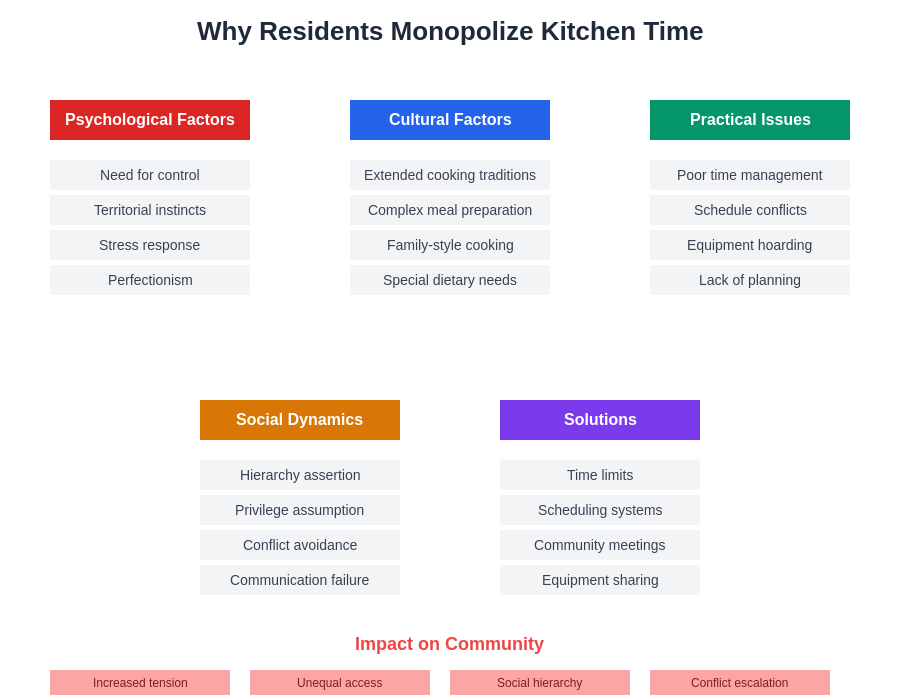
Understanding why certain individuals consistently dominate kitchen access requires examining complex psychological motivations, cultural backgrounds, practical circumstances, and social dynamics that drive this behavior. The monopolization pattern emerges from deep-seated needs for control, comfort, and territorial establishment that often operate below conscious awareness, making resolution particularly challenging for house communities attempting to maintain harmony while ensuring equitable access to essential facilities.
The Psychology of Territory and Control
Human beings possess innate territorial instincts that become heightened in shared living environments where personal space remains limited and clearly defined boundaries blur between individual and communal areas. The kitchen represents a particularly vulnerable space where these territorial impulses manifest because food preparation connects to fundamental survival needs and cultural identity expressions that trigger protective behaviors.
Japanese sharehouse rules every foreigner should know often address kitchen usage expectations, yet many residents unconsciously establish informal territorial claims that override official guidelines. These psychological boundaries develop through repeated usage patterns that create emotional ownership despite the legally shared nature of the space.
The need for control manifests particularly strongly among individuals experiencing stress, uncertainty, or displacement in other areas of their lives. International residents adjusting to new cultural environments may unconsciously seek stability and predictability through kitchen dominance, creating safe spaces where familiar routines and cultural practices can be maintained without external interference or judgment.
Perfectionist personalities often extend cooking sessions far beyond necessary timeframes because they cannot tolerate interruption during complex meal preparation processes. These individuals may genuinely believe their cooking requires uninterrupted focus and extended timeframes, failing to recognize how their standards impact others’ basic access needs.
Cultural Food Traditions and Time Investment
Cultural backgrounds significantly influence cooking time expectations and meal preparation approaches, creating conflicts when residents from different traditions attempt to share limited kitchen facilities. Some cultures emphasize elaborate meal preparation processes that require multiple hours of cooking, marinating, and complex timing coordination that naturally extends kitchen occupation periods.
Living with Japanese roommates in Tokyo sharehouses reveals how traditional Japanese cooking methods often involve intricate preparation steps, multiple cooking stages, and precise timing requirements that can legitimately require extended kitchen access periods. However, cultural understanding becomes problematic when extended cooking sessions occur during peak usage times without consideration for community needs.
Mediterranean and South Asian cooking traditions frequently involve lengthy spice preparation, multiple simultaneous dishes, and complex timing sequences that can monopolize kitchen facilities for several hours. Residents from these backgrounds may not realize that their culturally normal cooking processes create access barriers for housemates accustomed to quicker meal preparation methods.
Fermentation processes, bread making, and traditional preservation methods require extended timeframes and specific temperature controls that can effectively monopolize kitchen equipment for entire days. These practices represent legitimate cultural expressions, yet they create practical challenges in high-density living situations where kitchen access must be balanced among multiple users with varying cultural expectations.
Schedule Conflicts and Peak Time Competition
The concentration of cooking activities during limited peak hours creates natural competition for kitchen access that some residents resolve through monopolization strategies rather than cooperative scheduling approaches. Early morning preparation times before work, evening cooking windows after employment, and weekend meal preparation periods represent high-demand timeframes where monopolization patterns most frequently emerge.
How commute times impact your quality of life affects when residents can realistically access kitchen facilities, creating pressure situations where some individuals resort to monopolization tactics to ensure their cooking needs are met within their available timeframes. This schedule pressure often drives unconscious competitive behaviors that prioritize individual needs over community cooperation.
Working professionals with demanding schedules may feel entitled to extended kitchen access during their limited free time, justifying monopolization through the reasoning that their schedule constraints supersede others’ convenience preferences. This perspective fails to acknowledge that other residents face similar time limitations and scheduling challenges that deserve equal consideration.
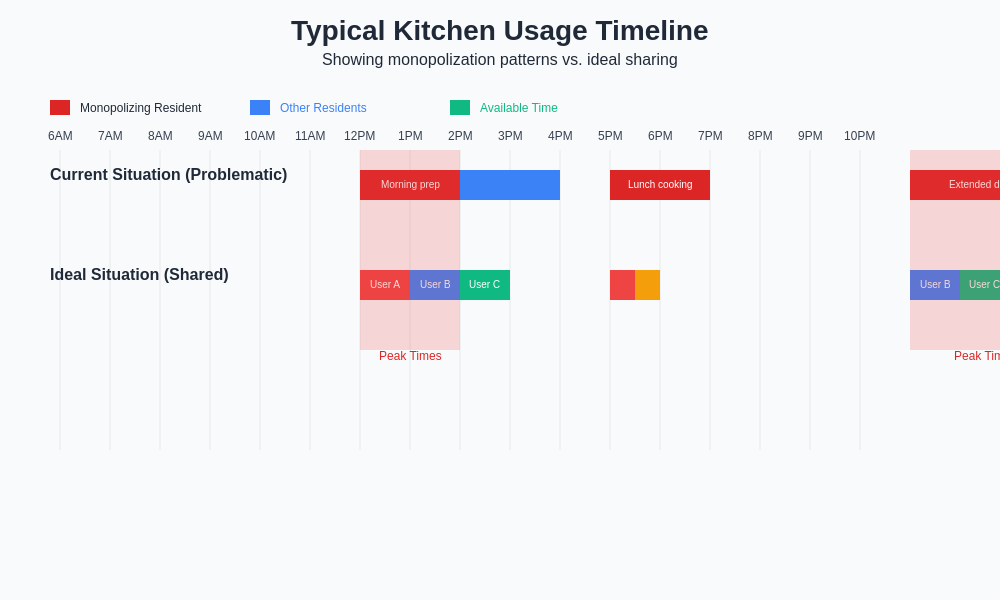
Students with irregular class schedules sometimes develop cooking routines during peak times simply because those periods coincide with their available energy and motivation levels. However, these patterns can evolve into monopolization habits that persist even when schedule changes could allow more flexible timing arrangements.
Equipment Hoarding and Preparation Expansion
Kitchen monopolization often extends beyond time occupation to include equipment hoarding behaviors where residents spread cooking projects across all available tools, burners, and preparation surfaces simultaneously. This expansion creates artificial scarcity that prevents other residents from accessing basic cooking facilities even when actual timing conflicts could be resolved through sharing strategies.
How kitchen cleaning schedules break down becomes more complex when monopolizing residents accumulate dirty dishes, preparation tools, and cooking equipment throughout extended cooking sessions without cleaning as they progress. This accumulation creates additional barriers for subsequent kitchen users who must navigate contaminated spaces and limited clean equipment availability.
Elaborate meal preparation projects that require multiple mixing bowls, cutting boards, and specialized equipment can legitimately need extensive tool access, yet monopolizing residents often fail to clean and return unused items promptly, creating unnecessary equipment shortages that extend their effective kitchen monopolization beyond actual cooking timeframes.
The psychology of equipment spreading involves unconscious territorial marking behaviors where residents establish visual ownership claims through physical object placement. Multiple cutting boards, ingredient containers, and cooking implements spread across available surfaces send implicit signals to other residents that the kitchen is currently occupied and unavailable for additional users.
Social Hierarchy and Privilege Assertion
Kitchen monopolization frequently serves as a mechanism for establishing and maintaining social hierarchy within sharehouse communities, particularly among residents who feel insecure about their status or position within the group dynamic. Extended cooking sessions can become performances of domestic competence, cultural sophistication, or lifestyle superiority that reinforce perceived social positioning.
How social hierarchies develop naturally in sharehouse environments often manifest through resource control behaviors, with kitchen access serving as a visible demonstration of influence and priority within the community structure. Residents who monopolize cooking times may unconsciously or deliberately use this behavior to assert dominance over shared resources and establish their importance within the household hierarchy.
Longer-term residents sometimes develop monopolization patterns based on seniority privilege assumptions, believing their established residence status grants them preferential access to shared facilities during desirable timeframes. This perspective creates conflict with newer residents who expect equal access rights regardless of arrival date or tenure length.
Economic privilege can influence monopolization behaviors when higher-income residents feel entitled to extended kitchen access because they contribute more substantial financial resources through rent payments, utility costs, or shared household expenses. This economic justification fails to recognize that equal facility access represents a fundamental aspect of shared living agreements regardless of individual financial contributions.
Conflict Avoidance and Communication Failures
Many residents who monopolize cooking times lack awareness of their impact on others because direct confrontation about kitchen access rarely occurs in conflict-avoidant sharehouse communities. The absence of clear feedback allows monopolization patterns to continue and intensify without the perpetrators recognizing the frustration and inconvenience they create for other residents.
How to handle roommate conflicts without moving out requires direct communication strategies that many sharehouse residents avoid due to cultural norms, language barriers, or personality preferences for indirect conflict resolution. This avoidance allows monopolization behaviors to persist and escalate without effective intervention or behavior modification.
Cultural communication styles that emphasize harmony preservation over direct confrontation can enable monopolization patterns to continue indefinitely because affected residents choose tolerance over conflict initiation. Japanese cultural norms particularly discourage direct criticism or requests that might create social tension, allowing problematic behaviors to persist without resolution.
Language barriers can prevent effective communication about kitchen scheduling needs, particularly when monopolizing residents and affected parties lack common language proficiency necessary for nuanced discussions about shared resource management and community cooperation expectations.
Time Management and Planning Deficiencies
Poor time management skills often underlie monopolization behaviors, with some residents genuinely unable to estimate accurate cooking timeframes or plan efficient meal preparation sequences that minimize kitchen occupation periods. These individuals may intend to cook quickly but consistently underestimate the time requirements for their chosen recipes and preparation methods.
How meal timing affects kitchen access becomes problematic when residents fail to plan cooking schedules that accommodate community needs and peak usage periods. Lack of advance planning leads to last-minute cooking sessions that extend into peak times when kitchen demand is highest and conflicts most likely to occur.
Procrastination patterns can drive monopolization behaviors when residents delay meal preparation until hunger becomes urgent, leading to rushed cooking sessions that paradoxically require more time due to poor planning and disorganized execution. These emergency cooking situations often occur during peak usage times when kitchen access is most competitive and monopolization most disruptive.
Perfectionist tendencies combined with poor time estimation create scenarios where residents begin cooking projects without realistic timeframe expectations, leading to extended kitchen occupation periods that exceed both their own intentions and community tolerance levels.
Solutions and Community Management Strategies
Effective monopolization prevention requires proactive community management approaches that address both practical scheduling needs and underlying psychological motivations that drive territorial kitchen behaviors. Clear scheduling systems, equipment sharing protocols, and community discussion forums can help prevent monopolization patterns from developing while maintaining respectful cooperation among residents with diverse cooking needs.
Time limit policies that restrict individual kitchen sessions during peak hours can prevent monopolization while allowing legitimate cooking needs to be met through multiple shorter sessions or off-peak scheduling arrangements. These policies require consistent enforcement and community buy-in to remain effective without creating additional conflict sources.
Equipment sharing protocols that require cleaning and return of unused items during cooking sessions can reduce artificial scarcity and equipment hoarding behaviors that extend effective monopolization periods beyond actual cooking timeframes. Clear expectations about tool usage and cleanup can minimize the space expansion that often accompanies monopolization behaviors.
Regular community meetings that address shared resource management allow residents to discuss scheduling conflicts, cooking needs, and community expectations before monopolization patterns become entrenched and disruptive. Open communication channels can prevent the conflict avoidance that often enables problematic behaviors to persist without resolution.
Educational initiatives that help residents understand cultural differences in cooking traditions, time requirements, and community expectations can reduce unconscious monopolization behaviors while promoting cross-cultural understanding and cooperation in shared living environments.
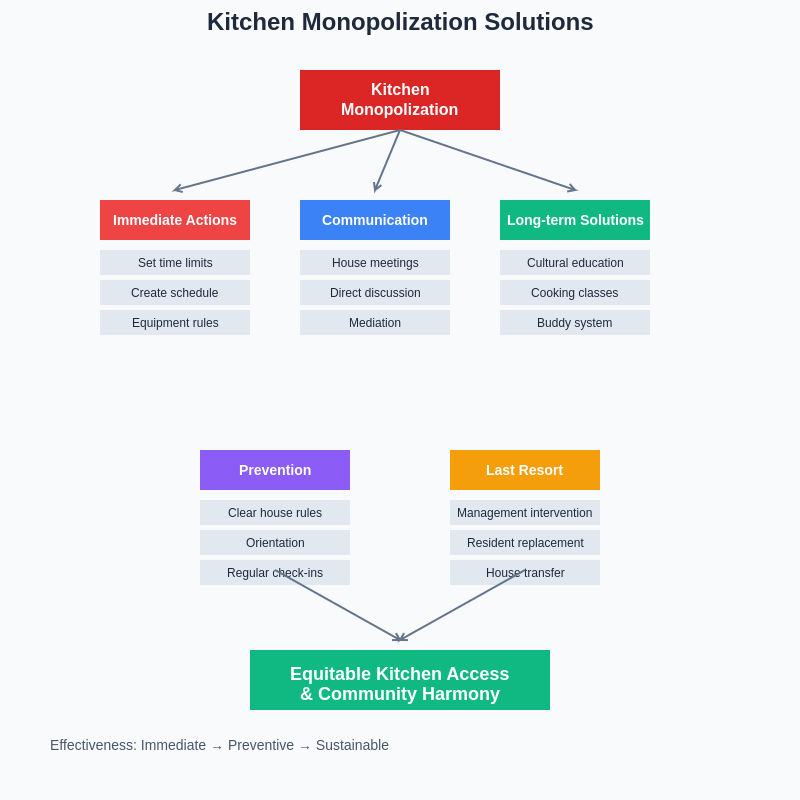
The resolution of cooking time monopolization requires recognition that this behavior serves multiple psychological and practical functions that must be addressed through comprehensive community management approaches rather than simple rule enforcement or individual behavior modification attempts. Understanding the complex motivations behind monopolization enables more effective intervention strategies that preserve community harmony while ensuring equitable access to essential shared resources.
Disclaimer
This article is for informational purposes only and reflects common patterns observed in sharehouse living situations. Individual circumstances may vary, and readers should approach roommate conflicts with sensitivity and cultural awareness. The effectiveness of suggested strategies depends on specific community dynamics, cultural backgrounds, and individual personalities involved in each situation.