
The phenomenon of residents who consistently avoid contributing to group purchases represents one of the most persistent and frustrating challenges in sharehouse living environments across Tokyo and Japan. This behavioral pattern creates tension, resentment, and financial imbalances that can destroy community harmony and force other residents to shoulder disproportionate costs for essential shared items. Understanding the underlying psychological, cultural, and economic factors that drive this behavior becomes crucial for both residents and house managers seeking to maintain fair and functional living environments.
The complexity of group purchasing dynamics in international sharehouses extends far beyond simple financial calculations, encompassing deep-seated cultural attitudes toward money, obligation, community responsibility, and individual autonomy that vary dramatically across different national and personal backgrounds. These differences create a perfect storm of misunderstanding and conflict that can escalate quickly when not addressed through clear communication and structured systems.
The Psychology of Non-Contribution
The decision to avoid group purchases rarely stems from malicious intent but rather emerges from complex psychological factors that influence how individuals perceive shared responsibility and financial obligation within temporary living arrangements. Many residents who avoid contributing operate under fundamentally different assumptions about what constitutes fair participation in communal activities and expenses.
Fear of commitment represents a primary psychological barrier for residents who view group purchases as creating ongoing obligations that extend beyond their comfort zone or planned residency duration. Living costs in Tokyo sharehouses explained reveals how financial uncertainty can amplify this anxiety, particularly among residents with variable income or uncertain visa status.
The concept of reciprocity varies significantly across cultures, with some individuals coming from backgrounds where unsolicited generosity creates uncomfortable social debts that must be repaid, while others operate under systems where individual financial independence takes precedence over collective cost-sharing. These cultural scripts operate subconsciously but powerfully influence participation decisions.
Trust issues frequently develop in houses where previous group purchases resulted in conflicts, waste, or perceived unfairness, creating learned avoidance behaviors that persist even when house dynamics improve. Residents who have experienced financial manipulation or felt pressured into unwanted purchases often develop defensive strategies that include blanket non-participation.
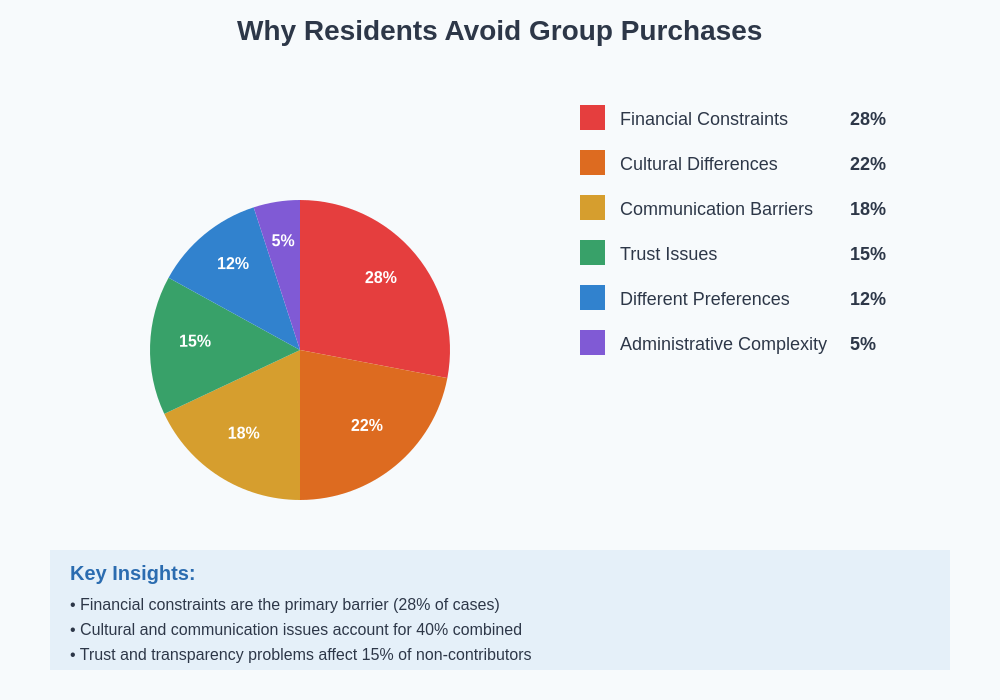
Cultural Attitudes Toward Shared Expenses
Cultural programming around money, sharing, and group responsibility creates profound differences in how residents approach collective financial decisions, often leading to seemingly incompatible approaches to group purchases that reflect broader societal values and family upbringing patterns.
Individualistic cultural backgrounds often emphasize personal financial autonomy and voluntary participation, creating residents who interpret mandatory or presumed contributions as violations of personal freedom and decision-making authority. How cultural differences impact holiday celebrations explores similar cultural tensions that manifest in financial contexts.
Collectivistic cultures may paradoxically create non-contributors when residents feel excluded from decision-making processes or perceive group purchases as insufficiently consultative, leading to passive resistance through non-participation rather than direct confrontation about procedural concerns.
Economic cultural backgrounds significantly influence attitudes toward spending on convenience items, luxury goods, or bulk purchases, with residents from resource-scarce environments often viewing such expenses as wasteful or unnecessary regardless of potential group benefits or cost savings.
Gift-giving cultures sometimes create residents who avoid group purchases because they prefer to contribute through individual generosity and personal relationship-building rather than impersonal collective financial arrangements that feel transactional rather than relationship-building.
Financial Constraints and Budget Priorities
Economic realities often drive non-participation in group purchases, particularly among residents operating on extremely tight budgets where every expense must be carefully evaluated against essential needs and long-term financial goals that may not align with house convenience purchases.
Student residents frequently face severe budget constraints that make optional group purchases genuinely unaffordable, regardless of their desire to participate in community activities. Student sharehouses near top Tokyo universities highlights how academic schedules and limited income create financial pressures that extend beyond basic living costs.
Variable income streams common among freelancers, part-time workers, and seasonal employees create unpredictable financial situations where residents cannot commit to regular group purchases without risking their ability to cover essential expenses during low-income periods.
Currency exchange fluctuations and international money transfer costs can make group purchases disproportionately expensive for residents whose income originates in other countries, particularly when exchange rates move unfavorably or transfer fees accumulate across multiple small transactions.
Hidden financial obligations such as family remittances, debt payments, or emergency savings requirements create budget pressures that are invisible to other residents but severely constrain available funds for optional purchases, even when those purchases might provide long-term savings or convenience benefits.

The demographic analysis reveals significant patterns in contribution behavior, with short-term residents and students showing higher rates of non-participation due to financial constraints and uncertain residency duration.
Communication Barriers and Misunderstandings
Language limitations and cultural communication styles create significant barriers to effective participation in group purchase discussions, often leading to withdrawal rather than engagement when residents feel unable to express their preferences, concerns, or financial constraints clearly.
Complex financial discussions require sophisticated language skills that many international residents lack, particularly when conversations involve negotiating terms, expressing preferences, or explaining personal financial situations in culturally appropriate ways. Language barriers prevent deep friendships examines how communication difficulties affect all aspects of sharehouse relationships.
Cultural communication patterns around money and obligation vary dramatically, with some cultures requiring indirect communication about financial topics while others expect direct discussion, creating misunderstandings when residents use inappropriate communication styles for their housemates’ cultural expectations.
Timing of financial discussions often conflicts with residents’ schedules, comfort levels, or cultural preferences, leading to decisions being made without input from residents who might otherwise participate if consulted through appropriate channels or at suitable times.
Non-verbal communication and social cues around group purchases operate differently across cultures, with some residents missing implicit invitations to participate while others feel pressured by what they perceive as aggressive solicitation tactics.
Trust and Transparency Issues
Previous negative experiences with group purchases create lasting trust issues that influence future participation decisions, particularly in houses with high resident turnover where new residents inherit the consequences of previous conflicts without understanding the historical context.
Financial transparency expectations vary significantly across cultures and personal backgrounds, with some residents requiring detailed accounting and receipts while others prefer simplified contribution systems, creating conflicts when houses cannot accommodate different transparency needs simultaneously.
Accountability systems for group purchases often lack clarity about who manages funds, how decisions are made, and what happens to unused money or unwanted items, creating uncertainty that drives risk-averse residents to avoid participation entirely.
Power dynamics within houses can make group purchases feel coercive or manipulative when initiated by dominant personalities or residents with unofficial leadership roles, leading to resentment and withdrawal among residents who feel their preferences are disregarded or their financial situations are not respected.
How shared expense apps create new problems reveals how technological solutions intended to improve transparency can sometimes increase confusion and create new barriers to participation among less tech-savvy residents.
Different Shopping Philosophies and Preferences
Fundamental philosophical differences about consumption, quality standards, and shopping priorities create incompatible approaches to group purchasing that reflect deeper values about materialism, environmental responsibility, and lifestyle choices.
Quality versus cost priorities divide residents between those who prefer higher-quality items that last longer and those who prioritize immediate affordability, making it difficult to reach consensus on group purchases that satisfy both philosophical approaches simultaneously.
Brand loyalty and product preferences create complications when group purchases involve specific brands or types of items that some residents strongly support or oppose based on personal experiences, ethical considerations, or cultural associations.
Environmental consciousness affects participation when residents oppose certain types of purchases due to packaging waste, product origins, or sustainability concerns that may not be shared by other house members seeking convenience or cost savings.
Shopping timing preferences vary dramatically, with some residents preferring planned bulk purchases while others prefer flexible individual shopping that accommodates changing needs and preferences without requiring advance commitment to specific items or quantities.
Bulk buying creates storage problems explores how practical concerns about storage space and product utilization can legitimately drive residents to avoid group purchases regardless of potential cost benefits.
Social Dynamics and Peer Pressure
Group dynamics within sharehouses often create social pressure around participation that can backfire by driving resistant residents to adopt defensive non-participation strategies rather than engaging in collaborative decision-making processes.
Personality conflicts between residents can extend to group purchase discussions, with non-participation serving as a form of passive resistance against individuals rather than opposition to the actual purchases, creating interpersonal tensions that complicate financial cooperation.
Social hierarchies within houses sometimes make group purchases feel like mandatory contributions to maintain social standing rather than voluntary cooperation, leading to resentment among residents who feel their autonomy is being compromised by social expectations.
Cultural concepts of saving face and avoiding public disagreement can drive residents to avoid group purchase discussions entirely rather than risk embarrassment by expressing financial constraints, different preferences, or concerns about proposed purchases.
Friend groups form and exclude others examines how social cliques within sharehouses can make group purchases feel exclusionary or politically charged rather than practical cooperation.
Administrative Complexity and Logistics
The logistical challenges of organizing group purchases often create barriers that discourage participation, particularly among residents who lack time, language skills, or cultural familiarity with Japanese shopping systems and payment methods.
Complex coordination requirements for timing, delivery, payment collection, and distribution can overwhelm busy residents who prefer simple individual purchases over collaborative processes that require ongoing communication and scheduling coordination.
Payment method complications arise when group purchases require specific payment systems, bank transfers, or cash collection methods that some residents cannot easily access or feel uncomfortable using due to security concerns or lack of familiarity.
Delivery and storage logistics create additional responsibilities that some residents cannot or will not accept, particularly when group purchases require someone to be present for deliveries, manage storage, or coordinate distribution among house members.
Online shopping deliveries overwhelm entryways highlights practical complications that make group purchases more complex than individual shopping for some residents.
Resolution Strategies and House Policies
Effective approaches to addressing non-contribution issues require understanding the underlying causes rather than simply implementing punitive measures that may increase resentment and withdrawal among residents who have legitimate reasons for avoiding group purchases.
Optional participation systems that clearly distinguish between essential shared expenses and convenience group purchases help residents make informed decisions without feeling pressured to participate in every collective financial decision.
Flexible contribution options such as allowing service contributions instead of cash, partial participation, or alternative benefit structures can accommodate residents with different financial situations or preferences while maintaining group cooperation.
Transparent communication about group purchase purposes, costs, benefits, and alternatives helps residents make informed decisions while reducing suspicion and misunderstanding that drive defensive non-participation.
How to handle roommate conflicts without moving out provides frameworks for addressing group purchase conflicts constructively before they escalate into serious relationship problems.
Regular house meetings with structured discussion formats can provide opportunities for residents to express concerns, suggest alternatives, and participate in decision-making processes that feel democratic rather than imposed by dominant personalities or informal leadership groups.
Long-term Impacts on House Dynamics
Chronic non-participation in group purchases creates lasting effects on house culture and resident relationships that extend far beyond immediate financial implications, often contributing to broader patterns of non-cooperation and community breakdown.
Financial resentment builds over time when contributing residents feel taken advantage of by non-contributors, leading to reduced willingness to organize group activities, share resources, or maintain positive relationships with residents perceived as selfish or irresponsible.
House culture deterioration occurs when group purchase conflicts create divisions between contributing and non-contributing residents, reducing overall cooperation and creating an atmosphere of suspicion and scorekeeping that affects all aspects of communal living.
Resident turnover increases in houses where group purchase conflicts create ongoing tension, as residents seek living environments where financial cooperation matches their expectations and values about shared responsibility.
Making friends through Tokyo sharehouse communities emphasizes how financial cooperation contributes to relationship-building and community formation in ways that extend beyond simple cost-sharing benefits.
The phenomenon of residents who never contribute to group purchases reflects complex intersections of cultural background, financial circumstances, communication abilities, and personal values that require nuanced understanding and flexible solutions rather than simple moral judgments. Successful sharehouses develop systems that accommodate different participation styles while maintaining fairness and community cooperation through clear communication, optional participation structures, and recognition that not all residents will approach shared expenses in the same way. Building inclusive communities requires acknowledging these differences while creating frameworks that enable cooperation without forcing conformity to single approaches to shared financial responsibility.
Disclaimer
This article is for informational purposes only and does not constitute professional advice about housing, finances, or conflict resolution. Individual experiences in sharehouses vary significantly based on location, house management, resident demographics, and cultural factors. Readers should consider their specific circumstances and seek appropriate guidance when dealing with financial conflicts or communication challenges in shared living environments. The effectiveness of suggested strategies may vary depending on house culture, resident personalities, and local customs.