The labyrinthine complexity of Tokyo’s transportation network represents one of the most formidable challenges facing international residents living in sharehouses across the metropolitan area. While some newcomers quickly adapt and navigate the intricate web of train lines, subway systems, and bus routes with confidence, a significant portion of residents remain perpetually dependent on navigation apps and struggle to develop the intuitive understanding that characterizes seasoned Tokyo inhabitants. This phenomenon extends far beyond simple geographical confusion, revealing deeper psychological, cultural, and practical barriers that can profoundly impact social integration, career opportunities, and overall quality of life in Japan’s capital city.
The inability to master Tokyo’s transportation system creates a cascade of limitations that extend into every aspect of daily life, from restricting social activities and employment opportunities to increasing reliance on expensive alternatives like taxis and ride-sharing services. Understanding why some residents never overcome these navigational challenges provides crucial insights into the broader process of cultural adaptation and the hidden obstacles that can prevent successful integration into Japanese urban life.
The Overwhelming Complexity of Tokyo’s Rail Network
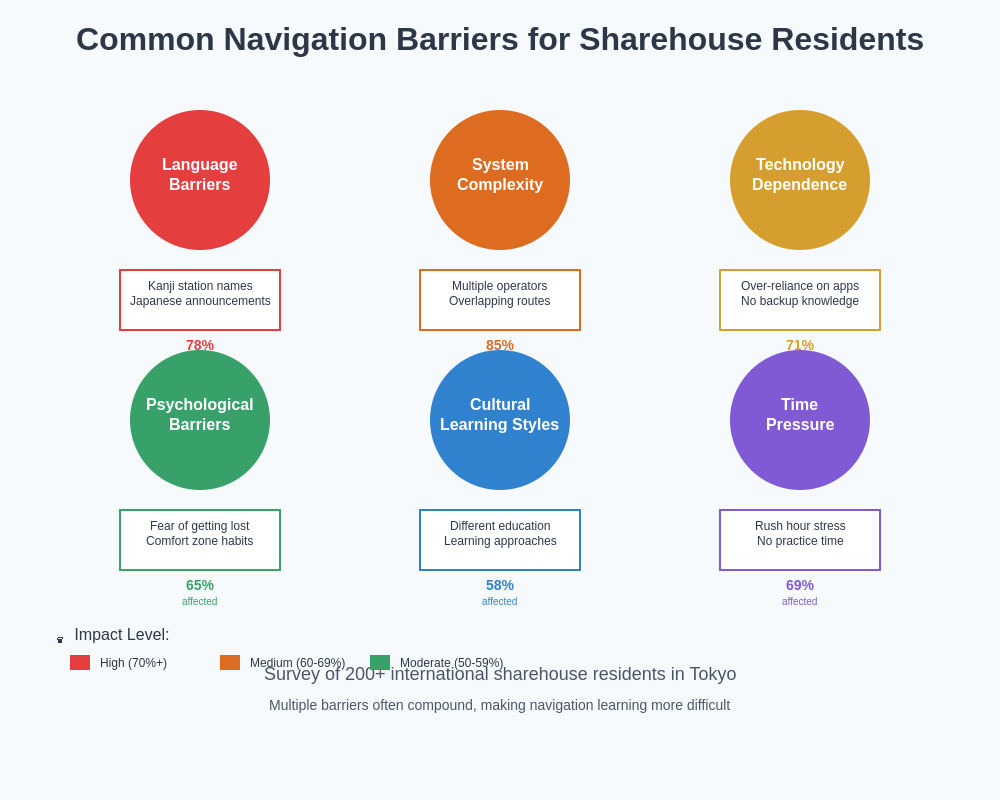
Tokyo’s transportation system represents one of the world’s most complex urban mobility networks, encompassing multiple operators, overlapping coverage areas, and pricing structures that can confuse even experienced travelers. The metropolitan area features over 280 stations connected by numerous railway companies including JR East, Tokyo Metro, Toei Subway, and various private operators, each with distinct ticketing systems, route numbering conventions, and operational characteristics that create a multilayered navigation challenge.
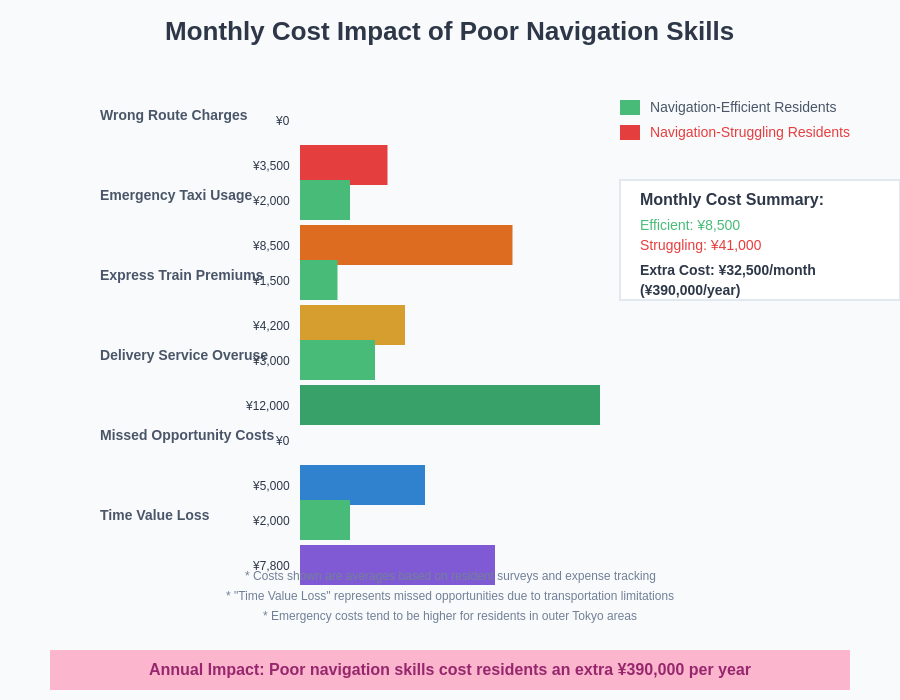
Understanding transportation costs in Tokyo sharehouses becomes essential when residents realize that navigation mistakes can significantly increase monthly expenses through wrong-route penalties, extra transfers, and emergency taxi usage. The financial pressure of making transportation errors often creates anxiety that paradoxically makes learning more difficult.
The physical infrastructure itself presents additional complications, with massive stations like Shinjuku and Tokyo Station containing dozens of platforms, multiple levels, and countless exits that can overwhelm newcomers who lack spatial reference points. The interconnected nature of the system means that understanding one line requires comprehending its relationships with connecting routes, creating a knowledge dependency that can seem insurmountable to residents who prefer step-by-step learning approaches.
Language Barriers and Information Processing Challenges
The predominance of Japanese-language signage and announcements creates fundamental information processing challenges that extend beyond simple vocabulary limitations. Many station names, route descriptions, and directional indicators rely on kanji characters that can be particularly difficult for residents from non-Asian countries to memorize and recognize quickly under pressure. Living with Japanese roommates in Tokyo sharehouses often helps with language exposure, but transportation terminology requires specialized vocabulary that may not emerge in casual conversations.
The speed requirements of train navigation compound these language challenges, as residents must process complex information quickly while managing crowds, time pressure, and multiple simultaneous decisions about routes, transfers, and destinations. The cognitive load of translating, interpreting, and decision-making in a foreign language while navigating physical spaces can overwhelm mental processing capacity, leading to reliance on familiar routes and avoidance of exploration.
Real-time information processing becomes particularly challenging during service disruptions, delays, or route changes when announcements are made rapidly in Japanese with limited English translation. These situations often force residents back into complete dependence on smartphone applications, reinforcing patterns of technological reliance rather than developing autonomous navigation skills.
Psychological Comfort Zones and Risk Aversion
Many residents develop psychological comfort zones around familiar routes that provide predictability and reduce daily stress levels, but these same comfort zones can become barriers to expanding geographical knowledge and transportation confidence. How cultural adaptation happens gradually explains how some individuals prefer incremental changes rather than comprehensive learning approaches that might involve temporary discomfort or confusion.
The fear of getting lost, missing important appointments, or experiencing public embarrassment creates risk-aversion behaviors that reinforce limited route knowledge. Residents often calculate that the temporary inconvenience of longer, familiar routes outweighs the potential benefits of learning more efficient alternatives, especially when smartphone navigation provides seemingly adequate backup support.
Social anxiety compounds these psychological barriers, particularly for residents who worry about asking for help in English or broken Japanese, or who feel self-conscious about appearing lost or confused in public spaces. The cultural emphasis on not causing trouble for others can prevent residents from seeking assistance when navigation problems arise, leading to repeated mistakes and reinforced avoidance patterns.
Technology Dependence and Digital Navigation Crutches
The widespread availability of sophisticated navigation applications creates a double-edged relationship with transportation learning, providing immediate solutions while potentially inhibiting the development of spatial awareness and route memorization skills. Many residents become completely dependent on apps like Google Maps, Hyperdia, and Y!Transit without developing backup knowledge or understanding the underlying logic of Tokyo’s transportation system.
This technological dependence becomes problematic during situations involving poor cell coverage, dead batteries, app malfunctions, or service disruptions when digital navigation becomes unreliable. How digital entertainment replaces social interaction illustrates broader patterns of technology substituting for traditional learning methods, including geographical and spatial skill development.
The instant gratification provided by navigation apps can reduce motivation for the slower, more effortful process of building mental maps and understanding transportation system logic. Residents may feel that memorizing routes is unnecessary when digital solutions provide accurate, real-time guidance, not recognizing the limitations and vulnerabilities of complete technological dependence.
Cultural Learning Styles and Educational Backgrounds
Different cultural approaches to learning and spatial reasoning can significantly influence how quickly residents adapt to Tokyo’s transportation complexity. Educational backgrounds emphasizing rote memorization versus systematic understanding, individual versus collaborative learning, and visual versus auditory processing all affect how individuals approach the challenge of mastering urban navigation.
How different learning styles clash in sharehouse environments often extends to transportation learning, where residents from cultures emphasizing detailed planning may struggle with Tokyo’s requirement for flexible, adaptive navigation strategies. Some educational systems prioritize theoretical knowledge over practical application skills, leaving graduates unprepared for the hands-on learning required for transportation mastery.
The absence of formal transportation education or orientation programs for international residents means that most learning occurs through trial and error, a process that can be particularly challenging for individuals who prefer structured, systematic instruction with clear progression markers and measurable outcomes.
Social and Professional Impact of Navigation Limitations
The inability to navigate Tokyo’s transportation system independently creates cascading effects on social relationships, professional opportunities, and community integration that can persist throughout residents’ time in Japan. Making friends through Tokyo sharehouse communities becomes more difficult when residents cannot reliably reach social gatherings, cultural events, or recreational activities without extensive planning and assistance.
Professional limitations emerge when job opportunities require travel to unfamiliar areas, attendance at networking events in different districts, or client meetings in locations outside familiar routes. Employers may view transportation independence as a basic competency requirement, particularly for positions involving business travel or customer visits across Tokyo’s metropolitan area.
The social dynamics within sharehouses can also be affected when some residents consistently require transportation assistance or guidance from housemates, creating dependency relationships that may strain friendships and community harmony over time. Dating while living in Tokyo sharehouses becomes particularly challenging when navigation limitations restrict spontaneous social activities or require constant coordination with more experienced residents.
Economic Consequences of Poor Navigation Skills
The financial implications of inadequate transportation knowledge extend beyond obvious costs like wrong-route charges and excess transfer fees to include broader economic impacts on entertainment, shopping, employment, and emergency expenses. How commute times impact work performance demonstrates how navigation inefficiencies can affect career progression and income potential through reduced productivity and missed opportunities.
Residents who cannot navigate independently often resort to expensive alternatives including taxi services, premium express trains, and delivery services that substitute for personal transportation to shopping and entertainment destinations. These costs accumulate significantly over time, potentially adding thousands of yen monthly to living expenses that could otherwise be minimized through efficient public transportation usage.
The opportunity costs include missed job interviews in unfamiliar areas, avoided social events requiring complex transportation, and limited access to better shopping options or services that require venturing beyond familiar routes. How convenience store proximity affects daily costs shows how transportation limitations can force residents into more expensive shopping patterns when they cannot access diverse retail options.
Strategies for Overcoming Navigation Barriers
Successful transportation learning requires systematic approaches that address both practical skills and psychological barriers while building confidence through gradual expansion of geographical knowledge. How to find perfect sharehouse in Tokyo includes location selection strategies that can reduce transportation complexity during the initial adaptation period.
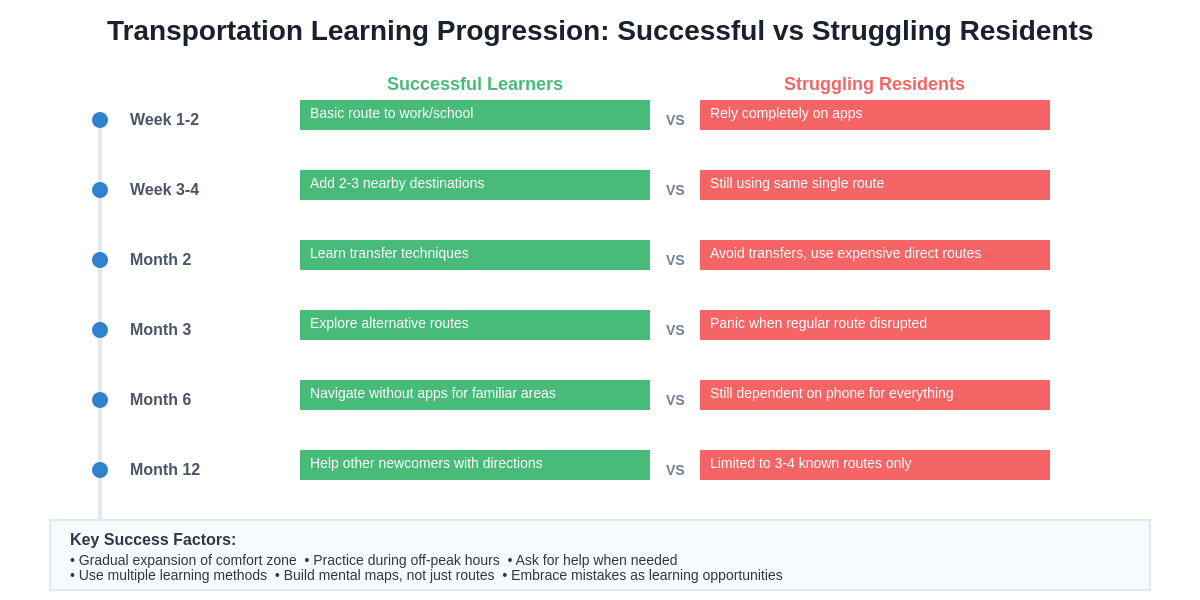
Progressive route learning involves starting with single-line destinations and gradually adding transfer points, alternative routes, and backup options while building mental maps of station relationships and geographical orientation. Practice during non-peak hours reduces pressure and allows for mistakes without significant time consequences or crowd-related stress.
Collaborative learning with experienced housemates or local friends can provide guided exposure to new routes while building confidence through shared navigation experiences. How language exchange programs work in sharehouses often include transportation vocabulary and practical navigation practice as components of cultural exchange activities.
Long-term Adaptation and Skill Development
The development of transportation independence represents a significant milestone in cultural adaptation that enables broader exploration, social integration, and professional opportunities throughout Tokyo and surrounding regions. Residents who overcome initial navigation barriers often discover increased confidence for tackling other cultural and practical challenges in Japanese society.
The skills developed through transportation mastery including spatial reasoning, pattern recognition, cultural observation, and stress management under uncertainty transfer to other aspects of life in Japan and contribute to overall adaptability and resilience. How problem-solving skills improve through daily challenges illustrates how navigation competency builds broader life skills and cultural confidence.
Understanding Tokyo’s transportation system also provides insights into Japanese organizational principles, efficiency priorities, and urban planning philosophy that enhance cultural understanding and appreciation beyond simple mobility benefits. The ability to navigate independently transforms Tokyo from an overwhelming maze into an accessible urban environment full of opportunities for exploration and discovery.
The phenomenon of residents never learning train routes reflects broader challenges of cultural adaptation, learning style differences, and psychological barriers that can persist without conscious effort to address underlying causes. Recognition of these barriers represents the first step toward developing effective strategies for building transportation independence and unlocking the full potential of life in one of the world’s most dynamic cities. The investment in navigation skills pays dividends through increased social opportunities, professional flexibility, economic efficiency, and cultural confidence that enhance every aspect of the Tokyo experience.
Disclaimer
This article is for informational purposes only and reflects observations about common challenges faced by international residents in Tokyo. Individual experiences with transportation learning may vary significantly based on personal factors, educational background, and circumstances. Readers should seek appropriate resources and support for their specific transportation learning needs. The observations presented are based on general patterns and should not be considered as professional advice for navigation or cultural adaptation strategies.