The phenomenon of residents who consistently avoid participating in sharehouse activities represents one of the most puzzling and sometimes frustrating aspects of communal living in Tokyo. While many international residents embrace the social opportunities that sharehouses provide, a significant portion remain perpetually absent from group gatherings, cultural events, and community-building initiatives. Understanding the complex web of factors that drive this behavior reveals deeper insights into human psychology, cultural adaptation challenges, and the diverse motivations that bring people to sharehouse living.
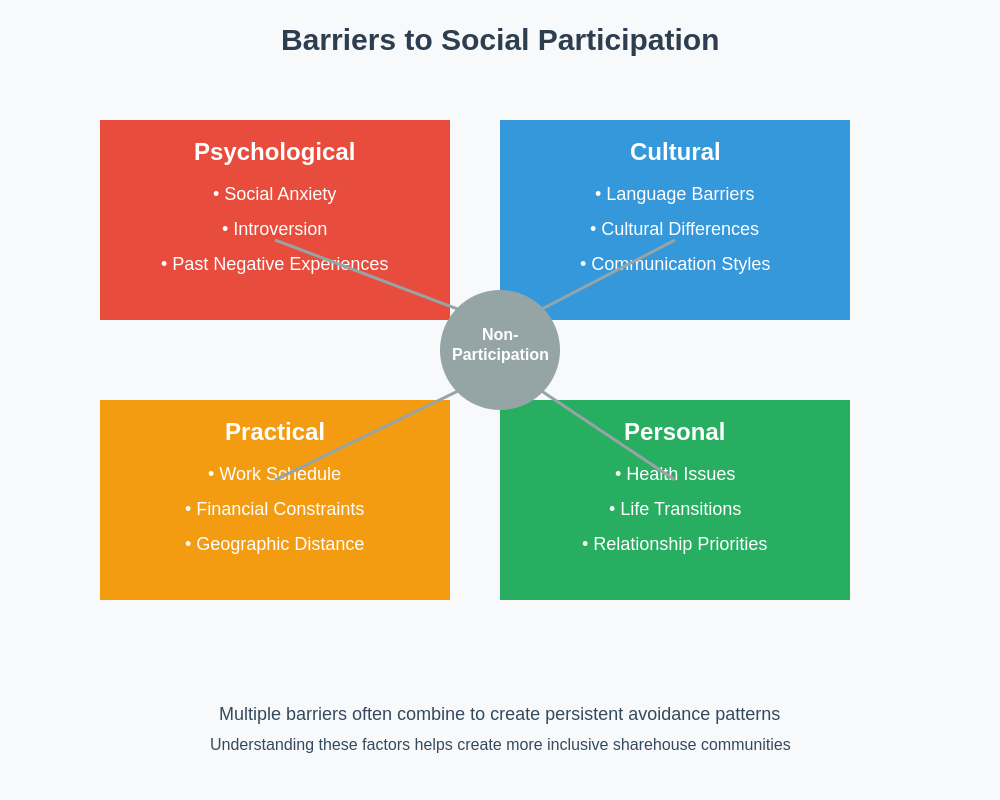
The reasons behind non-participation extend far beyond simple antisocial tendencies or lack of interest in community building. These patterns often reflect deeply personal struggles, cultural misunderstandings, economic pressures, and psychological barriers that create invisible walls between residents and their communities. Recognizing these underlying causes helps both house managers and fellow residents develop more inclusive approaches to community engagement while respecting individual boundaries and preferences.
The Psychology of Social Avoidance in Shared Living
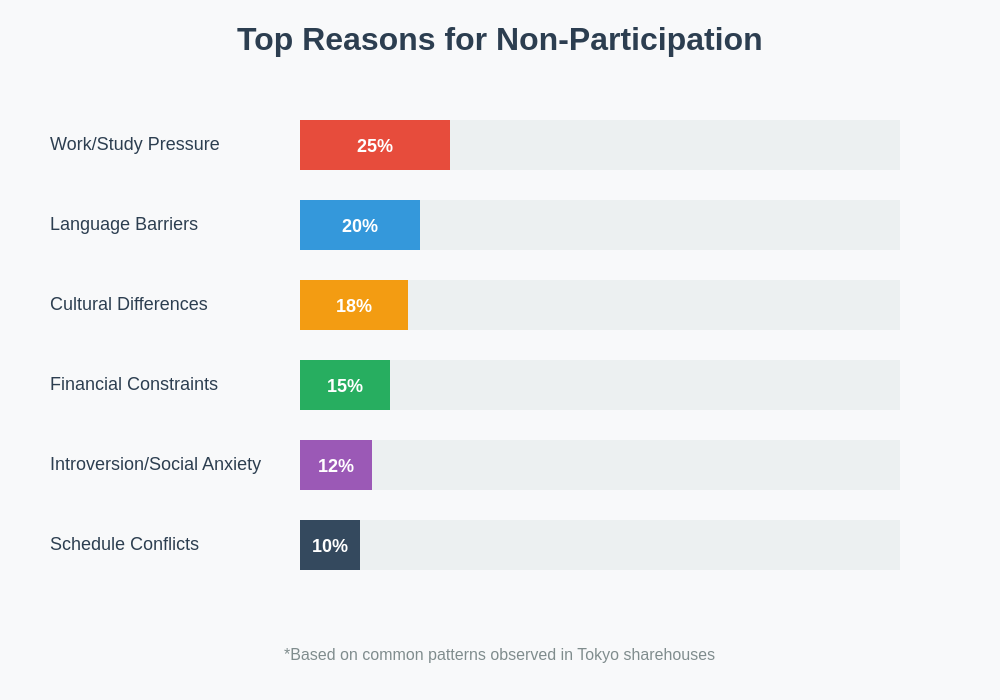
Social avoidance in sharehouse environments often stems from complex psychological factors that have little to do with the quality of activities or the friendliness of other residents. Many individuals who choose sharehouse living do so for practical rather than social reasons, seeking affordable accommodation rather than community connection. This fundamental difference in motivation creates a disconnect between expectations and reality that can lead to persistent non-participation.
Introversion plays a significant role in determining participation levels, but the relationship between personality type and social engagement in sharehouses is more nuanced than simple categorizations might suggest. How cultural differences affect friendship building explores how personality traits interact with cultural backgrounds to create unique challenges for some residents in group settings.
The concept of social battery depletion affects many residents who work in customer-facing roles, attend intensive language schools, or navigate demanding academic programs throughout their day. After hours of forced social interaction in professional or educational contexts, the prospect of additional group activities can feel overwhelming rather than rejuvenating, leading to consistent avoidance of optional social events.
Anxiety disorders and social phobias, while often undiagnosed or unacknowledged, significantly impact participation rates in communal activities. The prospect of group interactions with people from diverse cultural backgrounds can trigger intense anxiety for individuals who struggle with social confidence, particularly when language barriers compound existing insecurities about fitting in or being misunderstood.
Cultural Barriers and Communication Challenges
Cultural conditioning around group participation varies dramatically across different societies, creating invisible barriers that prevent some residents from engaging with community activities. Many cultures prioritize individual achievement and personal space over communal activities, leading residents from these backgrounds to view constant social events as unnecessary or even intrusive.
Language proficiency concerns represent one of the most significant barriers to participation, affecting not only non-native Japanese speakers but also international residents whose English skills may be limited. The fear of misunderstanding instructions, missing cultural references, or struggling to express themselves adequately in group discussions creates powerful incentives to avoid situations where these limitations might become apparent.
Why language barriers prevent deep friendships examines how communication difficulties extend beyond basic conversation to affect emotional connection and group dynamics. Residents who experience repeated frustrations in group settings often develop learned helplessness about social participation, choosing isolation over the stress of attempted engagement.
Religious or cultural dietary restrictions can create practical barriers to participation in food-centered activities, which represent a large percentage of sharehouse social events. Residents who cannot participate in cooking activities, shared meals, or cultural food exchanges may feel excluded from core community experiences, leading them to withdraw from other activities as well.
Different cultural concepts of privacy and appropriate social boundaries can make some residents uncomfortable with the level of personal sharing and emotional openness that characterizes many sharehouse activities. What feels like healthy community building to residents from some cultures may feel invasive or inappropriate to others, creating fundamental incompatibilities in social expectations.
Economic and Practical Constraints
Financial limitations significantly impact participation in sharehouse activities, particularly for residents operating on tight budgets who cannot afford the additional expenses associated with group outings, restaurant visits, or entertainment activities. How student budgets require different strategies reveals how economic pressures create invisible barriers to social participation.
Work schedule conflicts represent another major practical barrier, particularly for residents employed in hospitality, healthcare, or other industries requiring irregular hours. Shift workers, part-time employees juggling multiple jobs, and international students balancing work and study obligations often find themselves unavailable during peak activity times when most events are scheduled.
The hidden costs of social participation extend beyond obvious expenses to include transportation, appropriate clothing, and the opportunity cost of time that could be spent earning money or completing essential tasks. For residents living paycheck to paycheck, choosing between social activities and financial stability becomes a recurring source of stress and exclusion.
Geographic constraints also play a role when sharehouse activities require travel to central Tokyo areas that may be expensive or time-consuming to reach. How commute times impact your quality of life explores how location-based challenges affect residents’ ability and willingness to participate in group activities that extend their daily travel burden.
Personal Life Circumstances and Priorities
Major life transitions often cause residents to withdraw from social activities as they focus mental and emotional energy on navigating significant changes. Recent arrivals to Japan may be overwhelmed by the practical challenges of establishing themselves in a new country, while residents preparing for major moves, job changes, or relationship developments may lack the bandwidth for additional social commitments.
Academic and professional pressures can consume available time and mental energy, particularly during exam periods, thesis deadlines, or crucial career development phases. Why exam periods create stress for everyone examines how individual academic pressure affects entire house dynamics and participation patterns.
Health issues, both physical and mental, significantly impact social participation even when residents prefer not to disclose their conditions to housemates. Chronic illness, depression, anxiety disorders, and other health challenges can make social activities feel impossible rather than enjoyable, leading to patterns of avoidance that may be misinterpreted as antisocial behavior.
Romantic relationships and dating priorities can shift residents’ focus away from house-based social activities toward building connections outside the sharehouse community. Dating while living in Tokyo sharehouses explores how relationship development can affect community participation patterns and house dynamics.
Previous Negative Experiences and Learned Avoidance
Past negative experiences in group settings, whether in previous sharehouses or other communal living situations, can create lasting aversions to social participation. Residents who have experienced bullying, exclusion, cultural insensitivity, or social conflict may develop protective mechanisms that involve avoiding situations where similar problems could arise.
House drama and interpersonal conflicts can have lasting effects on participation patterns, particularly when residents feel that activities have become venues for social politics or exclusionary behavior. How breakups affect entire house dynamics examines how relationship conflicts can create ripple effects that impact community participation.
Unsuccessful attempts at integration can lead to learned helplessness about social connection, particularly for residents who have made genuine efforts to participate but felt consistently misunderstood, ignored, or marginalized during group activities. Repeated experiences of social failure can create powerful psychological barriers to future participation attempts.
Cultural misunderstandings that result in embarrassment, offense, or social awkwardness can create lasting reluctance to engage in group settings. Residents who have inadvertently violated cultural norms or made social mistakes may withdraw from activities to avoid repeating these uncomfortable experiences.
Work and Study-Related Stress Factors
Professional obligations and career development priorities often compete directly with social activities for time and energy allocation. Residents in demanding careers or intensive study programs may view social participation as a luxury they cannot afford rather than as an essential component of their living experience.
Language school schedules and homework requirements can create significant time constraints for international students who are already struggling to balance academic demands with work obligations and basic life maintenance tasks. How academic deadlines affect house mood explores how educational pressure impacts entire sharehouse communities.
Professional networking priorities may lead residents to focus their social energy on industry events and career-building activities rather than house-based social gatherings. For residents using their Japan experience primarily for career advancement, sharehouse activities may seem less valuable than professional development opportunities.
Remote work arrangements can blur the boundaries between home and office, making it difficult for residents to separate their living space from their work environment. When the sharehouse serves primarily as an office, social activities may feel like unwelcome intrusions into productive work time.
Personality Types and Individual Preferences
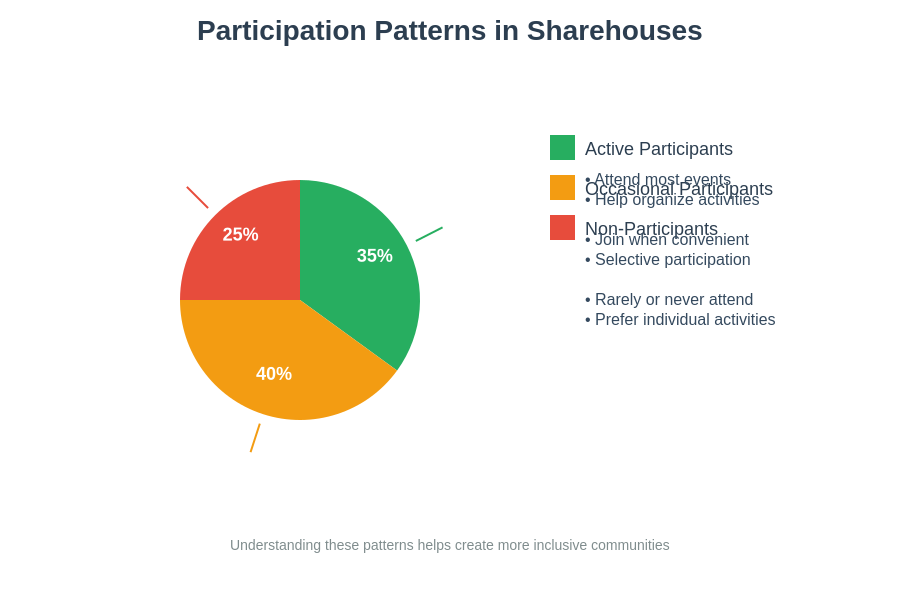
Some residents genuinely prefer solitary activities and find group events draining rather than energizing, regardless of how well-organized or inclusive these activities might be. Respecting these individual preferences while maintaining community cohesion requires understanding that social participation cannot be universally mandated or expected.
Creative pursuits and personal hobbies may provide more satisfaction than group activities for residents who have developed strong individual interests and skills. How art projects take over common areas examines how individual creative activities can sometimes conflict with communal space usage and group activity schedules.
Different entertainment preferences and leisure activity interests can create natural divisions within sharehouse communities, leading some residents to feel that organized activities do not align with their personal tastes or values. Residents interested in outdoor activities may feel excluded by indoor-focused events, while those preferring quiet activities may avoid high-energy group gatherings.
The need for personal space and alone time varies significantly among individuals, with some residents requiring substantial periods of solitude to maintain their mental health and emotional well-being. For these individuals, frequent group activities may feel overwhelming rather than welcoming, leading to avoidance patterns that protect their psychological needs.
Mental Health and Emotional Well-being Factors
Depression and anxiety disorders significantly impact social participation, often creating invisible barriers that prevent residents from engaging with community activities even when they genuinely want to participate. How mental health support varies in sharehouses explores how psychological factors affect communal living experiences.
Seasonal affective disorder and cultural adjustment depression can create cyclical patterns of social withdrawal that coincide with specific times of year or stages of cultural adaptation. Residents experiencing these conditions may participate actively during certain periods while completely avoiding activities during others.
Social anxiety specifically related to group settings can make even enjoyable activities feel impossible to attend. The fear of judgment, embarrassment, or social mistakes can be so overwhelming that residents choose isolation over the risk of negative social experiences, even when they recognize the potential benefits of participation.
Homesickness and cultural grief can manifest as withdrawal from activities that highlight cultural differences or remind residents of what they miss from their home countries. Why homesickness hits differently in shared spaces examines how cultural displacement affects social engagement patterns.
Creating More Inclusive Community Approaches
Understanding the diverse reasons behind non-participation enables sharehouse communities to develop more inclusive approaches that respect individual differences while maintaining opportunities for social connection. This might include offering various types of activities that cater to different personality types, schedules, and comfort levels rather than expecting universal participation in single-format events.
Providing multiple ways to contribute to community life can help residents feel connected without requiring attendance at traditional social gatherings. Some residents may prefer contributing through practical tasks, skill-sharing, or one-on-one interactions rather than group activities, and these alternative forms of engagement should be valued equally.
Reducing financial barriers to participation through free or low-cost activity options can increase accessibility for budget-conscious residents. Making friends through Tokyo sharehouse communities explores various approaches to community building that accommodate different economic circumstances.
Creating smaller, more intimate gathering options can help residents who find large group settings overwhelming while still providing social connection opportunities. Some individuals may thrive in pairs or small groups while finding larger gatherings intimidating or draining.
The key to building inclusive sharehouse communities lies in recognizing that participation takes many forms and that forced socialization often backfires by creating additional stress and resistance. Respecting individual choices while maintaining welcoming environments for those who do wish to participate creates the healthiest balance for diverse communities navigating the complex dynamics of shared living in Tokyo’s unique cultural environment.
Disclaimer
This article is for informational purposes only and does not constitute professional mental health or social advice. The experiences and challenges described reflect common patterns observed in sharehouse living but may not apply to all situations or individuals. Readers experiencing persistent social difficulties or mental health concerns should consult with appropriate professional support services. Community dynamics vary significantly between different sharehouses and cultural contexts.