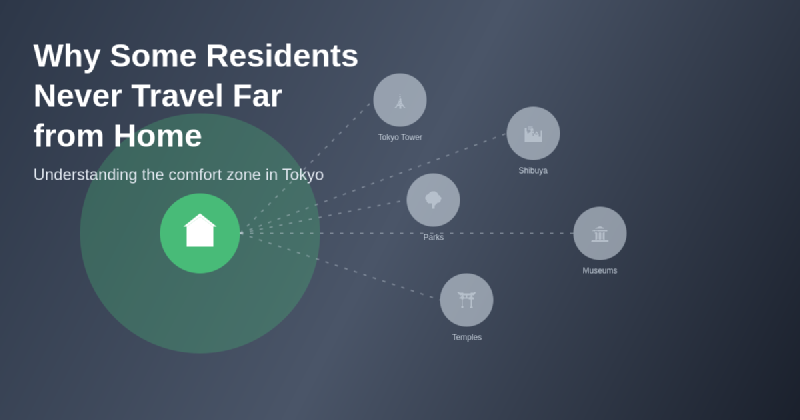
Living in a sharehouse in Tokyo opens up countless opportunities for exploration and adventure, yet a surprising number of international residents find themselves anchored to their immediate neighborhoods, rarely venturing beyond the familiar boundaries of their local train stations and convenience stores. This phenomenon represents more than simple laziness or lack of curiosity, revealing complex layers of psychological adaptation, financial constraints, cultural overwhelm, and the unexpected comfort that comes from establishing predictable routines in an otherwise chaotic metropolitan environment.
The tendency to remain close to home affects residents across all demographics and backgrounds, from budget-conscious students to well-paid professionals, suggesting that the underlying factors transcend simple economic considerations. Understanding these motivations provides insight into the complex relationship between international residents and their adopted city, highlighting both the challenges of cultural integration and the human need for security and familiarity in unfamiliar environments.
The Comfort Zone Phenomenon in Foreign Living
International residents arriving in Tokyo often experience an initial period of intense exploration and discovery, eagerly visiting famous landmarks, trying new restaurants, and immersing themselves in the city’s vibrant culture. However, this enthusiasm frequently gives way to a gradual retreat into increasingly smaller geographical circles, centered around their sharehouse, workplace, and a handful of familiar establishments that provide comfort and predictability in an otherwise overwhelming urban landscape.
The psychological concept of the comfort zone becomes particularly pronounced for foreigners navigating cultural and linguistic barriers that make every interaction potentially stressful or embarrassing. Making friends through Tokyo sharehouse communities often becomes the primary social outlet, reducing the perceived need to venture into unfamiliar territory where communication challenges and cultural misunderstandings might occur.
This geographical restriction develops gradually and often unconsciously, as residents establish routines that minimize stress and maximize familiarity. The local convenience store clerk who recognizes them, the nearby restaurant where they can order without confusion, and the train route they know by heart become anchoring points that provide emotional security in an environment that can otherwise feel unpredictable and challenging.
Financial Constraints and Budget Consciousness
Economic factors play a significant role in limiting travel patterns among sharehouse residents, particularly those on student visas or entry-level employment contracts that provide minimal disposable income for exploration and entertainment. Living costs in Tokyo sharehouses explained demonstrates how even basic living expenses can consume the majority of available funds, leaving little room for transportation costs, dining out, or tourist activities that would encourage broader exploration.
Transportation expenses in Tokyo, while efficient, can accumulate quickly for residents who lack commuter passes covering extensive areas. A round trip to distant neighborhoods or tourist destinations can cost several thousand yen, representing a significant portion of weekly discretionary spending for budget-conscious residents. This economic reality naturally encourages residents to seek entertainment and social activities within walking distance or accessible via their existing commuter routes.
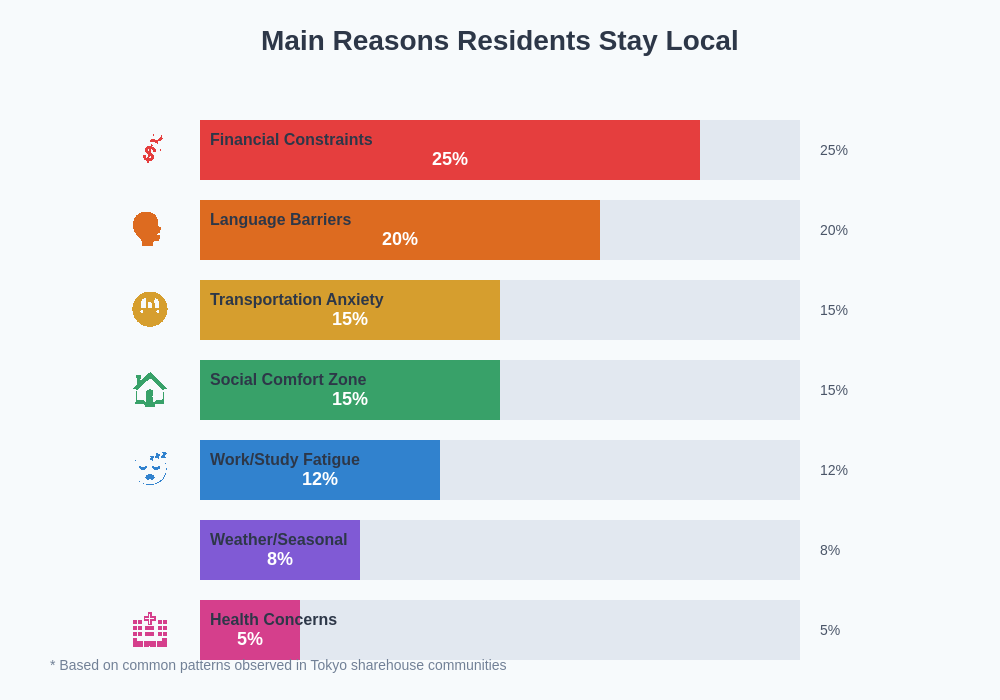
The psychological impact of financial stress extends beyond simple budgetary constraints, creating anxiety around spending that can make residents hesitant to explore expensive areas or participate in activities that might lead to unexpected costs. This financial anxiety often becomes self-reinforcing, as residents avoid situations where they might feel pressured to spend money they cannot afford, further limiting their geographical and social exploration.
Many residents develop sophisticated strategies for entertainment and social interaction that require minimal financial investment, focusing on free local events, parks, and community spaces within their immediate vicinity. These patterns, while financially sensible, can inadvertently create lifestyle restrictions that persist even when financial situations improve.
Language Barriers and Communication Anxiety
The linguistic challenges of navigating Tokyo extend far beyond basic conversation, encompassing complex systems of etiquette, non-verbal communication, and cultural context that can make even simple interactions feel daunting for non-native speakers. Japanese sharehouse rules every foreigner should know illustrates how cultural and linguistic complexity affects daily life, but these challenges become magnified when venturing into unfamiliar areas where established support systems and familiar faces are unavailable.
Residents often develop comfort with specific local establishments where staff members have learned to accommodate their language limitations or where menu systems and ordering processes have become familiar through repetition. Venturing into new areas requires reestablishing these communication patterns, a process that can feel exhausting and stressful for individuals already managing the daily challenges of living in a foreign language environment.
The fear of embarrassment or misunderstanding can be particularly paralyzing in Japanese culture, where social harmony and avoiding inconvenience to others are highly valued. Residents may avoid situations where their language limitations could cause problems or create awkwardness, preferring to stay within environments where they feel confident in their ability to communicate effectively and appropriately.
Technology provides some mitigation through translation apps and digital resources, but the cognitive load of constantly processing foreign language information, combined with cultural interpretation requirements, can create mental fatigue that makes staying local feel like a necessary form of self-care and energy conservation.
Social Anxiety and Cultural Overwhelm
The social dynamics of Tokyo sharehouse living can inadvertently contribute to geographical restriction, particularly for residents who struggle with social anxiety or cultural adaptation challenges. Living with Japanese roommates in Tokyo sharehouses highlights how cross-cultural interactions require constant attention and energy, leaving some residents emotionally depleted and seeking solitude or familiar environments for recovery and recharging.
Cultural overwhelm represents a legitimate psychological phenomenon where the constant processing of unfamiliar social cues, behavioral expectations, and environmental stimuli creates chronic stress that can be alleviated through geographical restriction and routine establishment. Some residents find that limiting their exploration allows them to focus their cultural adaptation energy on mastering their immediate environment rather than spreading their efforts across multiple unfamiliar contexts.
The pressure to constantly learn and adapt can become exhausting, particularly for residents who feel expected to embrace every aspect of Japanese culture enthusiastically. Creating boundaries around exploration and cultural engagement can represent a healthy coping mechanism that prevents burnout and allows for sustainable long-term adaptation at a comfortable pace.
Social comparison with other international residents who appear to be thriving and exploring extensively can create additional pressure and anxiety that paradoxically reduces motivation to venture beyond safe, familiar territories. The fear of not measuring up to perceived expectations or standards can create a defensive retreat into known environments where competence and comfort are assured.
Transportation Intimidation and System Complexity
Tokyo’s extensive transportation network, while impressively comprehensive, can feel overwhelming and intimidating for residents who have established familiarity with only limited routes and stations. How commute times impact your quality of life touches on transportation considerations, but the psychological barriers to exploring unfamiliar train lines and navigation systems can be significant for residents who prefer predictability and control over their travel experiences.
The complexity of fare systems, multiple train operators, and navigation requirements can create cognitive overload that makes local exploration feel more appealing than venturing into unknown transportation territory. Residents often develop expertise with specific routes while remaining completely unfamiliar with alternative options, creating practical barriers to broader exploration that require significant mental effort to overcome.
Rush hour crowding, platform confusion, and the social pressure to navigate efficiently without disrupting other passengers can create anxiety around transportation that encourages residents to minimize their travel and stick to familiar, well-practiced routes. The fear of getting lost, missing connections, or creating social disruption can outweigh the potential benefits of exploration.
Some residents develop transportation anxiety that extends beyond practical concerns to include fears about emergency situations, communication difficulties, or being unable to return home safely. These anxieties, while often disproportionate to actual risks, can create powerful psychological barriers that effectively limit geographical exploration and encourage reliance on familiar, proven transportation routes.

Work Schedule Constraints and Energy Management
The demanding work culture in Tokyo, combined with long commute times and social obligations within sharehouse communities, can leave residents with limited time and energy for exploration and adventure. How shift work schedules affect roommate relations illustrates how work patterns affect daily life, but the cumulative impact of professional demands, cultural adaptation stress, and social responsibilities can create lifestyle patterns that prioritize rest and routine over exploration and discovery.
Many residents find that their free time is consumed by essential activities such as shopping, laundry, communication with family and friends back home, and recovery from the physical and mental demands of adapting to Tokyo life. The energy required for exploration and cultural engagement competes with basic self-care needs, often losing priority when residents feel overwhelmed or exhausted.
Weekend and holiday periods, which might seem ideal for exploration, often become precious opportunities for rest, solitude, and familiar activities that restore energy rather than deplete it further. The pressure to maximize limited free time can paradoxically reduce motivation to engage in activities that require planning, energy, and potential stress or disappointment.
Work-related stress and professional pressures can create a psychological need for predictability and control in personal life, leading residents to seek comfort and familiarity rather than challenge and adventure during their limited personal time. This pattern can become self-reinforcing as residents develop strong associations between home environments and stress relief.
Health and Wellness Considerations
Physical and mental health factors can significantly influence travel patterns and exploration habits among sharehouse residents, particularly those dealing with chronic conditions, seasonal depression, or the general health impacts of cultural adaptation stress. Why seasonal depression affects house dynamics explores mental health considerations in shared living environments, but individual health challenges can create additional barriers to geographical exploration and social engagement.
Some residents develop health routines and support systems that are geographically specific, including relationships with local healthcare providers, pharmacies, and wellness resources that provide essential stability and security. Venturing far from these established support systems can create anxiety and practical difficulties for residents managing ongoing health concerns or adapting to different healthcare systems and practices.
Air quality concerns, seasonal allergies, and other environmental health factors can make certain areas of Tokyo less appealing or comfortable for residents with specific sensitivities or conditions. How air quality concerns affect daily decisions relates to environmental health considerations that can influence geographical preferences and travel patterns.
The stress of constant cultural adaptation can manifest in physical symptoms and health challenges that require careful management and self-care practices. Some residents find that maintaining health and wellness requires limiting stimulation and stress, which can naturally restrict exploration and encourage focus on familiar, comfortable environments that support rather than challenge their well-being.
Technology Dependence and Digital Comfort Zones
Modern technology provides unprecedented access to entertainment, social connection, and cultural content without requiring physical travel or geographical exploration. Many sharehouse residents develop rich digital lives that satisfy their curiosity and social needs without venturing beyond their immediate neighborhoods, creating virtual comfort zones that reduce motivation for physical exploration and adventure.
Streaming services, social media, video games, and online communities can provide compelling alternatives to local exploration, particularly for residents who feel overwhelmed by cultural adaptation challenges or financial constraints. The convenience and comfort of digital entertainment can inadvertently reduce engagement with local culture and community activities that might encourage broader geographical exploration.
Online shopping and delivery services eliminate many practical reasons for traveling to different areas of Tokyo, allowing residents to access goods, services, and entertainment without leaving their familiar local environment. While convenient, this technological infrastructure can reduce organic opportunities for discovery and exploration that might arise from practical necessities.
The digital representation of Tokyo through apps, websites, and virtual tours can create a false sense of familiarity and exploration that substitutes for actual physical engagement with the city. Some residents develop extensive knowledge about Tokyo attractions and neighborhoods through digital research while lacking actual experience visiting these locations.
Seasonal and Weather-Related Factors
Tokyo’s climate extremes, from humid summers to cold winters, can significantly impact residents’ motivation and ability to explore beyond their immediate neighborhoods. How summer heat makes small rooms unbearable touches on seasonal comfort issues, but weather-related challenges extend beyond housing conditions to include transportation comfort, outdoor activity limitations, and energy levels that affect exploration patterns throughout the year.
The rainy season creates particular challenges for exploration and outdoor activities, encouraging residents to develop indoor routines and entertainment options that don’t require extensive travel or exposure to uncomfortable weather conditions. These seasonal patterns can become habitual, extending beyond weather-specific periods to create year-round preferences for local activities and familiar environments.
Extreme weather conditions can exacerbate other barriers to exploration, such as transportation anxiety or financial constraints, creating compounding effects that strongly discourage adventure and geographical expansion. Residents may develop seasonal affective responses that reduce motivation and energy for exploration during challenging weather periods.
Cultural adaptation to Japanese seasonal customs and expectations can require significant energy and attention, leaving residents with reduced capacity for geographical exploration and cultural engagement beyond their immediate environment. The social and practical demands of navigating seasonal changes in a foreign culture can consume resources that might otherwise support broader exploration and adventure.
Community Dynamics and Social Satisfaction
The social environment within sharehouses can inadvertently discourage exploration by providing sufficient social stimulation and cultural exchange without requiring residents to venture beyond their immediate living community. Real stories from Tokyo sharehouse residents demonstrates how house communities can become primary social environments that meet residents’ needs for friendship, cultural exchange, and entertainment.
Strong house communities can create social ecosystems that feel complete and satisfying, reducing the perceived need or motivation to seek additional social opportunities or cultural experiences in the broader Tokyo area. Residents may develop deep friendships and social routines within their sharehouse that provide sufficient stimulation and support without requiring geographical expansion.
The convenience of having built-in social networks and cultural exchange opportunities within walking distance can make external exploration feel unnecessary or even disruptive to established relationships and routines. Some residents worry that spending time exploring alone or with other friends might negatively impact their house community relationships or social standing.
Social pressure within sharehouses can sometimes favor residents who contribute to house culture and community activities over those who frequently venture out independently. This dynamic can create subtle discouragement for exploration and adventure that conflicts with community engagement expectations and social harmony within the living environment.
Long-term Adaptation Patterns and Lifestyle Evolution
The tendency to remain geographically restricted often represents a transitional phase in cultural adaptation rather than a permanent lifestyle choice, reflecting the natural process of establishing security and familiarity before expanding comfort zones and exploration patterns. How cultural adaptation happens gradually relates to this process of incremental adjustment and growth that many international residents experience.
Some residents develop sophisticated local expertise and deep neighborhood knowledge that provides rich cultural experiences and social connections without requiring extensive geographical range. This intensive rather than extensive approach to cultural engagement can be equally valid and rewarding as broader exploration patterns, offering depth of experience over breadth of exposure.
The evolution from geographical restriction to broader exploration often occurs naturally as residents build confidence, language skills, financial stability, and cultural understanding. Understanding this pattern can help residents avoid self-criticism and recognize their current limitations as temporary rather than permanent characteristics.
Recognition that exploration patterns reflect individual adaptation styles, personality preferences, and life circumstances can help residents develop realistic expectations and sustainable approaches to cultural engagement that honor their personal needs and limitations while remaining open to future growth and expansion when conditions become more favorable for adventure and discovery.
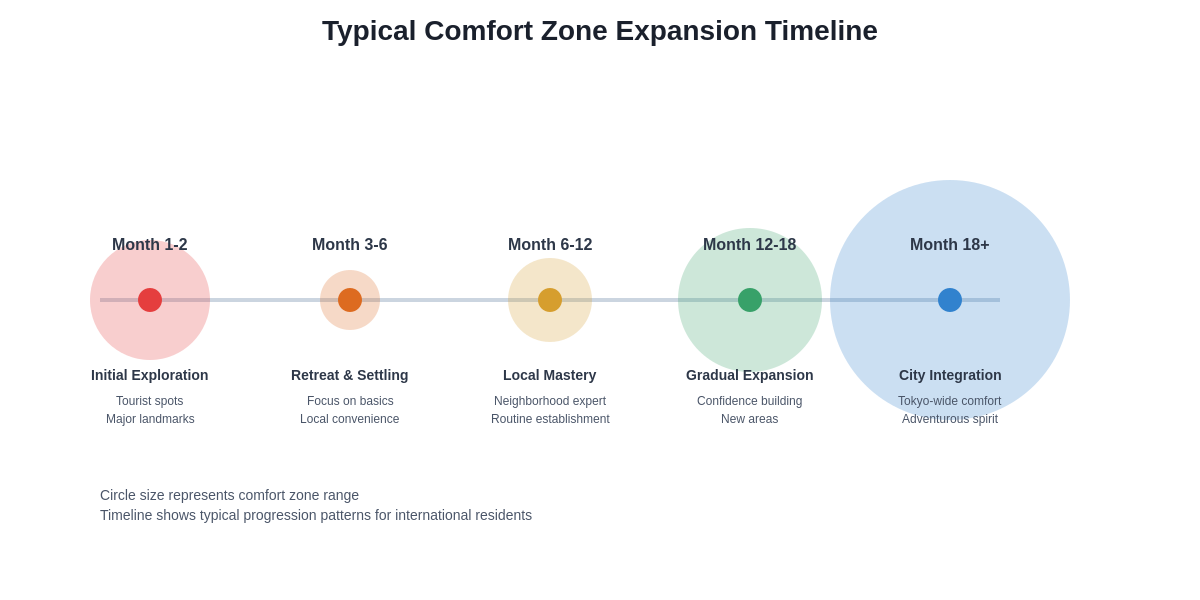
The phenomenon of geographical restriction among Tokyo sharehouse residents reflects the complex interplay of practical, psychological, and cultural factors that influence how international residents navigate their adopted city. Rather than representing personal failings or missed opportunities, these patterns often demonstrate healthy adaptation strategies that prioritize mental health, financial stability, and sustainable cultural integration over external expectations for adventure and exploration. Understanding and accepting these limitations can provide foundation for eventual expansion when circumstances and confidence levels support broader engagement with Tokyo’s vast opportunities for discovery and growth.
Disclaimer
This article is for informational purposes only and does not constitute professional psychological or medical advice. Individual experiences with cultural adaptation and geographical exploration vary significantly based on personal circumstances, mental health status, and individual preferences. Readers experiencing persistent anxiety or depression should consult with qualified healthcare professionals. The observations presented reflect common patterns among international residents but may not apply to all individuals or situations.