The phenomenon of residents choosing expensive convenience options in Tokyo sharehouses reveals fascinating insights into modern urban living priorities, cultural adaptation strategies, and the complex relationship between time, money, and quality of life in one of the world’s most fast-paced cities. While budget-conscious living typically drives sharehouse selection, a significant subset of residents consistently gravitates toward premium convenience options that dramatically increase their monthly expenses yet provide intangible benefits they consider essential for their Tokyo experience.
This preference for expensive convenience extends far beyond simple luxury spending, representing carefully calculated decisions about time allocation, stress management, and social positioning within the unique context of international living in Japan. Understanding these motivations provides valuable insights into contemporary urban lifestyle evolution and the changing priorities of global residents navigating cross-cultural living experiences in metropolitan environments.
The Psychology of Convenience Premium
The willingness to pay premium prices for convenience services reflects deeper psychological needs that extend beyond mere time-saving calculations. Residents who consistently choose expensive convenience options often prioritize mental bandwidth preservation over financial optimization, recognizing that cognitive load reduction can significantly impact their overall quality of life and professional performance in demanding urban environments.
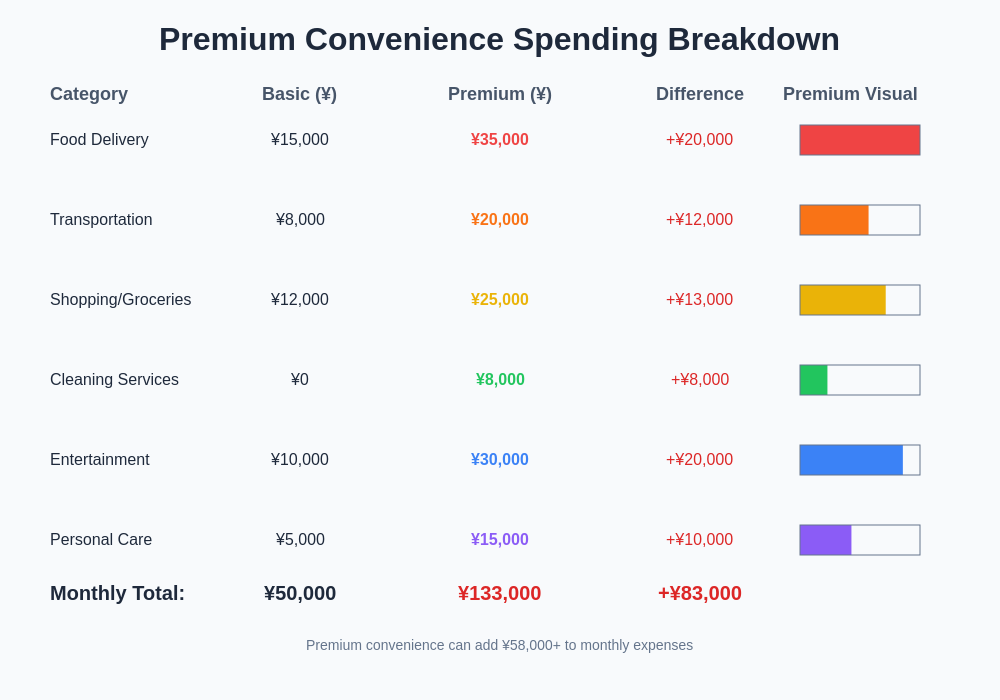
Living costs in Tokyo sharehouses explained demonstrates how convenience choices can dramatically alter monthly budgets, yet many residents view these expenditures as essential investments rather than discretionary luxury spending. The psychological comfort derived from reliable, high-quality services often outweighs the financial burden, particularly for individuals managing cultural adaptation stress and professional responsibilities simultaneously.
The concept of decision fatigue plays a crucial role in convenience preference formation, as residents facing constant choices about transportation, dining, shopping, and social activities often seek to eliminate low-value decisions through premium service subscriptions. This cognitive resource conservation strategy allows them to focus mental energy on higher-priority life areas such as career advancement, relationship building, and cultural learning experiences.
Status signaling through convenience consumption also influences resident behavior, particularly among younger professionals and international students seeking to establish social credibility within cosmopolitan sharehouse communities. The ability to demonstrate sophisticated urban lifestyle choices through premium service usage can facilitate social integration and peer recognition that residents consider valuable for their Tokyo experience.
Time Value Optimization Strategies
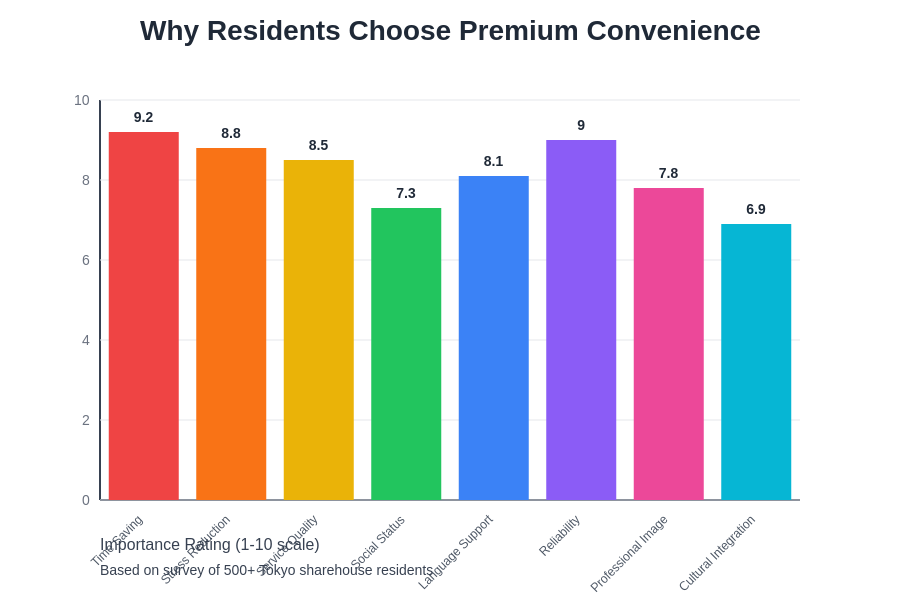
Professional residents often calculate convenience premiums against their hourly earning potential, creating sophisticated cost-benefit analyses that justify expensive service choices based on opportunity cost considerations. How commute times impact your quality of life illustrates how time-saving decisions can compound throughout daily routines, creating significant lifestyle improvements that residents consider worth substantial financial investment.
High-earning professionals frequently view convenience premiums as productivity investments that enable longer working hours, reduced commute stress, and improved work-life balance management. The ability to maintain professional performance while navigating complex urban living challenges often depends on strategic delegation of time-consuming daily tasks to premium service providers.
The concept of temporal arbitrage drives many convenience decisions, as residents recognize that time spent on routine tasks could be redirected toward income generation, skill development, or relationship building activities that provide greater long-term value. This economic reasoning framework transforms convenience spending from luxury consumption into strategic resource allocation that supports broader life objectives.
International residents often face steeper learning curves for routine tasks such as grocery shopping, banking, and municipal services, making premium convenience options particularly attractive during initial adaptation periods. Japanese sharehouse rules every foreigner should know highlights how cultural navigation complexity can justify convenience investments that simplify daily operations.
Cultural Adaptation and Service Quality
The Japanese service industry’s exceptional quality standards create expectations that influence resident convenience preferences, as exposure to premium service experiences establishes new baseline requirements for acceptable service quality. Residents often discover that Japanese convenience services provide reliability and attention to detail that justifies premium pricing compared to international equivalents.
Language barriers and cultural unfamiliarity make premium services particularly valuable for international residents, as higher-tier providers typically offer English language support, international payment options, and cultural sensitivity that facilitate smoother transactions. English-speaking sharehouses in Tokyo for foreigners demonstrates how language considerations influence many lifestyle choices beyond housing selection.
The risk mitigation aspect of premium convenience services appeals to residents managing cultural uncertainty, as established providers offer predictable experiences that reduce anxiety associated with navigating unfamiliar systems. This reliability premium becomes particularly valuable during stressful periods such as job searches, visa renewals, or family emergencies when service disruptions could have serious consequences.
Cultural status considerations also influence convenience choices, as residents observe local consumption patterns and adapt their spending to match perceived social expectations within their professional and social circles. The desire to demonstrate cultural integration and sophisticated urban lifestyle understanding often drives premium service adoption that aligns with observed Japanese consumer behavior.
Professional Lifestyle Maintenance
Career-focused residents often view convenience premiums as professional development investments that enable better performance through stress reduction, time optimization, and image management. How career changes affect sharehouse eligibility illustrates how professional priorities can dramatically influence lifestyle choices and spending patterns.
The networking benefits of premium services create additional value propositions, as high-end convenience providers often facilitate connections with other professionally successful individuals who share similar lifestyle priorities. These incidental networking opportunities can provide career advancement benefits that justify convenience spending beyond pure time-saving calculations.
Professional image maintenance requirements drive many convenience decisions, particularly for residents in client-facing roles where personal presentation and lifestyle sophistication directly impact career success. The ability to maintain polished appearance and demonstrate cultural sophistication through premium service usage becomes a professional necessity rather than personal luxury.
Stress management considerations become crucial for high-pressure professionals, as convenience services that reduce daily friction can significantly impact mental health and job performance. How stress management techniques become necessary explores how urban living challenges require proactive management strategies that often include premium convenience investments.
Social Integration Through Premium Choices
Premium convenience consumption often facilitates social integration within affluent sharehouse communities, as shared lifestyle choices create bonding opportunities and demonstrate compatibility with house culture. Making friends through Tokyo sharehouse communities shows how lifestyle alignment influences relationship formation in shared living environments.
The signaling effect of premium service usage helps residents communicate their values, priorities, and social positioning to potential friends and romantic partners within cosmopolitan Tokyo circles. This social currency aspect of convenience spending can facilitate access to exclusive social groups and cultural experiences that residents consider valuable for their Tokyo experience.
Group convenience activities such as premium food delivery, luxury transportation sharing, and high-end entertainment services create shared experiences that strengthen house relationships and establish social traditions. These collective premium experiences often become defining characteristics of particular sharehouse communities that attract like-minded residents.
The exclusivity factor of premium services creates artificial scarcity that enhances social desirability, as residents gain access to limited availability experiences that become conversation topics and social bonding opportunities. This exclusivity premium often justifies additional costs through enhanced social capital and relationship building benefits.
Economic Rationalization Frameworks
Residents develop sophisticated economic justification systems for convenience premiums, often reframing expensive choices as investments in productivity, health, happiness, or social capital that provide returns beyond immediate utility. How to budget realistically for sharehouse living demonstrates how residents can restructure spending priorities to accommodate convenience preferences.
The concept of lifestyle inflation becomes normalized within premium convenience consumption patterns, as residents gradually adjust baseline expectations for service quality and convenience levels. This adaptation process often makes returning to budget alternatives psychologically difficult even when financial circumstances change.
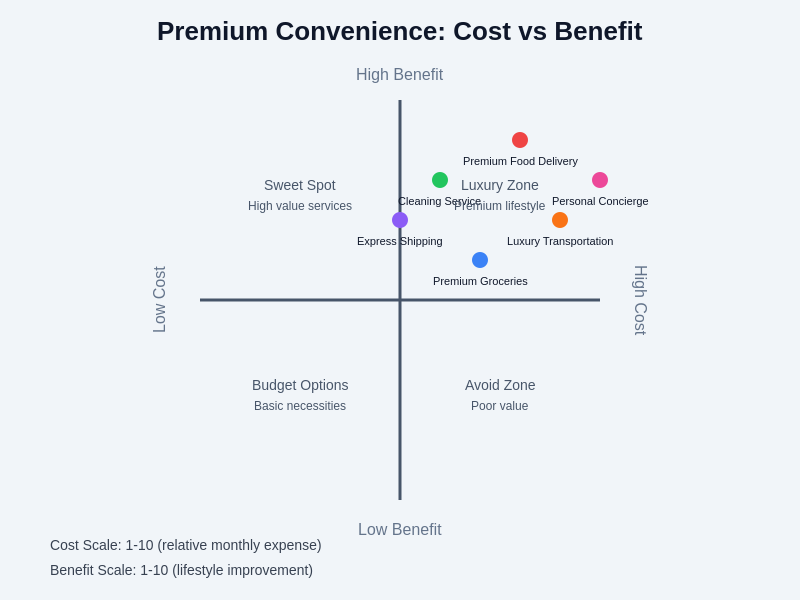
Comparative value assessment drives many premium choices, as residents evaluate convenience costs against alternative expenditures such as larger living spaces, frequent travel, or entertainment activities. The trade-off analysis often favors convenience when residents prioritize daily quality of life improvements over periodic luxury experiences.
Temporal discounting considerations influence convenience decisions, as immediate benefits from premium services feel more tangible than future financial consequences. This psychological bias toward present satisfaction often overrides long-term financial optimization strategies, particularly among younger residents with growing income expectations.
Health and Wellness Justifications
Premium convenience services often provide health and wellness benefits that residents use to justify additional costs, particularly in areas such as food delivery, fitness services, and medical care. How air quality concerns affect daily decisions illustrates how health considerations can drive premium spending decisions.
The stress reduction benefits of reliable convenience services contribute to mental health maintenance that residents consider essential for urban living success. Premium services that eliminate daily frustrations and uncertainties can significantly impact psychological well-being and life satisfaction levels.
Nutrition and dietary quality considerations drive premium food service choices, as residents prioritize healthy eating convenience over budget optimization. High-quality ingredient sourcing, nutritional customization, and dietary restriction accommodation often justify premium food delivery and grocery services.
Sleep quality improvements through premium services such as quiet transportation, efficient delivery scheduling, and stress reduction contribute to overall health outcomes that residents consider valuable long-term investments. The compounding health benefits of convenience choices often provide justification for sustained premium spending patterns.
Technology Integration and Future Planning
Digital natives often view premium convenience services as natural extensions of their technology-integrated lifestyles, where smartphone-enabled instant gratification becomes an expected baseline rather than luxury feature. How digital entertainment replaces social interaction explores how technology adoption patterns influence lifestyle choices.
The learning curve investment in premium service platforms creates switching costs that encourage continued usage even when alternatives become available. Residents often develop sophisticated service management systems that integrate multiple premium platforms into efficient daily operation frameworks.
Future planning considerations influence convenience decisions, as residents view premium service familiarity as preparation for higher income brackets where such services will become standard. This aspirational consumption pattern helps residents develop lifestyle sophistication that supports career advancement objectives.
The network effects of premium service ecosystems create additional value through seamless integration between different convenience providers. Residents often discover that premium services work better together, creating comprehensive lifestyle management systems that justify collective premium costs through enhanced efficiency and user experience.
Peer Influence and Social Conformity
Sharehouse communities often develop collective convenience consumption patterns that normalize premium spending through peer influence and social proof mechanisms. How cultural differences affect friendship building demonstrates how social dynamics influence individual choices within shared living environments.
The demonstration effect occurs when residents observe housemates using premium services and gradually adopt similar consumption patterns to maintain social compatibility and avoid feeling excluded from group activities. This social learning process often leads to lifestyle inflation that spreads throughout entire sharehouse communities.
Competition dynamics emerge when residents attempt to demonstrate lifestyle sophistication through premium service usage, creating arms races where convenience spending becomes a form of social positioning. These competitive patterns can drive community-wide adoption of expensive convenience options that become normalized expectations.
The fear of missing out on premium experiences drives adoption of convenience services that residents might otherwise consider financially unjustifiable. Social media sharing of premium convenience experiences creates additional pressure to maintain lifestyle standards that match peer group expectations.
Long-term Lifestyle Evolution
Premium convenience consumption often represents transitional behavior as residents adapt to higher income potential and develop lifestyle expectations that align with career advancement trajectories. How to calculate your true living costs provides frameworks for evaluating lifestyle evolution costs.
The habit formation aspect of premium convenience usage creates behavioral patterns that become difficult to modify even when financial circumstances change. Residents often discover that convenience dependencies develop gradually and become integrated into their identity and daily operation systems.
Investment in premium convenience services can facilitate career advancement by enabling better professional performance, networking opportunities, and stress management that supports long-term earning potential. This investment perspective transforms convenience spending from consumption into career development strategy.
The cultural capital acquired through premium service experience provides residents with sophisticated urban lifestyle knowledge that enhances social and professional opportunities. This cultural education aspect of convenience consumption often provides lasting value beyond immediate utility.
Understanding why residents choose expensive convenience reveals the complex interplay between financial resources, cultural adaptation, professional advancement, and social integration that defines modern urban living in Tokyo sharehouses. These choices reflect rational decision-making frameworks that prioritize quality of life optimization over pure financial efficiency, demonstrating how contemporary residents navigate the challenging balance between immediate satisfaction and long-term financial planning in dynamic metropolitan environments.
Disclaimer
This article is for informational purposes only and does not constitute financial advice. Individual spending decisions should be based on personal financial circumstances and priorities. The convenience services and spending patterns discussed may not be suitable for all residents, and readers should carefully evaluate their own budgets and lifestyle needs when making consumption choices.