The social dynamics within Tokyo sharehouses reveal fascinating patterns of individual behavior that challenge common assumptions about communal living preferences. While many residents embrace the collaborative and social aspects of shared accommodation, a significant portion consistently gravitates toward solo entertainment activities, creating distinct lifestyle patterns that reflect deeper psychological needs and practical considerations unique to the shared living environment.
Understanding these individual entertainment preferences provides crucial insights into the complex social ecosystem of sharehouse communities, revealing how personal space requirements, cultural backgrounds, and individual personality traits influence daily living choices in shared environments. The preference for solo activities often represents not social avoidance but rather intentional lifestyle design that maximizes personal satisfaction while maintaining respectful coexistence with housemates.
The Psychology of Individual Space Needs
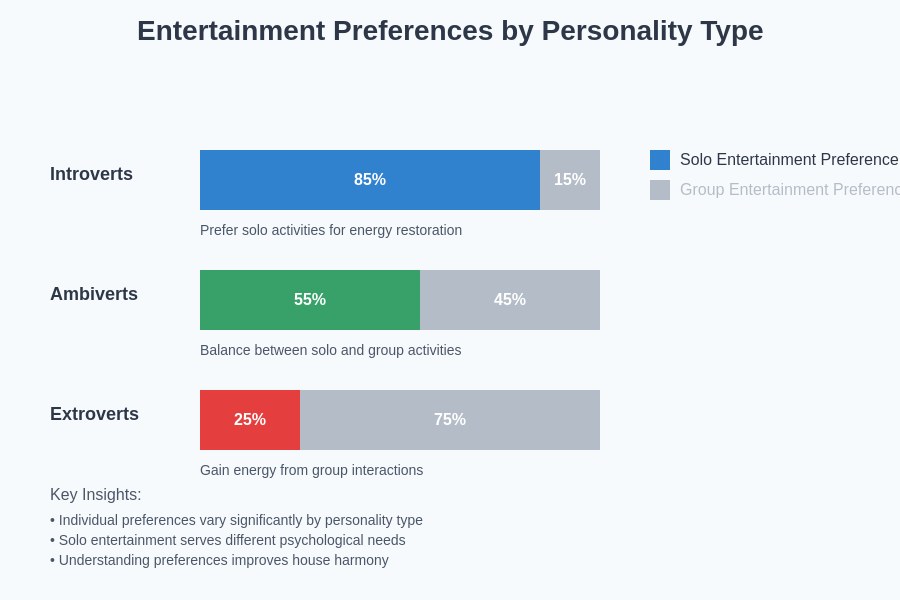
Personal space requirements vary dramatically among individuals, with some residents requiring substantial periods of solitary activity to maintain psychological well-being and emotional balance in otherwise highly social living environments. Understanding how personal space needs vary dramatically becomes essential for comprehending why certain individuals consistently choose individual entertainment options over group activities.
The psychological concept of social battery depletion affects many sharehouse residents who find themselves mentally exhausted by constant interpersonal interaction throughout their daily lives. Work environments, commute experiences, and basic household interactions create cumulative social demands that necessitate deliberate solitary recovery periods. Solo entertainment activities serve as essential restoration mechanisms that allow individuals to recharge their social energy reserves without complete social isolation.
Introverted personality types particularly benefit from solo entertainment options that provide stimulating engagement without the energy expenditure required for group social dynamics. These residents often discover that their most fulfilling leisure time occurs during individual activities that align with their natural energy patterns and cognitive preferences, creating sustainable lifestyle routines that enhance rather than drain their overall well-being.
Cultural background influences significantly impact entertainment preferences, with residents from cultures emphasizing individual achievement and personal reflection often gravitating toward solo activities that reflect their upbringing and value systems. These cultural inclinations create natural preferences for entertainment formats that emphasize personal growth, skill development, and individual accomplishment rather than group-oriented social experiences.
Practical Advantages of Individual Entertainment
Solo entertainment activities offer numerous practical advantages that group activities cannot match, particularly in terms of scheduling flexibility, cost control, and personal preference accommodation. Individual entertainment choices eliminate the complex coordination requirements necessary for group activities, allowing residents to pursue their interests according to their personal schedules without depending on others’ availability or commitment levels.
Financial considerations often drive solo entertainment preferences, as individual activities typically involve lower costs and more predictable expenses compared to group entertainment options that may require splitting costs, coordinating payments, or participating in activities beyond individual budget constraints. Living costs in Tokyo sharehouses explained demonstrates how entertainment expenses can significantly impact monthly budgets, making solo options more financially sustainable for many residents.
Equipment and resource control represents another practical advantage of solo entertainment, allowing individuals to use personal devices, entertainment systems, and recreational materials according to their preferences without negotiating shared access or accommodating others’ usage patterns. This control extends to timing, volume levels, content choices, and activity duration that align perfectly with individual preferences and schedules.
Privacy considerations become particularly important for residents who prefer entertainment content or activities that may not align with housemates’ interests or cultural sensitivities. Solo entertainment allows individuals to explore personal interests, consume preferred media content, or engage in hobbies without concern for others’ reactions or judgments about their entertainment choices.
Digital Entertainment and Technology Preferences
Modern technology has revolutionized solo entertainment options, providing unprecedented access to personalized content and interactive experiences that cater specifically to individual interests and preferences. Digital entertainment replaces social interaction in many cases, offering sophisticated alternatives to traditional group activities that were previously the primary entertainment options available to sharehouse residents.
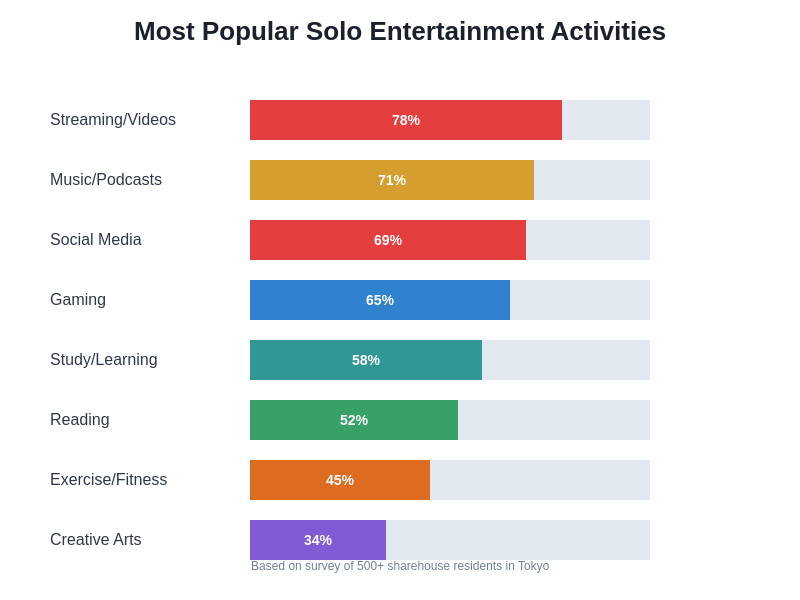
Streaming services, gaming platforms, and digital content libraries enable residents to access vast entertainment options tailored to their specific tastes without requiring group consensus or coordination. These platforms utilize sophisticated algorithms to recommend content based on individual viewing history and preferences, creating increasingly personalized entertainment experiences that group activities cannot replicate.
Gaming represents a particularly popular solo entertainment category that combines interactive engagement, skill development, and achievement satisfaction without requiring real-time coordination with housemates. Online gaming communities provide social interaction opportunities that residents can control and moderate according to their comfort levels and availability, offering social benefits without the complexities of in-person group dynamics.
Virtual reality and immersive entertainment technologies have created entirely new categories of solo entertainment that provide rich, engaging experiences previously impossible in individual formats. These technologies allow residents to explore virtual worlds, participate in simulated social experiences, or engage in educational content that rivals or exceeds the engagement levels of traditional group activities.
Creative and Educational Solo Pursuits
Many residents discover that solo entertainment activities provide optimal environments for creative expression and skill development that group settings cannot accommodate effectively. Individual creative pursuits such as writing, digital art, music production, or craft projects require concentrated focus and personal creative flow that group activities often disrupt or compromise.
Educational entertainment represents a growing category of solo activities that combine personal development with enjoyable engagement, allowing residents to pursue language learning, professional skills development, or academic interests according to their individual pace and learning style preferences. How language learning affects career opportunities illustrates how solo educational activities can provide significant long-term benefits that group activities may not deliver as effectively.
Reading remains one of the most popular solo entertainment activities among sharehouse residents, providing intellectual stimulation, escapism, and personal growth opportunities that align perfectly with individual schedules and interests. The availability of digital books, audiobooks, and online reading communities has expanded reading entertainment options while maintaining the fundamentally individual nature of the activity.
Meditation, mindfulness practices, and wellness activities represent solo entertainment categories that provide both immediate enjoyment and long-term health benefits. These activities often require quiet, private environments that sharehouses can provide in individual rooms, making them ideal entertainment options for residents seeking both relaxation and personal development.
Managing Social Expectations and House Dynamics
Residents who prefer solo entertainment often face social pressure or misunderstanding from housemates who interpret individual activity preferences as antisocial behavior or rejection of community participation. How to handle roommate conflicts without moving out provides strategies for maintaining positive relationships while honoring individual entertainment preferences.
Communication becomes essential for solo entertainment enthusiasts who need to establish clear boundaries and expectations with housemates regarding their individual activity preferences. Explaining the personal benefits and necessity of solo entertainment helps create understanding and acceptance within the household community while maintaining respectful relationships with more socially oriented residents.
Scheduling balance represents a key consideration for residents who prefer solo entertainment but also recognize the importance of maintaining positive house dynamics and community relationships. Finding appropriate proportions of individual versus group activities ensures personal satisfaction while contributing to overall household harmony and social cohesion.
House rule considerations may affect solo entertainment options, particularly regarding noise levels, equipment usage, and common area occupation during individual activities. Understanding and respecting these limitations while advocating for reasonable accommodation of solo entertainment needs requires careful negotiation and compromise with household management and other residents.
Technology Setup and Personal Entertainment Spaces
Creating optimal solo entertainment environments within sharehouse constraints requires careful consideration of technology setup, furniture arrangement, and privacy enhancement that maximizes individual enjoyment without disrupting housemates or violating house rules. Personal room optimization becomes crucial for residents who spend significant time on individual entertainment activities.
Audio equipment selection significantly impacts solo entertainment quality and housemate relationships, with high-quality headphones, sound isolation solutions, and volume control systems enabling immersive individual experiences without disturbing others. Why noise control becomes critical for career success emphasizes how sound management affects both entertainment quality and house harmony.
Internet bandwidth and network performance directly affect many solo entertainment activities, particularly streaming, gaming, and digital content consumption that require consistent, high-speed connections. Understanding household internet capabilities and peak usage patterns helps solo entertainment enthusiasts optimize their technology use for maximum enjoyment and minimal conflict with other users.
Storage solutions for entertainment equipment, collections, and accessories become important considerations for residents with extensive solo entertainment setups. Maximizing limited room space while maintaining organized, accessible storage for entertainment materials requires creative solutions and careful planning that respects sharehouse space constraints.
Cultural and Social Acceptance of Individual Preferences
Cultural attitudes toward solo entertainment vary significantly among different nationalities and backgrounds represented in Tokyo sharehouses, with some cultures viewing individual activities as normal and healthy while others may interpret them as antisocial or problematic behavior. How cultural differences affect friendship building explores how these varying perspectives influence house dynamics and social expectations.
Generational differences also impact solo entertainment acceptance, with younger residents often more comfortable with individual digital activities while older residents may prefer traditional group activities or view solo entertainment as socially isolating. These generational perspectives can create tension or misunderstanding that requires careful navigation and mutual respect.
Gender expectations may influence solo entertainment preferences and social acceptance, with different cultural backgrounds holding varying views about appropriate individual versus group activity participation based on gender roles and social norms. Understanding these cultural nuances helps create more inclusive environments that respect individual preferences regardless of background.
Professional and academic pressures often necessitate solo entertainment choices that support career development, stress relief, or study requirements rather than purely recreational preferences. How career changes affect sharehouse eligibility demonstrates how professional demands influence lifestyle choices, including entertainment preferences.
Economic Factors Influencing Entertainment Choices
Budget constraints significantly influence entertainment preferences, with solo activities often providing more cost-effective options compared to group activities that may involve restaurant visits, event tickets, or shared entertainment expenses that exceed individual financial comfort zones. How to budget realistically for sharehouse living provides frameworks for evaluating entertainment expenses within overall living costs.
Equipment investment strategies affect long-term solo entertainment satisfaction, with residents needing to balance initial setup costs against ongoing entertainment value and space constraints within sharehouse living arrangements. High-quality individual entertainment setups often require significant upfront investments that provide years of enjoyment and cost savings compared to regular group activity expenses.
Subscription service management becomes important for residents who maintain multiple digital entertainment platforms, streaming services, or gaming subscriptions that support their solo activity preferences. Optimizing these recurring expenses while maximizing entertainment value requires careful evaluation and periodic reassessment of usage patterns and preferences.
Income stability affects entertainment spending patterns, with residents experiencing variable income often preferring solo entertainment options that provide consistent access regardless of monthly financial fluctuations. Individual entertainment investments provide reliable access to preferred activities without depending on disposable income availability for group activity participation.
Long-term Benefits of Balanced Individual Entertainment
Personal development outcomes from solo entertainment activities often exceed those available through group activities, particularly in areas of skill acquisition, creative expression, and self-reflection that require sustained individual focus and practice. These long-term benefits justify the initial investment in solo entertainment infrastructure and time allocation despite potential social pressures to participate more heavily in group activities.
Mental health benefits from solo entertainment include stress reduction, anxiety management, and emotional regulation that group activities may not provide as effectively for certain personality types and individuals with specific psychological needs. Regular solo entertainment time contributes to overall well-being and life satisfaction that enhances rather than detracts from social relationships and community participation.
Career advancement opportunities often emerge from solo entertainment activities that develop professional skills, creative portfolios, or educational credentials that group activities cannot provide. How to find perfect sharehouse tokyo suggests considering entertainment preferences when selecting living arrangements that support long-term personal and professional goals.
Independence and self-reliance skills developed through solo entertainment preferences prepare residents for future living arrangements and life transitions that may require greater individual resourcefulness and entertainment self-sufficiency. These skills contribute to overall life competency and personal confidence that benefit multiple aspects of adult life beyond sharehouse living.
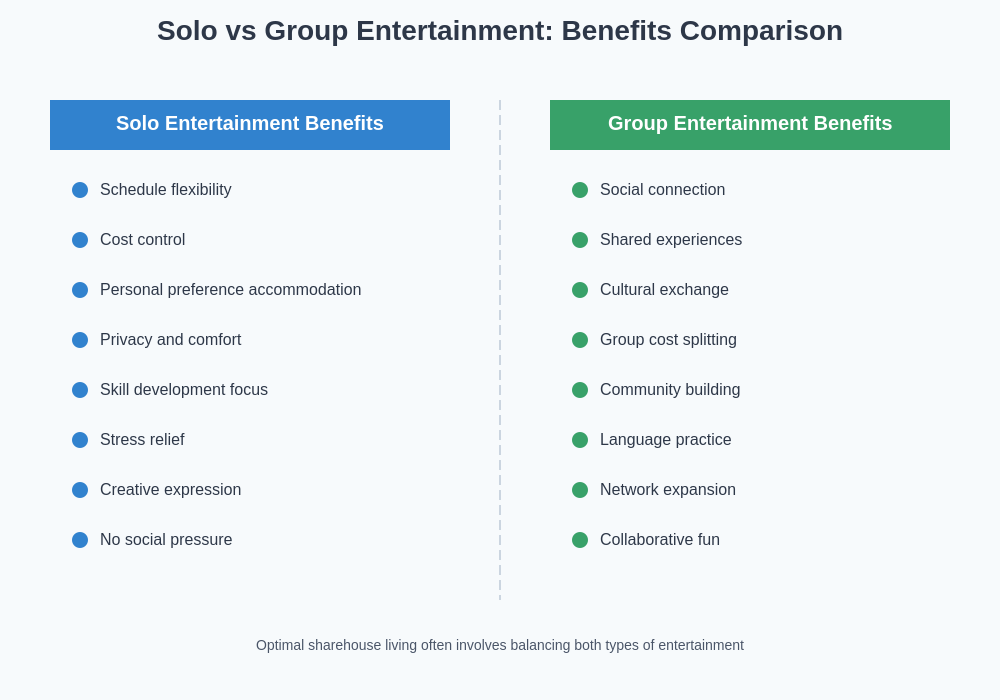
The choice to prioritize solo entertainment within sharehouse environments reflects sophisticated understanding of personal needs, practical constraints, and long-term well-being considerations that deserve respect and accommodation from both housemates and housing providers. Rather than representing antisocial tendencies, these preferences often indicate mature self-awareness and intentional lifestyle design that contributes to sustainable, satisfying shared living experiences for all residents involved.
Disclaimer
This article is for informational purposes only and does not constitute professional psychological or social advice. Individual entertainment preferences vary significantly among people and cultures. Readers should consider their personal needs and house dynamics when making entertainment choices. The observations presented are based on general patterns and may not apply to all sharehouse situations or individual circumstances.