The phenomenon of food restrictions in Japanese sharehouses represents a complex intersection of cultural sensitivities, practical considerations, and community harmony maintenance that often surprises international residents unfamiliar with Japan’s unique living dynamics. These policies, which can range from outright bans on specific ingredients to elaborate cooking time restrictions, reflect deeply rooted cultural values about shared spaces, consideration for others, and the delicate balance required to maintain peaceful coexistence among diverse residents from different backgrounds and culinary traditions.
Understanding the reasoning behind these food restrictions becomes essential for anyone considering sharehouse living in Japan, as these policies directly impact daily routines, cooking habits, and social interactions within the house community. The motivations behind such restrictions encompass everything from odor management and cultural considerations to health concerns and building maintenance issues that extend far beyond simple personal preferences or arbitrary rule-making by house management.
Cultural Sensitivity and Odor Management
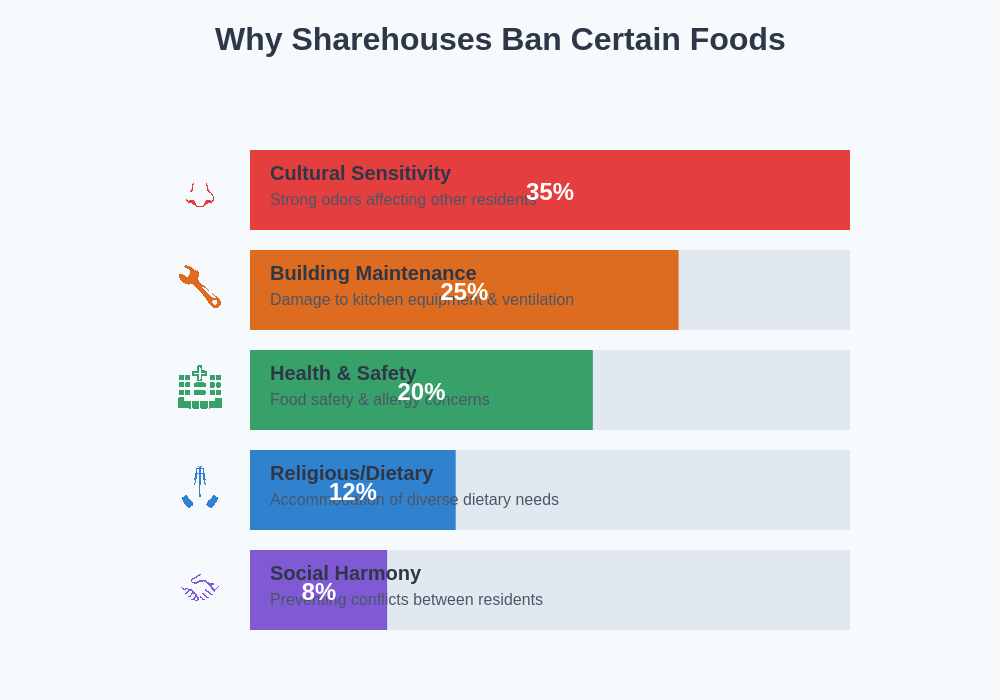
The primary driver behind most food restrictions in Japanese sharehouses stems from cultural attitudes toward strong odors and their impact on shared living spaces. Japanese culture places extraordinary emphasis on consideration for others, particularly regarding sensory experiences that might affect neighboring residents or common areas used by the entire house community.
Certain ingredients known for producing lingering or penetrating odors often face restrictions or outright bans in many sharehouses across Japan. Understanding Japanese sharehouse rules every foreigner should know provides broader context for how these cultural considerations shape daily living policies and community expectations.
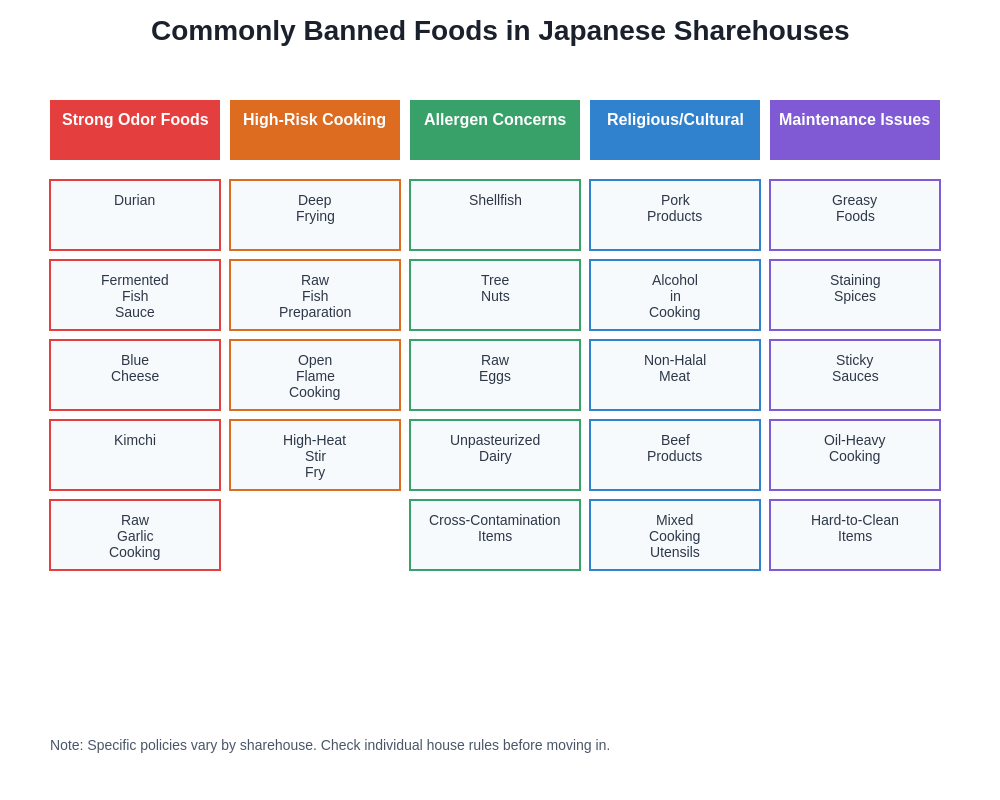
Foods containing fermented fish sauces, pungent cheeses, durian, and various strong spices frequently appear on prohibited lists due to their ability to permeate building materials, ventilation systems, and personal belongings of other residents. The compact nature of most Japanese living spaces amplifies these concerns, as odors that might dissipate quickly in larger Western-style homes can linger for days in smaller, more enclosed environments typical of urban Japanese housing.
The challenge becomes particularly acute when residents from different cultural backgrounds have varying tolerance levels for food aromas that others might find overwhelming or unpleasant. What constitutes normal cooking smells in one culture might be considered intrusive or problematic in the context of Japanese communal living expectations, creating the need for clear policies that protect everyone’s comfort and wellbeing.
Building Maintenance and Infrastructure Concerns
Beyond cultural considerations, practical building maintenance issues drive many food restriction policies in sharehouses, particularly those related to ventilation systems, plumbing infrastructure, and fire safety requirements that affect the entire property and all residents.
Certain cooking methods and ingredients can cause long-term damage to kitchen equipment, exhaust systems, and building materials that prove expensive to repair or replace. Deep-frying restrictions, for example, often exist not only due to odor concerns but also because of the accumulation of oil particles in ventilation systems and the increased fire risk associated with high-temperature cooking methods in shared facilities.
Grease-heavy cooking can clog drainage systems, damage exhaust fans, and create cleaning challenges that exceed normal maintenance expectations. How kitchen politics actually work in Japanese sharehouses explores how these practical concerns influence daily cooking arrangements and house rule enforcement.
Ingredients that stain surfaces, leave residual odors in appliances, or require specialized cleaning procedures often face restrictions to protect shared kitchen equipment and maintain hygienic conditions for all residents. The cost of replacing or professionally cleaning contaminated equipment typically far exceeds the inconvenience of ingredient restrictions, making these policies economically sensible for house management.
Health and Safety Considerations
Food safety concerns in shared living environments create additional layers of complexity that influence restriction policies, particularly regarding ingredients that pose risks of cross-contamination, allergic reactions, or food-borne illness transmission among residents with diverse dietary needs and health conditions.
Raw fish preparation, for instance, faces restrictions in many sharehouses due to the specialized knowledge required for safe handling, the risk of cross-contamination with other residents’ food items, and the potential for serious health consequences if proper procedures aren’t followed. The liability concerns for house management regarding food poisoning incidents create strong incentives for preventive policies.
Allergen management becomes particularly challenging in shared kitchen environments where trace amounts of prohibited substances can trigger severe reactions in sensitive individuals. How food allergies complicate shared cooking examines the delicate balance between individual dietary freedom and community health protection.
Fermented foods that require specific temperature controls or specialized storage conditions often face restrictions due to the risk of spoilage, contamination of shared refrigerator spaces, and the potential for creating unsanitary conditions that affect all residents’ food safety. The responsibility for monitoring and maintaining proper storage conditions becomes too complex for shared living arrangements.
Religious and Dietary Accommodation Challenges
The intersection of various religious dietary laws, cultural food taboos, and personal ethical choices creates complex accommodation challenges in sharehouses that serve diverse international populations with conflicting dietary requirements and restrictions.
Houses serving residents from multiple religious backgrounds must navigate conflicting requirements regarding meat preparation, alcohol storage, and cooking utensil separation that can make certain ingredients problematic for communal kitchen use. The complexity of maintaining kosher, halal, vegetarian, and other specialized dietary requirements simultaneously often leads to simplified policies that restrict potentially problematic ingredients entirely.
Cross-contamination concerns extend beyond health issues to include religious and ethical considerations that carry deep personal significance for affected residents. Living with Japanese roommates in Tokyo sharehouses explores how cultural and religious differences influence daily cooking and eating arrangements.
The administrative burden of managing multiple dietary accommodation systems often proves impractical for house management, leading to policies that eliminate potential conflicts rather than attempting to accommodate every possible dietary requirement through complex separation and labeling systems.
Economic and Practical Management Factors
The economic realities of operating profitable sharehouses while maintaining affordable rent prices create pressure for policies that minimize management overhead, reduce maintenance costs, and prevent expensive damage or cleaning requirements that could force rent increases.
Ingredients that require specialized disposal methods, create unusual cleaning requirements, or attract pests often face restrictions due to the additional costs and management attention they require. How much Tokyo sharehouses really cost per month examines how various operational costs influence house policies and rent structures.
The time and resources required to mediate food-related conflicts, address odor complaints, and manage dietary accommodation requests can consume significant management resources that affect the overall operation efficiency and profitability of sharehouse businesses.
Storage space limitations in compact Japanese kitchens create additional pressure for ingredient restrictions, as specialty items requiring refrigeration, freezer space, or specific storage conditions can quickly overwhelm available capacity and create conflicts among residents competing for limited storage resources.
Social Dynamics and Community Harmony
Food restrictions often serve as tools for maintaining social harmony and preventing conflicts that could disrupt the delicate balance required for successful communal living among diverse residents with different cultural backgrounds and lifestyle preferences.
The potential for food-related disputes to escalate into broader interpersonal conflicts creates strong incentives for preventive policies that eliminate common sources of tension before they develop into serious community problems. How to handle roommate conflicts without moving out provides strategies for managing disagreements that do arise despite preventive policies.
Cooking time restrictions and ingredient limitations help ensure equitable access to shared kitchen facilities while preventing situations where certain cooking styles or ingredients monopolize common spaces or create scheduling conflicts among residents with different lifestyle patterns.
The establishment of clear, consistent policies reduces ambiguity and potential misunderstandings that can arise when cultural expectations differ significantly among residents. Having explicit rules helps prevent situations where acceptable behavior in one culture might be considered inconsiderate or problematic in another cultural context.
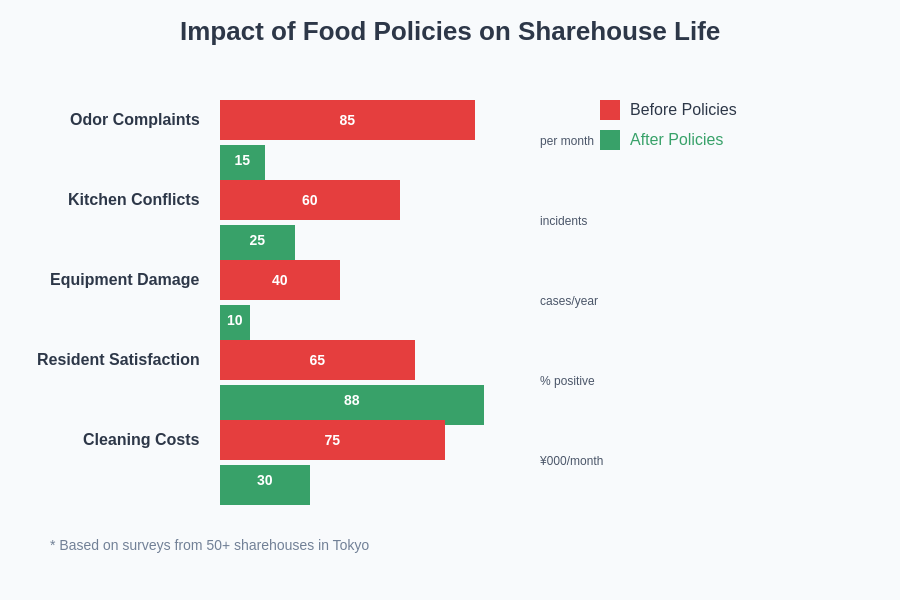
The measurable benefits of implementing clear food policies demonstrate their effectiveness in creating more harmonious living environments while reducing operational challenges for house management.
Regional and Neighborhood Considerations
Location-specific factors influence food restriction policies, with sharehouses in different areas of Tokyo and Japan facing varying challenges related to local ordinances, neighborhood expectations, and building code requirements that affect cooking and food storage policies.
Dense residential areas with close proximity to neighboring buildings may require stricter odor controls due to complaints from nearby residents who aren’t part of the sharehouse community but are affected by cooking smells that escape through windows or ventilation systems.
Best Tokyo neighborhoods for sharehouse living explores how location factors influence house rules and policies. Some areas have specific regulations regarding commercial cooking activities, waste disposal requirements, or noise ordinances that indirectly affect what foods can be prepared in residential sharehouses.
Transportation accessibility affects shopping patterns and ingredient availability, with some sharehouses in remote areas implementing restrictions based on the difficulty of obtaining specialized ingredients or the increased costs associated with food delivery and waste management services.
Legal and Insurance Implications
Liability concerns regarding food safety, building damage, and resident health issues drive many restriction policies as house operators seek to protect themselves from potential legal and financial consequences of food-related incidents or conflicts.
Insurance policies covering sharehouse operations often include specific exclusions or requirements regarding cooking activities, food storage, and building maintenance that influence what ingredients and cooking methods can be permitted without voiding coverage or increasing premium costs.
Fire safety regulations and building codes may mandate specific restrictions on high-temperature cooking, open flame use, or oil storage that directly affect what foods can be prepared in shared kitchen facilities. What security deposits actually cover in sharehouses examines how various types of damage and liability issues affect resident financial responsibilities.
Health department regulations in some jurisdictions treat sharehouses with large numbers of residents similarly to commercial food service operations, requiring compliance with additional safety and sanitation standards that make certain ingredients or preparation methods impractical or prohibited.
Enforcement Mechanisms and Compliance
The practical challenges of monitoring and enforcing food restrictions in sharehouses require careful balance between resident privacy, community standards, and effective policy implementation that maintains house harmony without creating oppressive surveillance or conflict situations.
Most sharehouses rely on peer monitoring and voluntary compliance rather than invasive inspection procedures, creating systems where residents share responsibility for maintaining community standards and addressing violations through social pressure rather than authoritarian enforcement methods.
Graduated response systems typically begin with educational approaches and informal discussions before escalating to formal warnings or lease termination procedures for persistent violators who refuse to comply with established policies. How cleaning responsibilities create house drama explores how enforcement challenges affect community dynamics.
The effectiveness of restriction policies depends largely on clear communication during the application process, comprehensive orientation procedures for new residents, and consistent application of rules that avoids favoritism or selective enforcement that could create resentment or conflict within the house community.
Alternative Solutions and Compromises
Progressive sharehouses increasingly explore creative solutions that accommodate diverse dietary needs while addressing the underlying concerns that drive food restriction policies, seeking approaches that maximize resident satisfaction while maintaining community harmony and operational efficiency.
Designated cooking times, specialized ventilation systems, and separate food storage areas represent infrastructure-based solutions that allow greater cooking freedom while addressing odor and cross-contamination concerns that typically drive ingredient restrictions.
Some sharehouses implement ingredient-specific preparation guidelines rather than outright bans, providing detailed procedures for safely and considerately preparing potentially problematic foods while maintaining community standards and addressing practical concerns.
Making friends through Tokyo sharehouse communities examines how creative policy approaches can enhance rather than restrict social interaction and cultural exchange among residents with diverse backgrounds and dietary preferences.
Educational programs and cultural exchange activities help residents understand the reasoning behind restrictions while providing opportunities to share traditional foods and cooking methods in ways that respect community guidelines and build cross-cultural understanding.
Future Trends and Adaptations
The evolution of sharehouse food policies reflects changing demographics, cultural attitudes, and technological solutions that may reduce the need for restrictive approaches while maintaining the underlying goals of community harmony and operational efficiency.
Improved ventilation systems, better kitchen design, and smart building technologies create opportunities for more flexible policies that address practical concerns without requiring broad ingredient restrictions that limit residents’ culinary expression and cultural food traditions.
Growing awareness of cultural sensitivity and international living experiences among Japanese house operators leads to more nuanced policies that distinguish between necessary restrictions and unnecessarily limiting rules that could be modified without compromising community standards.
The increasing sophistication of international residents seeking sharehouse accommodation creates market pressure for operators to develop more flexible, culturally inclusive policies that attract diverse tenants while maintaining the peaceful, respectful living environments that make sharehouses attractive alternatives to traditional rental housing.
Understanding food restriction policies in Japanese sharehouses requires recognizing the complex interplay of cultural values, practical considerations, and community management challenges that shape these rules. While some restrictions may seem arbitrary or overly limiting to newcomers, they typically reflect genuine concerns about maintaining harmonious, safe, and comfortable living environments for all residents. Success in sharehouse living involves finding properties whose policies align with your culinary needs while respecting the cultural and practical factors that make these communities function effectively for everyone involved.
Disclaimer
This article is for informational purposes only and does not constitute professional advice regarding sharehouse policies or legal requirements. Food restriction policies vary significantly between different sharehouses and may change over time. Prospective residents should directly confirm current policies with house operators and understand all rules before committing to any accommodation. Individual experiences may vary depending on specific house cultures, management approaches, and resident demographics.