
The requirement for Japanese guarantors represents one of the most complex and often frustrating aspects of securing accommodation in Japan’s sharehouse market, creating significant barriers for international residents who lack established local connections or comprehensive understanding of this deeply rooted cultural and legal practice. This system, which extends far beyond simple financial verification, reflects fundamental aspects of Japanese society including concepts of social responsibility, risk mitigation, and long-term relationship building that profoundly influence housing accessibility for foreign nationals.
Understanding why certain sharehouses maintain guarantor requirements while others have moved toward more flexible arrangements provides crucial insights into navigating Japan’s rental landscape and making informed decisions about housing applications that align with your available resources and long-term residency goals. The guarantor system’s evolution continues to adapt to Japan’s increasingly international population while maintaining its core protective functions for property owners and management companies.
Historical Context and Cultural Foundation
The Japanese guarantor system, known as “hosho-nin” or “rentai hoshonin,” emerged from centuries-old practices of mutual responsibility and community accountability that formed the backbone of traditional Japanese social structures. This system extends far beyond real estate transactions, influencing employment relationships, financial agreements, and various contractual arrangements throughout Japanese society where personal responsibility and social connections carry significant weight in establishing trust and mitigating risk.
In the context of housing, guarantor requirements developed as property owners sought reliable methods for ensuring rent payment, property maintenance, and adherence to lease terms in a society where legal recourse for breach of contract could be lengthy and expensive. Japanese sharehouse rules every foreigner should know illustrates how deeply embedded cultural practices continue to influence modern living arrangements and contractual obligations.
The persistence of guarantor requirements in contemporary Japan reflects ongoing concerns about economic stability, demographic changes, and the perceived risks associated with an increasingly mobile population that may lack the traditional social connections that historically provided natural accountability mechanisms. These concerns become particularly pronounced when dealing with international residents whose legal status, cultural understanding, and long-term commitment to Japan may appear uncertain to conservative property management approaches.
Legal Framework and Financial Protection
Japanese law provides specific legal standing for guarantors that creates substantial financial liability extending beyond simple cosigning arrangements common in other countries. Guarantors assume joint responsibility for all lease obligations including rent payments, utility bills, property damage costs, and any legal fees associated with breach of contract or eviction proceedings, creating significant financial exposure that can extend for the entire duration of the rental agreement.
The legal definition of guarantor responsibilities encompasses both primary financial obligations and secondary duties including property condition monitoring, tenant behavior oversight, and serving as intermediary communication channels between tenants and property management companies. How to spot financial red flags in sharehouse contracts helps identify clauses that may expand guarantor liability beyond standard expectations and create unreasonable burden for both tenants and their guarantors.
Property owners and management companies view guarantor requirements as essential risk mitigation tools that provide multiple layers of protection against financial losses, property damage, and complicated legal proceedings that can arise from problematic tenancies. The guarantor system effectively creates a safety net that allows property managers to extend rental opportunities to applicants who might otherwise be considered high-risk while maintaining confidence in their ability to recover losses and maintain property standards.
Modern legal interpretations continue to strengthen guarantor protections for property owners while imposing increasingly strict verification requirements for guarantor qualifications including income verification, employment stability, residential history, and sometimes even credit assessments that parallel those applied to primary tenants.
Specific Risks Associated with International Tenants
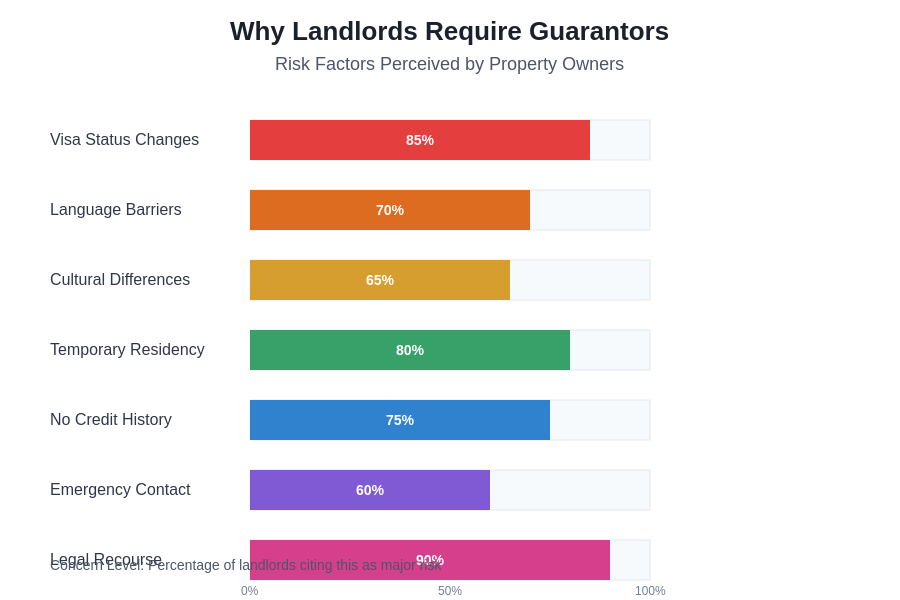
Property management companies identify several categories of elevated risk when working with international residents that drive their insistence on guarantor requirements, beginning with concerns about visa status changes that could result in unexpected tenancy termination, deportation, or inability to fulfill lease obligations due to legal status complications beyond the tenant’s immediate control.
Language barriers represent another significant concern as property managers worry about communication difficulties that could lead to misunderstandings about lease terms, house rules, maintenance procedures, or emergency protocols that might result in property damage or neighborhood disputes. Living with Japanese roommates in Tokyo sharehouses demonstrates how cultural and linguistic differences can create unexpected challenges in shared living environments.
Cultural differences in living habits, noise tolerance, guest policies, and general property care standards create additional concerns for property managers who may have experienced difficulties with previous international tenants who inadvertently violated cultural norms or failed to understand implicit expectations about apartment maintenance and community behavior.
The perceived transient nature of many international residents, particularly students and working holiday visa holders, creates concerns about long-term commitment and stability that property owners associate with higher turnover rates, increased marketing costs, and potential periods of vacancy that negatively impact their financial returns and operational efficiency.
Financial verification challenges also contribute to guarantor requirements as international residents may lack established Japanese credit history, verifiable domestic income sources, or clear understanding of Japanese financial obligations and payment systems that property managers consider essential for reliable tenancy relationships.
Types of Guarantor Requirements
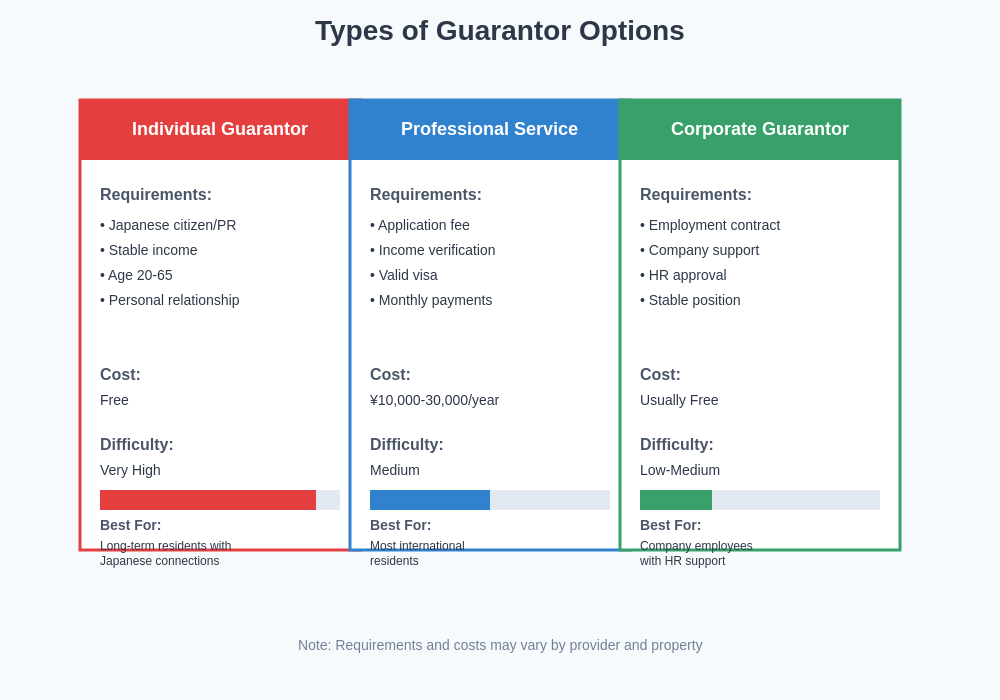
Different categories of guarantor requirements exist across the sharehouse market, ranging from traditional family-based guarantors who must be Japanese citizens or permanent residents with established income and residential history, to professional guarantor services that charge fees for assuming financial responsibility on behalf of tenants who lack personal connections.
Individual guarantors typically must meet stringent qualification criteria including minimum annual income requirements often set at three to four times the annual rent amount, stable employment history, Japanese residency status, and sometimes age restrictions that exclude elderly individuals who may have limited income or uncertain health status that could affect their long-term financial reliability.
Corporate guarantor systems have emerged as alternative solutions that allow tenants to pay monthly or annual fees to specialized companies that assume guarantor responsibilities, though these services often require their own application processes, income verification, and sometimes additional insurance requirements that can add substantial costs to monthly housing expenses.
How to find the perfect sharehouse in Tokyo provides strategies for identifying properties with flexible guarantor policies and understanding which types of sharehouses are more likely to accept alternative arrangements or waive guarantor requirements entirely for qualified international applicants.
Some sharehouses offer graduated guarantor requirements based on tenant qualifications, visa status, income level, or length of intended stay, creating tiered systems that may waive guarantor requirements for applicants who meet specific criteria such as permanent residency status, high income levels, or significant security deposits that provide equivalent protection for property owners.
Impact on International Residents
The guarantor requirement creates substantial barriers for international residents who typically arrive in Japan without established social networks or family connections capable of assuming significant financial liability on their behalf, effectively limiting housing options to properties that accept alternative arrangements or creating additional costs through professional guarantor services.
Social isolation becomes a significant concern as the need to find guarantors forces international residents to develop relationships specifically for housing purposes, potentially creating unbalanced social dynamics or imposing unwanted obligations on new acquaintances who may feel pressured to assist with housing applications despite limited personal knowledge of the applicant’s character or reliability.
Financial implications extend beyond obvious costs as guarantor requirements may force international residents toward more expensive housing options that don’t require guarantors, accept higher security deposits in lieu of guarantors, or pay substantial fees for professional guarantor services that significantly increase monthly housing costs and reduce overall affordability.
The psychological stress associated with guarantor requirements often creates anxiety and uncertainty during housing searches, particularly for newcomers who lack understanding of alternatives or strategies for navigating the system effectively. Real stories from Tokyo sharehouse residents documents how guarantor challenges have affected international residents’ housing experiences and settlement processes.
Professional development opportunities may also be limited as guarantor requirements can restrict housing choices to specific geographic areas or property types that may not align with career goals, educational institutions, or social preferences that support long-term success and integration into Japanese society.
Alternative Solutions and Workarounds
Progressive sharehouse operators have developed various alternative approaches to traditional guarantor requirements, including higher security deposits that provide equivalent financial protection while eliminating the need for third-party guarantors, though these arrangements typically require substantial upfront payments that may exceed the financial capacity of many international applicants.
Professional guarantor services offer fee-based solutions where specialized companies assume guarantor responsibilities in exchange for monthly or annual payments, though these services require their own application processes and qualification criteria that may include income verification, visa status confirmation, and sometimes additional insurance policies that increase overall housing costs.
Insurance-based alternatives have emerged where tenants purchase specialized rental insurance policies that provide property damage protection and rent payment guarantees, creating financial security for property owners while eliminating the need for individual guarantors, though coverage terms and premium costs vary significantly between different insurance providers and policy types.
English-speaking sharehouses in Tokyo for foreigners often feature more flexible guarantor policies as these properties specifically cater to international residents and have developed systems for managing the unique challenges associated with foreign tenants without relying on traditional guarantor arrangements.
Some sharehouses accept alternative forms of financial security including bank guarantees, prepaid rent arrangements, or corporate sponsorship from employers who assume responsibility for their employees’ housing obligations, though these arrangements typically require specific employment relationships or significant financial resources that may not be available to all international applicants.
How to Navigate Guarantor Requirements
Successful navigation of guarantor requirements begins with understanding which types of sharehouses are most likely to offer flexible arrangements, including properties operated by international management companies, sharehouses specifically designed for foreign residents, or newer operators who have adapted their policies to accommodate Japan’s growing international population.
Building relationships within the international community can provide access to individuals who may be willing to serve as guarantors, though these arrangements require careful consideration of mutual obligations and potential risks for both parties, particularly regarding long-term financial liability and the impact on personal relationships if problems arise during the tenancy.
Student sharehouses near top Tokyo universities often maintain partnerships with educational institutions that provide guarantor alternatives or simplified application processes for enrolled students, creating opportunities for academic residents to access housing without traditional guarantor requirements.
Professional guarantor services require careful evaluation of costs, coverage terms, and application requirements that may include income verification, visa documentation, and sometimes interviews or background checks that parallel traditional rental applications, making it essential to budget for these additional expenses when calculating total housing costs.
Early preparation of financial documentation, visa paperwork, and character references can strengthen applications and potentially convince property managers to waive guarantor requirements for well-qualified applicants who demonstrate financial stability, cultural understanding, and long-term commitment to responsible tenancy.
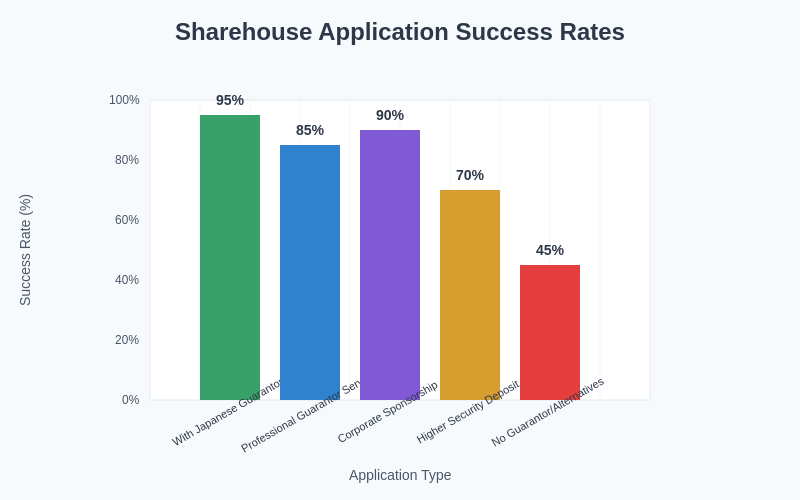
These statistics demonstrate how different approaches to guarantor requirements significantly impact application success rates, with traditional Japanese guarantors providing the highest approval rates while alternative arrangements still offer viable pathways for international residents.
Current Market Trends and Future Outlook
The Japanese rental market continues evolving toward greater accommodation of international residents as property owners recognize the growing economic importance of foreign tenants and the competitive advantages of inclusive rental policies that attract qualified applicants from diverse backgrounds and cultural contexts.
Generational changes in property management approaches reflect younger operators who have international experience or education and demonstrate greater willingness to adapt traditional practices to modern demographic realities, creating opportunities for international residents to access housing with more flexible requirements and culturally sensitive policies.
Best Tokyo neighborhoods for sharehouse living increasingly include areas where international-friendly properties cluster, creating concentration effects that provide multiple housing options without guarantor requirements and supportive community networks for foreign residents.
Government initiatives aimed at supporting international residents and addressing demographic challenges have begun influencing rental policies, though changes in traditional practices occur gradually and vary significantly between different property management companies, geographic areas, and market segments within Japan’s diverse housing ecosystem.
Technology solutions including digital verification systems, international credit assessment tools, and online guarantor services continue developing to address the practical challenges of traditional guarantor requirements while maintaining property owner protections, suggesting future evolution toward more accessible and internationally compatible rental practices.
Regional and Property Type Variations
Tokyo’s central districts tend to feature more international-friendly policies compared to suburban areas where traditional practices remain stronger, reflecting the demographic composition and competitive pressures in different segments of the rental market. Business district sharehouses near Tokyo Station often cater to international professionals and may offer more flexible guarantor alternatives.
Luxury sharehouses and premium properties sometimes waive guarantor requirements for qualified applicants while budget-oriented properties in suburban locations may maintain stricter traditional requirements, creating inverse relationships between price points and accessibility that can surprise international applicants expecting higher-priced properties to have more stringent requirements.
Cheaper sharehouse options in Tokyo suburbs may paradoxically present greater guarantor challenges despite lower rental costs, as suburban property managers often maintain more conservative approaches and have less experience working with international tenants compared to central Tokyo operators.
Age-specific sharehouses and gender-specific properties may apply different guarantor standards based on their target demographics, with some student-oriented properties offering institutional guarantor arrangements while professional-focused sharehouses might require individual guarantors or accept corporate sponsorship from employers.
The emergence of co-living brands and international management companies has created property segments with standardized policies that often include guarantor alternatives, though these options typically command premium prices that reflect the additional services and reduced application barriers they provide to international residents.
Understanding the guarantor system’s role in Japanese sharehouses empowers international residents to make informed housing decisions, prepare appropriate documentation and financial resources, and identify properties that align with their specific circumstances and available support networks. While guarantor requirements present genuine challenges, the evolving market offers increasing options for qualified applicants who approach the system with proper preparation and realistic expectations about the time and resources required to secure suitable accommodation.
The ongoing evolution of Japan’s rental market toward greater international accommodation suggests that guarantor requirements will continue adapting to demographic realities while maintaining core protective functions for property owners, creating opportunities for well-prepared international residents to access quality housing through various alternative arrangements and progressive property management approaches.
Disclaimer
This article is for informational purposes only and does not constitute legal or financial advice. Guarantor requirements and rental regulations in Japan can vary significantly between properties and may change over time. Readers should consult with legal professionals and conduct thorough research when making housing decisions. The effectiveness of strategies mentioned may vary depending on individual circumstances, property requirements, and current market conditions.