
The allure of an incredibly affordable sharehouse in one of the world’s most expensive cities can be irresistible, especially for budget-conscious international residents navigating Tokyo’s notoriously challenging housing market. However, listings that appear too good to be true often conceal significant problems, hidden costs, or even fraudulent schemes that can transform what seems like a bargain into a costly nightmare. Understanding the underlying factors that make some sharehouses suspiciously inexpensive can save you from financial losses, legal complications, and deeply unsatisfactory living experiences.
The Tokyo rental market operates on complex dynamics where legitimate pricing reflects genuine value propositions, while artificially low prices typically indicate compromised quality, problematic conditions, or deliberately misleading advertising practices. Experienced residents and housing professionals recognize specific warning signs that distinguish authentic budget options from potentially problematic situations, knowledge that proves invaluable for newcomers unfamiliar with local market standards and cultural expectations.
Understanding Tokyo’s Real Housing Market Dynamics
Tokyo’s housing costs reflect genuine economic realities including land values, construction expenses, regulatory compliance, and service quality standards that create predictable pricing ranges for different types of accommodation. How much Tokyo sharehouses really cost per month provides baseline expectations for what constitutes realistic pricing across various neighborhoods and accommodation types.
Properties priced significantly below market averages often compensate for reduced rent through compromised living conditions, inadequate maintenance, poor location characteristics, or additional fees that become apparent only after commitment. The relationship between price and value in Tokyo’s housing market rarely allows for genuine bargains without corresponding trade-offs that affect daily comfort, convenience, or safety.
Professional property managers and established sharehouse operators maintain consistent pricing structures that reflect their operational costs, service quality, and profit margins necessary for sustainable business operations. Dramatic price reductions typically indicate either temporary promotional offers with specific limitations or fundamental problems that make properties difficult to rent at standard market rates.
Market dynamics also involve seasonal fluctuations, promotional periods, and competitive pressures that can create legitimate opportunities for reduced pricing, but these genuine discounts typically involve modest reductions rather than dramatic departures from established market norms. Understanding these patterns helps distinguish between authentic opportunities and potentially problematic situations.
Hidden Costs That Inflate Total Expenses
The most common reason for suspiciously low advertised rents involves the strategic omission of mandatory additional costs that significantly increase total monthly expenses beyond the headline price. Understanding utility bills in Japanese sharehouses reveals how utility calculations can dramatically affect actual living costs compared to advertised base rents.
Management fees, cleaning charges, internet costs, and utility surcharges often add substantial amounts to monthly expenses, with some operators deliberately advertising artificially low base rents while recovering profits through inflated additional charges. These practices create misleading cost impressions that attract initial interest but result in financial surprises after contract signing.
Equipment rental fees for basic necessities like bedding, kitchenware, or air conditioning units represent another common source of hidden expenses that can double or triple actual monthly costs. What additional fees really mean in practice explores how these charges accumulate and affect budget planning for unsuspecting residents.
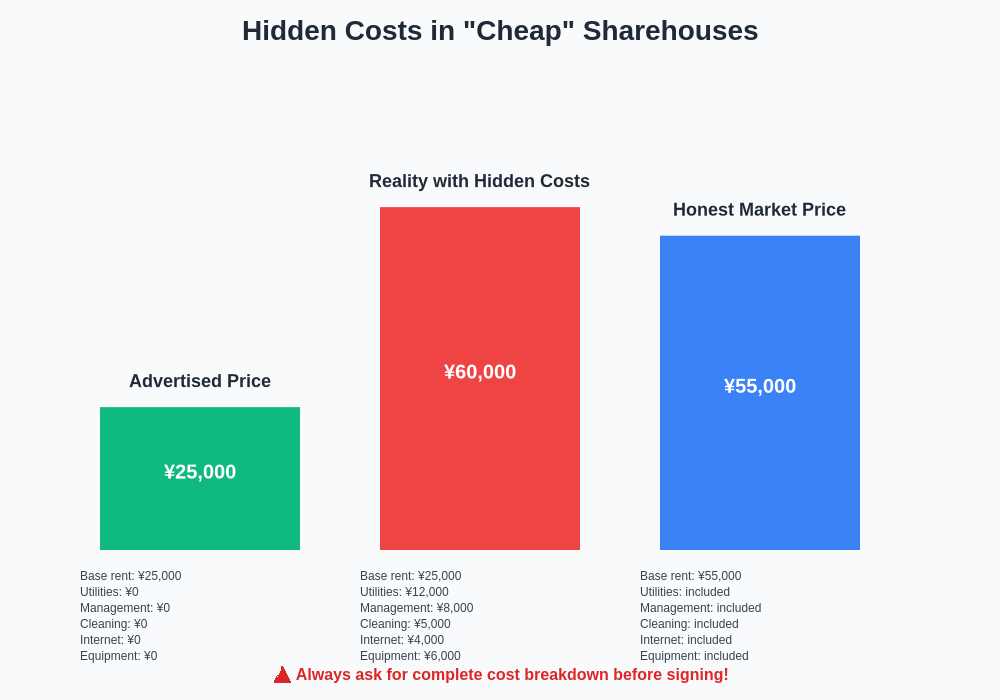
Security deposit manipulation through excessive damage assessment criteria, unrealistic cleaning standards, or administrative processing fees creates additional financial risks that effectively increase total occupancy costs well beyond advertised pricing. How to actually get your deposit back provides insights into common deposit-related problems and protection strategies.
Location-Based Cost Reductions and Trade-offs
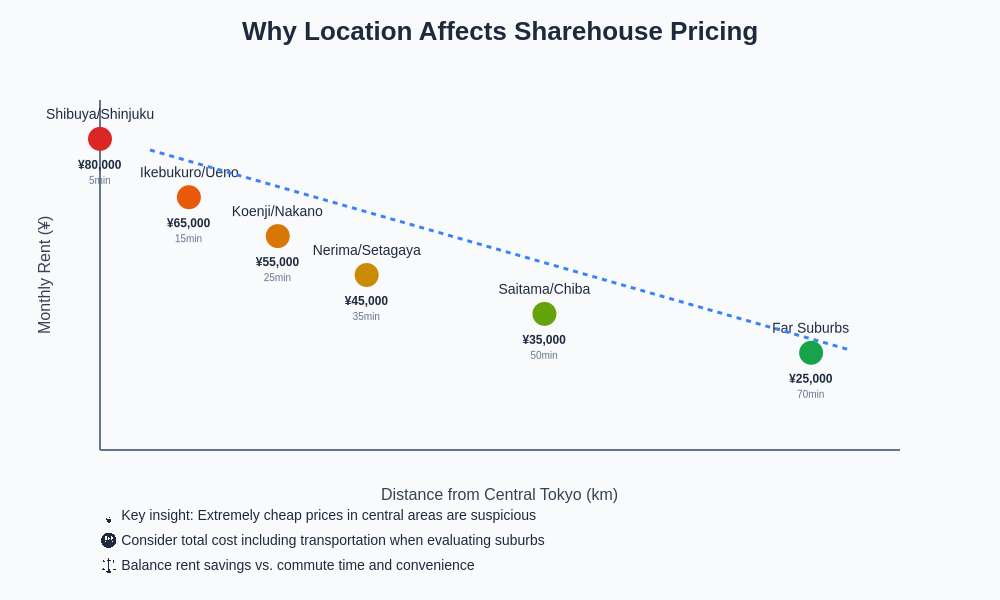
Genuinely affordable sharehouses often achieve lower pricing through remote locations that significantly increase transportation costs and reduce access to employment opportunities, educational institutions, and social activities. Cheaper sharehouse options in Tokyo suburbs examines how distance from central areas affects both rental costs and quality of life considerations.
Properties in less desirable neighborhoods may offer reduced rents due to safety concerns, noise pollution, limited amenities, or poor transportation connections that create legitimate reasons for below-market pricing. These location-based trade-offs can represent acceptable compromises for some residents but require honest evaluation of long-term implications for daily convenience and lifestyle satisfaction.
Environmental factors such as proximity to industrial areas, flight paths, busy highways, or entertainment districts can significantly reduce property values and rental prices while creating ongoing quality of life challenges that may not be immediately apparent during brief viewing visits.
Building age, construction quality, and maintenance standards in older or converted properties often justify reduced pricing through compromised comfort, energy efficiency, or aesthetic appeal that affects daily living experiences. Why some buildings lack proper ventilation highlights how structural compromises can create ongoing problems despite attractive initial pricing.
Quality Compromises That Reduce Property Values
Overcrowding represents a primary strategy for reducing per-person rental costs through increased occupancy density that compromises privacy, comfort, and facility access while maintaining total property revenue. Properties that squeeze excessive numbers of residents into limited space create inherent quality of life problems that justify reduced individual pricing but often result in unsatisfactory living experiences.
Inadequate maintenance, deferred repairs, and substandard amenities allow property operators to reduce operational expenses while offering lower rents that reflect genuine reductions in service quality and living standards. Why bathroom cleanliness affects health demonstrates how maintenance compromises can create serious health and comfort issues despite attractive pricing.
Furniture quality, equipment functionality, and common area amenities often suffer in budget-focused operations where cost cutting affects every aspect of the resident experience. Properties with broken appliances, uncomfortable furnishings, or inadequate facilities may offer reduced pricing that reflects their genuinely diminished value proposition.
Security compromises including inadequate building access controls, insufficient lighting, or poor neighborhood safety characteristics can justify reduced pricing while creating ongoing personal security concerns that affect daily peace of mind and overall satisfaction with the living arrangement.
Operational Issues That Force Price Reductions
Management quality problems including poor communication, inadequate support services, and ineffective conflict resolution create conditions that require reduced pricing to attract and retain residents despite frustrating operational deficiencies. How to handle roommate conflicts without moving out explores common management failures that affect resident satisfaction.
High resident turnover rates often necessitate aggressive pricing strategies to maintain occupancy levels when properties develop reputations for poor living conditions, problematic management, or resident compatibility issues. Properties with constantly changing populations may offer reduced rates to compensate for the instability and social disruption caused by frequent resident changes.
Legal compliance issues, permit problems, or regulatory violations can force operators to reduce pricing while resolving administrative complications that create uncertainty about long-term operational viability. Properties operating outside proper legal frameworks may offer attractive pricing that comes with significant risks regarding contract enforceability and resident protections.
Financial distress among property operators can lead to desperate pricing strategies that prioritize immediate cash flow over sustainable business operations, creating situations where bargain pricing reflects underlying business instability rather than genuine value propositions.
Recognizing Fraudulent Schemes and Scams
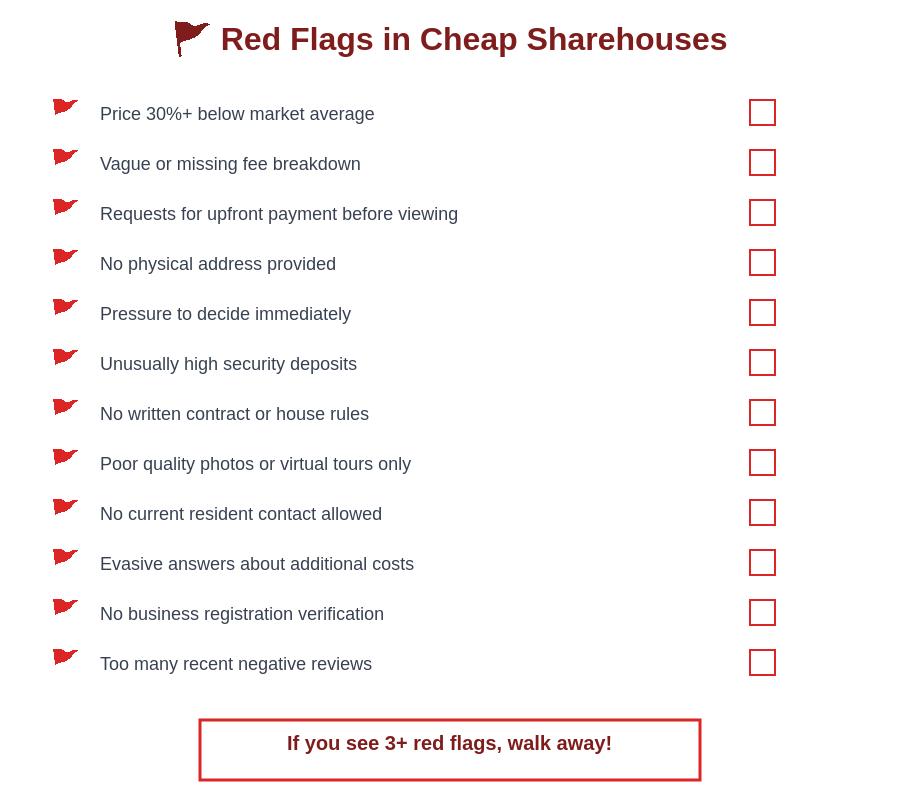
Advance fee fraud represents a serious risk where fake listings advertise incredibly attractive properties at below-market prices to collect application fees, deposits, or advance rent payments for properties that don’t exist or aren’t available for rental. How to spot financial red flags in sharehouse contracts provides guidance for identifying potentially fraudulent operations.
Identity theft operations may use attractive housing offers to collect personal documentation, financial information, and sensitive data for criminal purposes rather than legitimate housing arrangements. Requests for excessive personal information, unusual payment methods, or immediate document submission should trigger careful verification of operator legitimacy.
Subletting scams involve individuals illegally renting spaces they don’t own or have authority to sublet, creating situations where residents may face eviction, legal complications, or financial losses despite making good faith payments and following apparent rental agreements.
Bait-and-switch tactics advertise attractive properties that become unavailable upon contact, with operators then attempting to redirect prospects toward less desirable but available options at higher prices, using the initial attraction to generate leads for inferior alternatives.
Market Manipulation and Promotional Strategies
Introductory pricing promotions may offer genuine temporary discounts for initial periods followed by significant rent increases that make properties expensive despite attractive introductory rates. Understanding contract terms regarding rent escalation prevents commitment to arrangements that become unaffordable after promotional periods expire.
Loss leader strategies involve operators offering select units at below-cost pricing to attract attention and generate inquiries for their broader portfolio of standard-priced properties. These genuine bargains typically involve limited availability and specific qualification requirements that may not apply to most prospective residents.
Competitive pressure during low-demand periods can create legitimate opportunities for reduced pricing as operators adjust rates to maintain occupancy during seasonal fluctuations or market downturns. These market-driven price reductions typically affect multiple properties and reflect broader economic conditions rather than property-specific problems.
Group booking incentives and referral programs may provide authentic discounts for residents who commit to longer lease terms, bring multiple tenants, or participate in specific promotional campaigns that benefit both operators and residents through mutually advantageous arrangements.
Due Diligence Strategies for Evaluating Bargain Properties
Physical property inspection becomes especially critical when evaluating below-market pricing, requiring careful examination of building conditions, room quality, common area maintenance, and neighborhood characteristics that might justify reduced pricing through legitimate quality compromises versus indicating potential problems or misrepresentations.
Financial verification of operators through business registration checks, online reviews, and references from current or former residents provides essential information about legitimacy, reliability, and service quality that affects long-term satisfaction regardless of attractive initial pricing.
Contract analysis with particular attention to additional fees, escalation clauses, termination requirements, and service specifications helps identify hidden costs or unfavorable terms that may offset apparent pricing advantages through unexpected expenses or reduced flexibility.
Comparative market research involving multiple property viewings and price comparisons establishes realistic expectations for value relationships and helps distinguish between genuine bargains and suspiciously discounted properties that may involve compromises or risks not immediately apparent.
Legitimate Reasons for Below-Market Pricing
New property launches may offer introductory pricing to establish initial occupancy and generate positive reviews that support future marketing efforts, creating genuine opportunities for below-market pricing during limited promotional periods with clear terms and reasonable long-term pricing structures.
Seasonal availability fluctuations can create temporary pricing advantages during low-demand periods when operators reduce rates to maintain occupancy levels, particularly during academic calendar transitions or holiday periods when student populations and international residents may be less active in the housing market.
Corporate partnerships with educational institutions, employers, or international programs may subsidize housing costs for specific populations, creating legitimately reduced pricing for qualified participants while maintaining standard service quality and operational standards.
Renovation transitions where properties undergo improvements may offer reduced pricing for residents willing to accept temporary inconveniences during construction or upgrade periods, providing mutual benefits through reduced costs for residents and maintained occupancy for operators during improvement projects.
The key to navigating suspiciously affordable sharehouse options lies in maintaining healthy skepticism while conducting thorough research that distinguishes between legitimate bargains and potentially problematic situations. How to find the perfect sharehouse in Tokyo provides comprehensive guidance for evaluating all types of housing options including those with attractive pricing.
Understanding the relationship between price and value in Tokyo’s housing market empowers informed decision-making that prioritizes long-term satisfaction and financial security over short-term savings that may prove costly through hidden expenses, poor living conditions, or fraudulent schemes. The most successful sharehouse experiences typically involve realistic pricing that reflects genuine value rather than artificially reduced costs that compromise essential aspects of comfortable and secure living arrangements.
Disclaimer
This article is for informational purposes only and does not constitute professional legal or financial advice. The sharehouse market in Tokyo is constantly evolving, and specific pricing, regulations, and operator practices may change. Readers should conduct thorough research, verify information independently, and consult with relevant professionals when evaluating housing options. Individual experiences may vary, and this information should not be considered a substitute for personal due diligence and professional guidance.