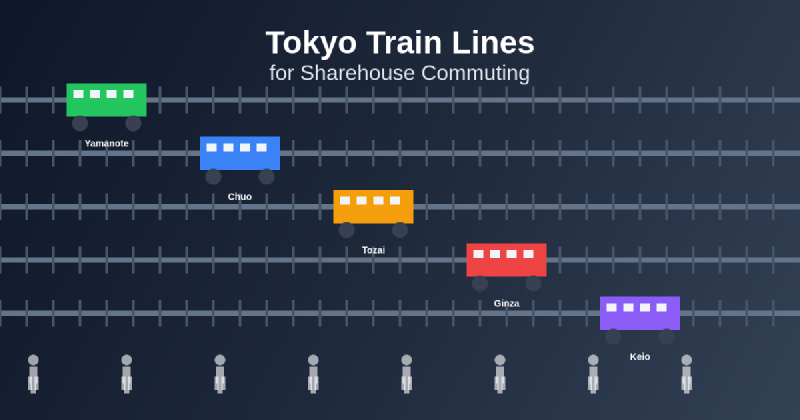
The choice of train line accessibility fundamentally shapes the sharehouse living experience in Tokyo, influencing everything from daily convenience and monthly expenses to career opportunities and social connections. Understanding which train lines provide optimal advantages for sharehouse residents requires careful analysis of factors extending far beyond simple proximity, encompassing frequency, reliability, cost efficiency, and network connectivity that can dramatically impact your quality of life in Japan’s sprawling metropolitan area.
The strategic selection of sharehouse locations based on superior train line access represents one of the most impactful decisions international residents can make, often determining the difference between seamless urban integration and daily transportation struggles that compound over months and years of residency. This comprehensive analysis will illuminate the specific characteristics that make certain train lines exceptionally suited for sharehouse commuting while revealing the hidden costs and benefits that significantly affect long-term satisfaction and financial stability.
Understanding Tokyo’s Complex Rail Network Structure
Tokyo’s rail network consists of multiple operators including JR East, Tokyo Metro, Toei Subway, and numerous private railway companies, each maintaining distinct service standards, pricing structures, and coverage areas that create vastly different commuting experiences depending on your chosen sharehouse location. How commute times impact your quality of life becomes particularly relevant when considering the cumulative effects of daily transportation decisions on personal well-being and professional performance.
The integration between different railway systems varies significantly across Tokyo, with some areas offering seamless transfers and unified ticketing while others require multiple transfers, separate fare payments, and extended walking distances that can transform simple journeys into complex logistical challenges. Understanding these connectivity patterns helps identify sharehouse locations that provide maximum flexibility and minimal daily friction.
JR lines typically offer the most extensive coverage and highest frequency services, particularly the Yamanote Line which forms the circular backbone of central Tokyo transportation. However, the popularity and central routing of JR services often result in severe overcrowding during peak hours and premium pricing that can significantly impact monthly transportation budgets for sharehouse residents.
Private railway companies such as Odakyu, Keio, and Tokyu often provide more comfortable commuting experiences with less crowding, express services, and integrated development around stations that create vibrant residential communities ideal for sharehouse living. These lines frequently offer better value propositions for residents living in suburban areas while maintaining reasonable access to central business districts.
Frequency and Reliability Considerations
Train frequency during peak and off-peak hours dramatically affects the practical usability of different lines for sharehouse residents who often maintain irregular schedules due to part-time work, language classes, and social activities that extend beyond traditional business hours. How late-night transportation limits social life highlights the importance of service hours and frequency for maintaining active social connections and professional flexibility.
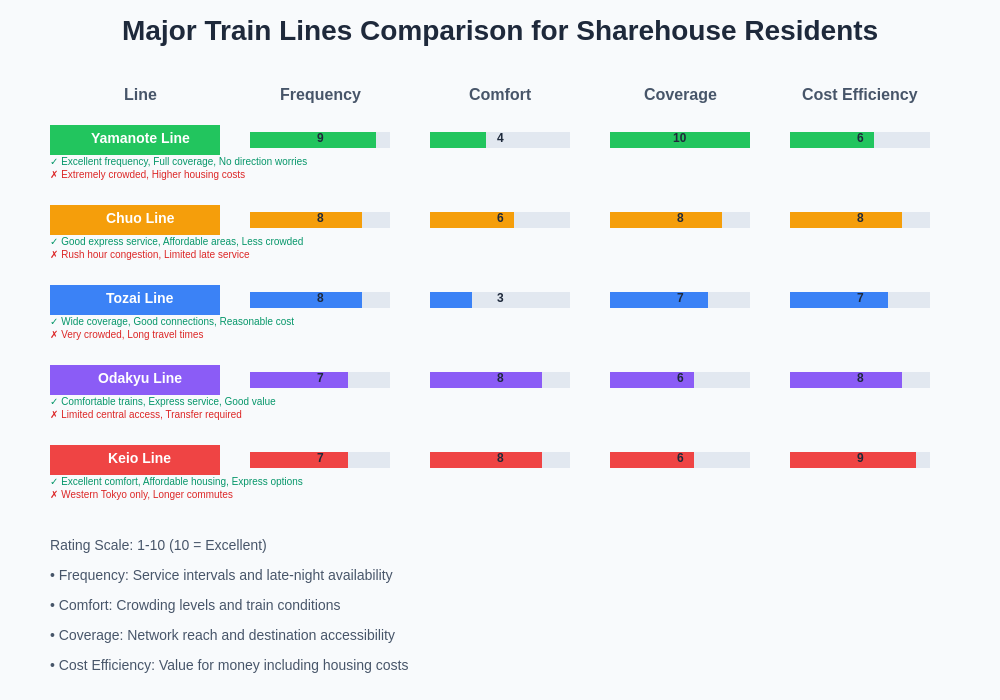
The Yamanote Line operates with intervals of 2-4 minutes during peak hours and maintains frequent service until nearly midnight, making it exceptionally convenient for sharehouse residents with varied schedules. However, this convenience comes with the trade-off of extreme overcrowding that can make commuting physically uncomfortable and mentally exhausting during rush hours.
Express and rapid services on private lines often provide superior comfort and speed for longer-distance commutes from suburban sharehouse locations, but their limited frequency requires more careful schedule planning and can create significant delays when missed connections occur. Understanding the balance between service frequency and comfort levels helps identify optimal train line choices for different lifestyle patterns.
Reliability during adverse weather conditions, system maintenance, and unexpected disruptions varies considerably between different operators and lines. Some lines maintain excellent punctuality records and robust backup systems, while others experience frequent delays that can cascade into significant schedule disruptions for daily commuting patterns.
Cost Analysis and Monthly Transportation Budgets
Transportation costs represent a substantial portion of monthly expenses for sharehouse residents, with significant variations between different train lines and route combinations that can impact overall living affordability. How transportation costs impact entertainment budgets demonstrates how commuting expenses directly affect disposable income and lifestyle choices for international residents.
Monthly commuter passes offer substantial savings compared to individual ticket purchases, but the cost-effectiveness varies dramatically depending on usage patterns, route complexity, and available discount programs. Some lines offer special pricing for students, while others provide integrated passes that cover multiple transportation modes including buses and subway systems.
Zone-based pricing systems versus distance-based pricing can create unexpected cost advantages or disadvantages depending on your specific travel patterns and destination requirements. Understanding these pricing structures helps identify locations where transportation costs remain manageable while maintaining access to desired areas of Tokyo.
The hidden costs of complex routing, such as multiple transfer fees and time penalties, can significantly increase both financial and time investments in daily commuting. Lines that provide direct access to major employment centers and educational institutions often justify higher housing costs through reduced transportation expenses and improved time efficiency.
Coverage Area and Destination Accessibility
The geographic coverage and destination accessibility of different train lines determine the range of opportunities available to sharehouse residents for employment, education, and social activities. How work location should influence sharehouse choice emphasizes the importance of matching transportation access with career and lifestyle objectives.
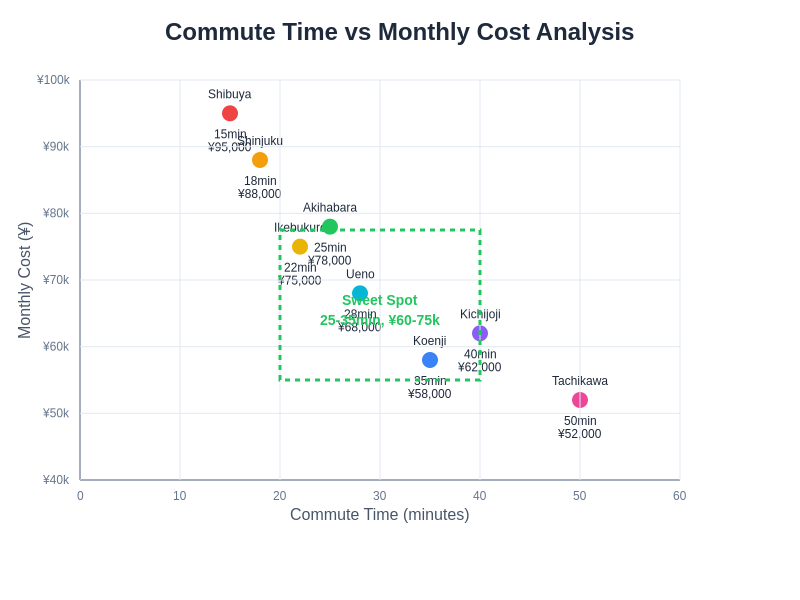
Central Tokyo lines such as the Yamanote, Marunouchi, and Ginza lines provide unparalleled access to business districts, government offices, and major commercial areas but often require premium location costs that may exceed sharehouse budget constraints. The concentration of employment opportunities along these lines can justify higher housing and transportation costs through improved career prospects and reduced commuting time.
Suburban lines extending to western Tokyo, such as the Chuo, Keio, and Odakyu lines, offer access to more affordable sharehouse options while maintaining reasonable connectivity to central business areas through express services and strategic transfer points. These lines often serve areas with lower living costs and more spacious accommodations that provide better value for sharehouse residents.
Northeastern lines including the Hibiya, Tozai, and various Toei lines serve areas with growing international communities and emerging business districts that may offer unique opportunities for career development and cultural integration. Understanding the demographic and economic trends along different lines helps anticipate future development and opportunity availability.
Rush Hour Dynamics and Overcrowding Patterns
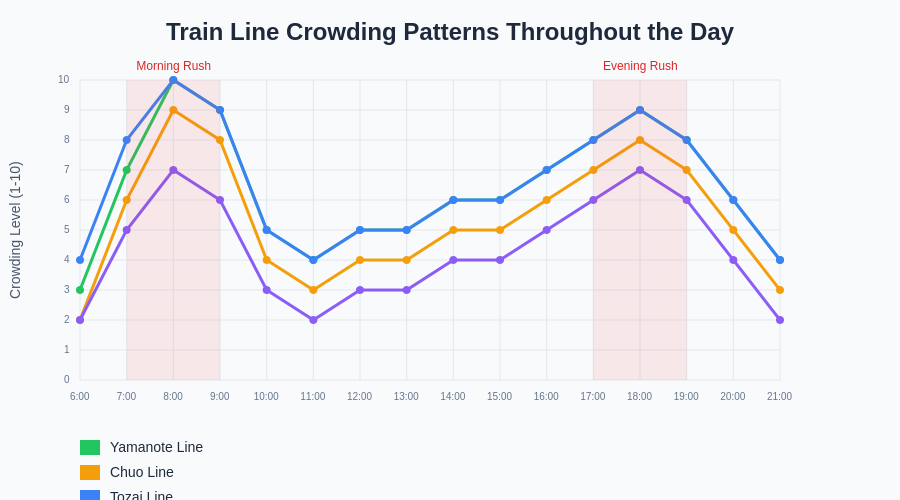
The severity and timing of rush hour overcrowding vary significantly between different train lines, with some experiencing extreme compression during standard business hours while others maintain more manageable capacity levels throughout the day. How rush hour timing affects work schedules explores strategies for navigating peak commuting periods and maintaining professional punctuality.
Lines serving primarily residential areas often experience reverse commuting patterns that provide more comfortable travel experiences for residents working in less conventional locations or maintaining flexible schedules. Understanding these flow patterns helps identify lines where comfortable commuting remains possible even during busy periods.
The introduction of women-only cars during rush hours on many lines provides additional comfort and safety considerations that can significantly influence the commuting experience for female sharehouse residents. These services vary in availability and timing between different operators and lines.
Express and local service combinations during peak hours create complex boarding and transfer dynamics that require local knowledge and experience to navigate efficiently. Some lines provide excellent express services that bypass congestion, while others offer only local services that amplify overcrowding problems.
Transfer Convenience and Network Integration
The ease and efficiency of transfers between different lines significantly impact the practical utility of Tokyo’s rail network for sharehouse residents who often need to reach diverse destinations for work, study, and social activities. How metro access impacts your social life highlights the importance of network connectivity for maintaining active social and professional relationships.
Major transfer hubs such as Shinjuku, Shibuya, and Tokyo stations provide excellent connectivity but often involve long walking distances, complex navigation, and significant time investments that can make transfers more burdensome than beneficial. Understanding the layout and efficiency of these major interchange points helps evaluate the true convenience of different routing options.
Smaller transfer stations often provide quicker and less crowded interchange experiences while still maintaining good connectivity to multiple destinations. These intermediate hubs can offer superior convenience for daily commuting while avoiding the chaos and complexity of major terminal stations.
Same-platform transfers and cross-platform transfers provide significant time and convenience advantages compared to transfers requiring exit and re-entry through fare gates. The availability of these efficient transfer types varies significantly between different station combinations and can dramatically affect route selection strategies.
Safety and Security Considerations
Personal safety and security levels vary between different train lines and their service areas, with some lines maintaining excellent safety records and responsive security systems while others experience higher incidence rates of various safety concerns. Why some areas have higher crime rates provides context for evaluating neighborhood and transportation safety factors.
Late-night service availability and safety measures during off-peak hours significantly impact the practical usability of different lines for sharehouse residents with varied schedules and social commitments. Some lines maintain strong security presence and well-lit stations throughout service hours, while others may present safety concerns during less busy periods.
Emergency response systems, station staffing levels, and passenger assistance services vary between different operators and lines. Understanding these safety infrastructure differences helps evaluate the overall security and reliability of different transportation options for daily use.
The presence of international residents and English-language support systems along different lines can provide additional security and comfort for foreign sharehouse residents, particularly during emergency situations or when seeking assistance with transportation issues.
Future Development and Service Improvements
Planned infrastructure improvements, service expansions, and technological upgrades significantly affect the long-term value and convenience of different train lines for sharehouse residents considering multi-year housing commitments. Understanding development timelines and planned improvements helps anticipate changes in transportation quality and accessibility.
New station openings, line extensions, and service frequency improvements can dramatically alter the attractiveness and convenience of previously overlooked areas for sharehouse living. Monitoring these development plans provides opportunities to identify emerging areas with improving transportation access before housing costs increase.
Technology implementations such as platform screen doors, improved ventilation systems, and enhanced passenger information systems vary between different lines and stations. These improvements significantly impact daily comfort and convenience levels for regular commuters.
Integration with emerging transportation technologies, autonomous systems, and smart city initiatives may provide additional advantages for certain lines and service areas in the coming years. Understanding which operators and lines prioritize technological advancement helps anticipate future service quality improvements.
Line-Specific Advantages and Characteristics
The Yamanote Line offers unparalleled convenience and frequency but suffers from extreme overcrowding and premium location costs that may not align with sharehouse budget constraints. Its circular route provides excellent connectivity to major districts while eliminating directional concerns that affect other lines.
The Chuo Line provides excellent express services to western Tokyo suburbs with reasonable pricing and less crowding than central lines, making it ideal for sharehouse residents seeking affordable housing with maintained central access. However, morning inbound services experience significant overcrowding that requires careful timing and patience.
Private lines such as Odakyu and Keio offer superior comfort, integrated station development, and efficient express services that create attractive living environments around station areas. These lines often provide better value propositions for sharehouse residents willing to accept slightly longer commute times in exchange for improved comfort and lower housing costs.
The Tozai Line serves diverse areas from business districts to residential suburbs while maintaining good frequency and reasonable pricing, but experiences extreme overcrowding that ranks among Tokyo’s most congested services during peak hours. Understanding timing and alternative routing helps maximize the benefits while minimizing the drawbacks of this otherwise excellent line.
Making Strategic Transportation Decisions
Successful sharehouse selection requires balancing transportation convenience against housing costs, commute comfort against location prestige, and current needs against future flexibility to create optimal living situations that support both immediate satisfaction and long-term goals. How to find perfect sharehouse tokyo provides comprehensive guidance for integrating transportation considerations into overall housing decisions.
Testing potential commute routes during different times and days provides realistic assessments of actual travel experiences that may differ significantly from theoretical route planning and official schedule information. Direct experience with peak and off-peak conditions helps evaluate whether specific train line access aligns with personal tolerance levels and schedule requirements.
Building flexibility into transportation planning through multiple route options and backup alternatives provides resilience against service disruptions, schedule changes, and evolving life circumstances that may affect commuting needs over time. Understanding the full range of transportation options from potential sharehouse locations helps ensure long-term adaptability and satisfaction.
The integration of transportation decisions with broader lifestyle goals, career objectives, and social priorities creates comprehensive living strategies that support overall life satisfaction rather than optimizing individual factors in isolation. Best tokyo neighborhoods for sharehouse living offers additional insights into balancing transportation access with community characteristics and lifestyle compatibility.
The selection of optimal train line access for sharehouse living represents a complex decision that significantly impacts daily quality of life, monthly expenses, and long-term satisfaction with Tokyo residency. Understanding the nuanced differences between various lines and their service characteristics empowers informed decision-making that aligns transportation convenience with personal priorities and budget constraints while maintaining flexibility for future changes and opportunities.
Disclaimer
This article is for informational purposes only and does not constitute professional advice regarding transportation or housing decisions. Train schedules, fares, and service characteristics are subject to change without notice. Readers should verify current information and conduct personal research when making housing and transportation decisions. Individual experiences with train lines may vary depending on specific routes, timing, and personal preferences.