The seemingly innocent act of storing spices in a sharehouse kitchen has evolved into one of the most contentious battlegrounds in Tokyo’s international co-living spaces. What begins as simple food storage quickly transforms into complex territorial disputes that reflect deeper cultural values, personal boundaries, and the fundamental challenge of sharing intimate domestic spaces with strangers from vastly different culinary traditions. Understanding why spice storage becomes such a flashpoint reveals profound insights into human psychology, cultural identity, and the delicate social dynamics that govern successful communal living arrangements.
The modern sharehouse kitchen serves as a microcosm of globalization, where Indian curry spices sit alongside Japanese miso paste, Mexican chilies compete for space with Korean gochujang, and European herbs crowd against Southeast Asian aromatics. This culinary diversity, while enriching the cultural experience, creates unprecedented logistical challenges and psychological tensions that most residents never anticipate when signing their rental agreements. The spice cabinet becomes a contested territory where personal identity, cultural pride, and practical necessity collide in ways that can either foster beautiful cross-cultural understanding or explode into bitter household conflicts.
The Psychology of Culinary Territory
Human attachment to food extends far beyond mere sustenance, encompassing deep-rooted connections to cultural identity, childhood memories, and personal comfort that intensify dramatically when living in foreign environments. Living with Japanese roommates in Tokyo sharehouses often amplifies these psychological dynamics as residents navigate the intersection of traditional Japanese minimalism with international residents’ diverse culinary needs and storage expectations.
The territorial behavior surrounding spice storage emerges from fundamental human instincts about resource protection and personal space that predate modern civilization. When individuals invest significant financial resources in purchasing specialty spices, particularly expensive saffron, imported vanilla beans, or rare regional seasonings that connect them to distant homelands, the psychological investment creates emotional attachments that transform simple food storage into personal territory that feels violated when others encroach upon designated spaces.
Cultural conditioning around food sharing varies dramatically between societies, with some cultures emphasizing communal cooking and ingredient sharing while others maintain strict personal ownership boundaries that extend to individual salt containers. These conflicting approaches create confusion and resentment when residents operate under different cultural assumptions about what constitutes appropriate kitchen behavior and resource utilization in shared living environments.
The scarcity mindset that develops in shared kitchens intensifies protective behaviors around valuable ingredients, particularly when residents have experienced previous losses of expensive items or witnessed others using personal supplies without permission. This psychological state transforms ordinary spice storage into strategic resource hoarding that prioritizes protection over convenience or community building, creating artificial shortages and competition even in abundance.
Cultural Clashes in Flavor Profiles
The collision of diverse culinary traditions within confined kitchen spaces creates inevitable conflicts that extend far beyond simple storage logistics into fundamental disagreements about appropriate flavors, cooking methods, and sensory experiences. How cooking odors create cultural conflicts explores how aromatic differences can escalate from minor annoyances into major household disputes that threaten community harmony and individual comfort within shared living spaces.
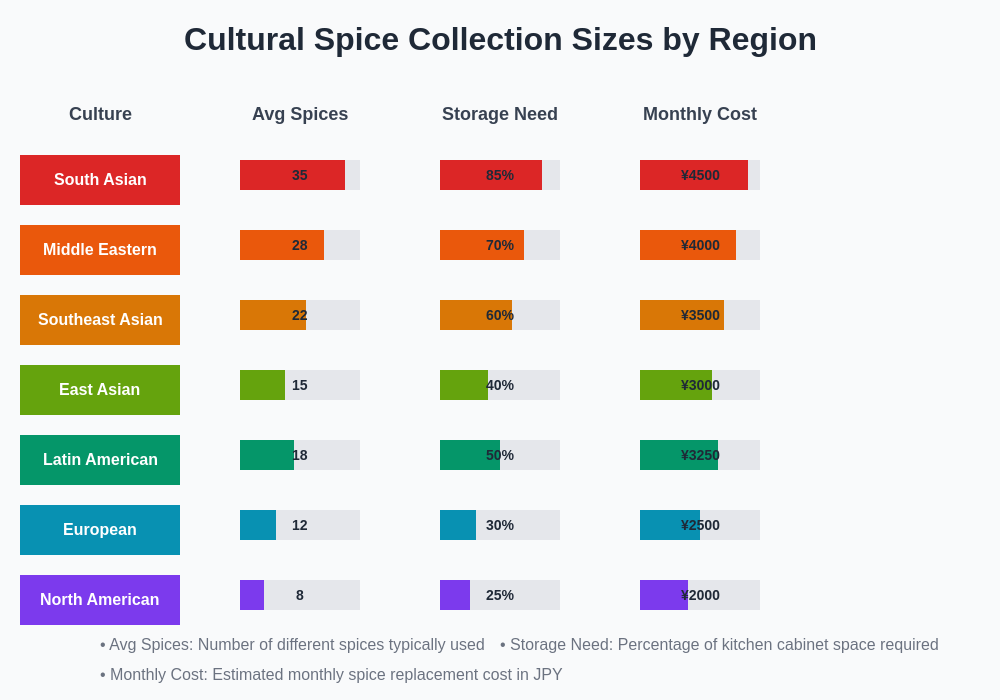
Asian cooking traditions often rely heavily on pungent ingredients like fish sauce, fermented pastes, and aromatic spice blends that can overwhelm residents unaccustomed to these intense flavors and odors. When these ingredients are stored in shared spaces, their powerful scents can permeate other foods and create lasting aromatic associations that some residents find deeply unpleasant or culturally alienating, leading to requests for storage restrictions that feel discriminatory to those whose cultural cuisines depend on these essential ingredients.
European and American cooking traditions typically emphasize milder herb profiles and individually stored seasonings that occupy minimal space and produce subtle aromas. Residents from these backgrounds may feel overwhelmed by the sheer volume and intensity of spices that other cultural groups consider essential basics, creating perceived storage inequality where some residents appear to monopolize shared kitchen resources while others maintain modest spice collections that seem inadequate for their cooking needs.
Middle Eastern and South Asian culinary traditions require extensive spice collections with dozens of individual seasonings, whole spices that need grinding, and complex blends that must be stored separately to maintain flavor integrity. The storage requirements for these traditions can easily overwhelm kitchen cabinet space and create visual clutter that conflicts with Japanese aesthetic principles or minimalist living philosophies embraced by other residents who prefer clean, uncluttered environments.
Economic Inequality and Spice Hoarding
The significant cost differences between basic seasonings and specialty international ingredients create economic disparities that manifest as protective territorial behavior around expensive spice collections. Understanding utility bills in Japanese sharehouses often reveals how financial stress affects all aspects of shared living, including food-related expenses that can represent substantial portions of tight student or working holiday budgets.
High-quality spices can cost exponentially more than basic seasonings, with items like authentic saffron, cardamom pods, or specialty chili varieties representing significant financial investments for residents on limited budgets. When these expensive ingredients disappear or diminish mysteriously, the financial loss creates genuine hardship that transforms future storage behavior into protective hoarding that prioritizes security over sharing or community building within the household environment.
Budget disparities between residents create resentment when some individuals purchase premium ingredients while others survive on basic seasonings, leading to perceived unfairness around storage space allocation and usage rights. Residents with extensive spice collections may feel entitled to more storage space due to their investment, while budget-conscious residents may feel displaced from adequate storage areas despite paying equal housing costs and deserving equal kitchen access rights.
The temptation to “borrow” small amounts of expensive spices creates ongoing tension where owners must constantly monitor their supplies and implement protective measures that feel antisocial but seem necessary for financial self-protection. This monitoring behavior transforms communal kitchen spaces into surveillance zones where residents watch each other’s cooking activities and develop suspicious attitudes that undermine trust and community building efforts.
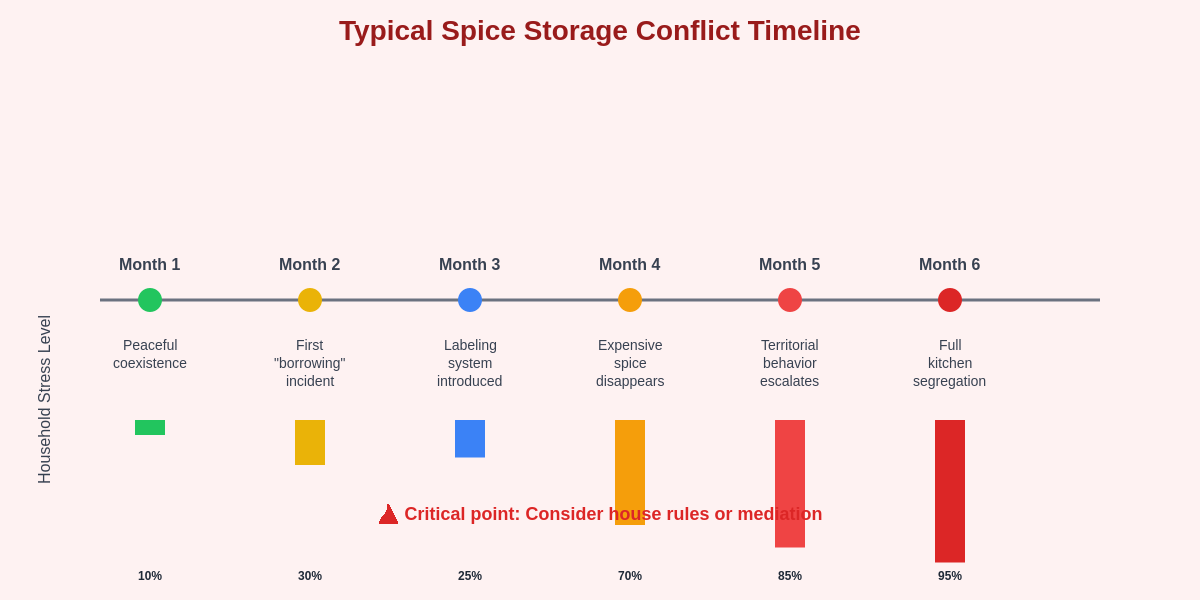
The escalation pattern follows predictable stages as residents adjust to shared living realities and territorial instincts emerge through repeated resource conflicts.
Storage Logistics and Space Wars
Limited kitchen storage space in typical Tokyo sharehouses creates zero-sum competition where one resident’s spice collection necessarily displaces another’s storage options. Kitchen politics actually work in Japanese sharehouses reveals how storage allocation decisions become proxy battles for household hierarchy, respect, and fundamental fairness in resource distribution among residents with competing needs and different cultural storage expectations.
The vertical storage challenge in Japanese kitchen cabinets, designed for traditional cooking methods and ingredient types, proves inadequate for international spice collections that require horizontal accessibility and temperature-controlled environments. Tall spice containers cannot fit standard cabinet heights, while wide spice racks block access to other storage areas, creating storage tetris games where every placement decision affects multiple residents’ access to essential kitchen resources and cooking convenience.
Refrigerated spice storage adds another layer of complexity where certain ingredients require temperature control but compete with limited refrigerator space already strained by residents’ individual food storage needs. Specialty items like certain chili pastes, nut oils, or ground spices deteriorate rapidly in Tokyo’s humid climate, creating pressure for refrigerated storage that many residents view as luxury space allocation rather than legitimate preservation necessity.
The visual impact of extensive spice collections can overwhelm small kitchen spaces and create aesthetic conflicts with residents who prefer minimalist environments or have different standards for organized appearance. What one resident considers a well-stocked cooking resource, another may perceive as cluttered chaos that degrades the shared living environment and creates stress through visual overwhelm in spaces meant for relaxation and nourishment.
Labeling Wars and Ownership Disputes
The introduction of labeling systems to identify spice ownership creates new categories of conflict around implementation, enforcement, and respect for personal property boundaries in shared spaces. How to handle roommate conflicts without moving out becomes essential knowledge when spice labeling disputes escalate into broader household tensions that affect all aspects of communal living and social relationships.
Multilingual labeling challenges arise when residents use different writing systems, languages, or cultural naming conventions for identical ingredients, creating confusion about ownership and usage rights. Japanese residents may label items in kanji while international residents use romanized script, leading to misidentification and accidental usage that feels like theft to owners who cannot verify whether others truly misunderstood labeling or deliberately ignored ownership markers.
The aesthetics of labeling systems create secondary conflicts where some residents prefer discrete, minimal labeling while others use bold, colorful identification systems that other residents find visually offensive or culturally inappropriate. These aesthetic differences reflect broader cultural values about personal expression, property rights, and appropriate behavior in shared spaces that extend far beyond simple spice storage into fundamental living philosophy disagreements.
Enforcement of labeling respect varies dramatically between residents, with some individuals rigorously honoring all ownership markers while others maintain casual attitudes toward “borrowing” small amounts of labeled ingredients. This inconsistent enforcement creates unfair situations where respectful residents subsidize the cooking of those who ignore labeling systems, leading to resentment and eventual protective escalation that transforms friendly sharing into rigid territorial behavior.
Cultural Food Sharing Traditions
Different cultural approaches to food sharing create incompatible expectations about spice usage rights and community resource attitudes in sharehouse environments. Cultural differences affect friendship building through daily interactions around shared resources like cooking ingredients, where misaligned expectations about sharing can either create beautiful cross-cultural bonds or generate lasting resentments that poison household relationships.
Mediterranean and Latin American cultures often emphasize generous sharing of cooking ingredients as expressions of hospitality and community building, leading residents from these backgrounds to offer spices freely while expecting reciprocal generosity from housemates. When this generosity meets cultures that maintain strict personal property boundaries, the resulting asymmetrical sharing creates resentment on both sides and confusion about appropriate social behavior in multicultural living environments.
East Asian cultures may emphasize respectful restraint and formal permission-seeking before using others’ ingredients, creating elaborate social protocols around spice sharing that feel unnecessarily complicated to residents from more casual sharing cultures. These protocol differences can make spontaneous cooking collaborations difficult while creating opportunities for cultural misunderstandings when residents violate unspoken etiquette rules through ignorance rather than malice.
Northern European cultures often maintain individual ownership approaches where sharing requires explicit negotiation and reciprocal arrangements, creating transactional relationships around spice usage that feel cold or unfriendly to residents from more communal cultural backgrounds. These transactional approaches can prevent the community building that many sharehouse residents seek while protecting individual resources from exploitation by less considerate housemates.
Spoilage, Quality, and Freshness Conflicts
The varying standards for spice freshness and quality between cultural traditions create conflicts around storage duration, replacement timing, and acceptable deterioration levels. Food storage rules impact your eating habits in ways that extend beyond individual dietary choices into household dynamics where one resident’s expired ingredients affect communal storage space and cooking environment quality for all household members.
Professional cooking backgrounds create elevated standards for spice freshness that conflict with casual cooking approaches where residents use ingredients until completely depleted regardless of flavor deterioration. These quality standards can create waste conflicts where professional cooks dispose of ingredients that amateur cooks consider perfectly usable, leading to disputes about resource waste and replacement responsibilities in shared kitchen environments.
Climate adaptation challenges in Tokyo’s humid environment accelerate spice deterioration rates for residents unaccustomed to tropical storage requirements, creating unexpected replacement costs and storage failures that affect household dynamics. Residents from dry climates may struggle with proper storage techniques while those from similar climates may feel frustrated by others’ improper storage that accelerates spoilage and increases costs for everyone sharing storage spaces.
The economics of replacing deteriorated spices become complicated when storage failures result from inadequate shared storage conditions rather than individual mismanagement, creating debates about financial responsibility for losses caused by systemic household infrastructure problems. These replacement cost disputes can escalate into broader conflicts about household maintenance standards and individual versus collective responsibility for preserving shared resources.
Strategic Territory Establishment
Experienced sharehouse residents develop sophisticated strategies for establishing and maintaining spice storage territory that minimize conflicts while protecting personal cooking interests. Making friends through Tokyo sharehouse communities often requires navigating these territorial dynamics successfully while building positive relationships that transcend kitchen politics and resource competition.
Early arrival advantages allow residents to claim prime storage locations before others establish territorial claims, creating lasting advantages in storage convenience and access that can influence cooking frequency and meal quality throughout entire tenancy periods. Strategic residents may invest in additional storage solutions or organize existing spaces to maximize their territory while appearing to maintain fairness in space allocation among household members.
Portable storage solutions enable residents to maintain control over spice collections while avoiding fixed territorial claims that create resentment among other household members. Personal spice racks, storage containers, or mobile organization systems allow individuals to protect their investments while adapting to changing household dynamics and storage space availability without engaging in territorial conflicts with rotating residents.
Diplomatic relationship building around kitchen usage can create informal alliances and sharing agreements that benefit all parties while avoiding the rigid territorial behavior that destroys household harmony. Successful residents often establish early relationships with housemates that include explicit discussions about cooking preferences, sharing boundaries, and storage expectations that prevent later conflicts through proactive communication.
Resolution Strategies and House Rules
Effective household management requires developing explicit spice storage policies that address cultural differences, economic disparities, and space limitations while maintaining flexibility for changing resident needs. Japanese sharehouse rules every foreigner should know provides foundation knowledge for understanding formal rule structures, but successful spice storage management often requires informal negotiations and cultural sensitivity that extend beyond written policies.
Designated storage zones can reduce territorial conflicts by providing each resident with defined space allocations that eliminate competition while ensuring equitable access to storage resources. These systems work best when combined with clear policies about shared versus personal ingredients and explicit guidelines for storage duration, labeling requirements, and cleanliness standards that all residents understand and agree to follow consistently.
Community spice funds enable residents to collectively purchase commonly used ingredients while maintaining individual control over specialty items that reflect personal culinary preferences and cultural needs. These hybrid systems can reduce overall costs while eliminating many territorial disputes, though they require ongoing coordination and financial management that some households find too complicated to maintain effectively over time.
Regular kitchen reorganization sessions provide opportunities for diplomatic territory adjustment and conflict resolution while maintaining household flexibility as residents change and cooking needs evolve. These sessions can address emerging storage problems before they escalate into territorial conflicts while creating opportunities for cultural exchange and community building around shared culinary interests and cooking collaboration.
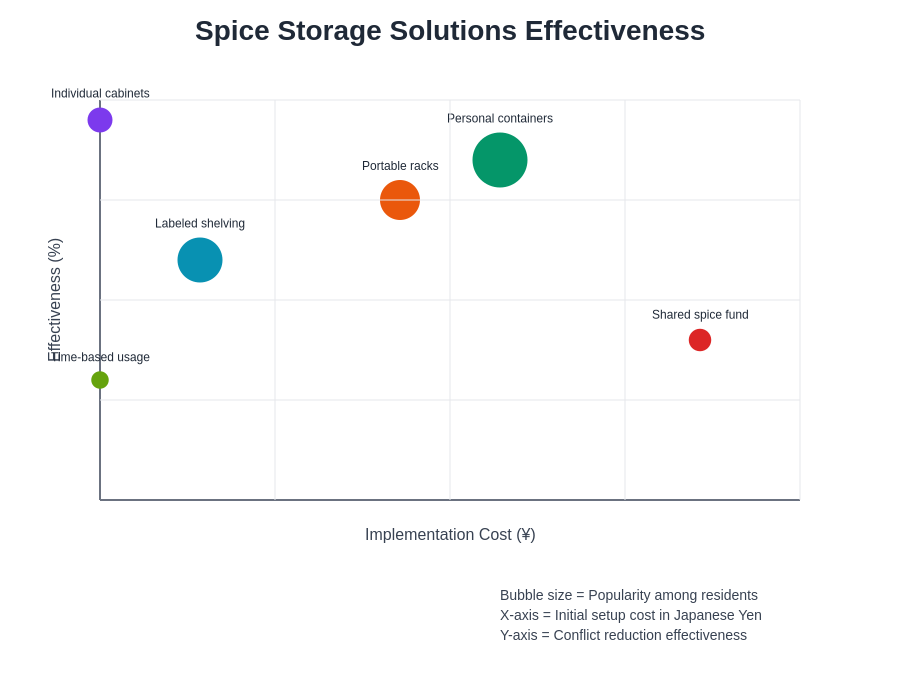
Different approaches to spice storage management show varying levels of success in reducing conflicts while balancing cost considerations and resident satisfaction.
The intricate dynamics of spice storage territoriality in Tokyo sharehouses reflect fundamental challenges of cross-cultural living that extend far beyond simple logistics into questions of identity, respect, economics, and community building. Successful navigation of these challenges requires cultural sensitivity, clear communication, creative problem-solving, and genuine commitment to building inclusive communities where diverse culinary traditions can coexist peacefully. Understanding these dynamics helps residents anticipate potential conflicts while developing strategies that protect individual needs without sacrificing the community benefits that make sharehouse living such a unique and rewarding experience in Japan’s vibrant international community.
Disclaimer
This article is for informational purposes only and reflects common experiences in Tokyo sharehouses. Individual sharehouse rules, cultural dynamics, and resident relationships may vary significantly. Readers should communicate directly with housemates about storage preferences and kitchen policies. The effectiveness of suggested strategies may depend on specific household dynamics, cultural composition, and individual personalities within each living arrangement.