The phenomenon of takeout containers rapidly accumulating in Tokyo sharehouses represents a pervasive issue that transcends simple laziness or poor organization, reflecting deeper structural challenges within modern urban living arrangements and Japan’s sophisticated food delivery ecosystem. This seemingly mundane problem reveals complex interactions between cultural practices, economic pressures, space limitations, and environmental consciousness that collectively create perfect conditions for packaging waste to overwhelm shared living spaces.
Understanding why takeout containers accumulate so quickly in sharehouse environments requires examining multiple interconnected factors that extend far beyond individual responsibility or household management skills. The rapid proliferation of food delivery services, combined with Tokyo’s unique urban density and sharehouse living dynamics, creates an ecosystem where packaging waste generation outpaces disposal capabilities, leading to mounting frustration among residents and ongoing conflicts over responsibility and cleanliness standards.
The Modern Food Delivery Revolution
Tokyo’s food delivery landscape has undergone dramatic transformation over the past decade, with platforms like Uber Eats, Demae-can, and countless restaurant-specific services making takeout more accessible and convenient than ever before. How food delivery apps change sharehouse dynamics explores how this convenience revolution has fundamentally altered eating patterns and waste generation in shared living environments.
The sheer volume of packaging materials accompanying modern food delivery orders far exceeds what previous generations of takeout produced, with multiple layers of bags, containers, utensils, napkins, and promotional materials creating substantial waste streams from single meals. Restaurant chains and delivery platforms have embraced increasingly elaborate packaging systems designed to ensure food quality during transport, often prioritizing presentation and food safety over environmental impact or disposal convenience.
Individual meal orders frequently arrive with enough packaging materials to fill entire garbage bags, multiplying exponentially when multiple residents order separately rather than coordinating group purchases. The psychological ease of ordering food through mobile applications removes traditional barriers that once limited takeout frequency, leading to consumption patterns that generate packaging waste at unprecedented rates.
Space Constraints and Storage Limitations
Tokyo sharehouses typically feature severely limited kitchen and storage space that cannot accommodate the volume of packaging waste generated by regular takeout consumption among multiple residents. Limited storage forces you to live minimally explains how space restrictions affect daily living patterns and waste management capabilities in shared accommodations.
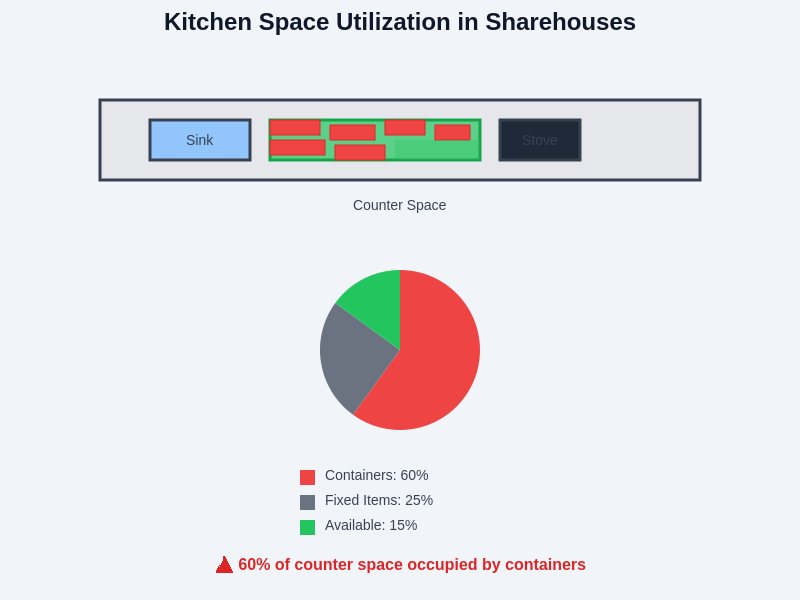
Counter space in sharehouse kitchens often measures less than two meters total, creating immediate conflicts when residents attempt to unpack takeout orders while maintaining space for food preparation and other kitchen activities. The lack of dedicated staging areas for packaging disposal means containers and bags accumulate on limited surface areas, creating visual clutter and practical obstacles that compound over time.
Garbage sorting requirements in Tokyo demand significant storage space for separated waste categories, but sharehouses rarely provide adequate facilities for the complex sorting systems required by local regulations. Residents must store different types of packaging materials separately while waiting for appropriate collection days, creating multiple accumulation points throughout limited living spaces.
Refrigerator space limitations force residents to keep leftover food in original takeout containers rather than transferring to more space-efficient storage solutions, leading to temporary storage becoming permanent clutter as busy schedules prevent timely food consumption and container cleaning.
Cultural and Social Dynamics
The intersection of Japanese cleanliness standards with international residents’ varying cultural backgrounds creates complex social dynamics around responsibility, cleanliness expectations, and collective action regarding waste management. How cultural differences affect friendship building provides insights into how diverse backgrounds influence shared living experiences and conflict resolution.
Different cultural approaches to communal responsibility and individual accountability create confusion about who bears responsibility for cleaning and disposing of takeout packaging, particularly when containers accumulate in shared spaces over extended periods. Some cultures emphasize individual responsibility for personal waste, while others expect collective action and shared cleaning duties that may not align with other residents’ expectations.
Language barriers often prevent effective communication about waste sorting requirements, disposal schedules, and household rules regarding takeout packaging, leading to well-intentioned residents inadvertently contributing to accumulation problems through misunderstanding rather than negligence. How language barriers complicate legal documents highlights similar communication challenges that affect daily living arrangements.
Social hierarchies and power dynamics within sharehouses can prevent direct confrontation about cleanliness issues, allowing problems to escalate rather than being addressed through clear communication and collaborative solutions. Newer residents may feel unable to address issues created by established housemates, while long-term residents may feel frustrated by perceived inconsideration from newcomers.
Economic Factors and Time Constraints
The economic pressures facing many sharehouse residents create time poverty that prioritizes convenience over environmental responsibility or household organization, making takeout an attractive solution despite its packaging waste implications. How student budgets require different strategies explores how financial constraints influence daily living decisions and priorities.
Working multiple jobs or maintaining demanding study schedules leaves little time for grocery shopping, meal preparation, and thorough cleanup, making takeout orders seem like efficient time management despite their environmental and space costs. The immediate convenience of delivered meals outweighs long-term consequences when residents face competing demands on their limited time and energy.
Delivery platforms’ promotional strategies and discount offerings encourage frequent ordering through time-limited deals and minimum order requirements that incentivize larger purchases, generating more packaging waste per transaction while appealing to budget-conscious residents seeking value maximization.
The hidden costs of takeout packaging disposal, including time spent sorting waste and potential fines for improper disposal, rarely factor into ordering decisions because these consequences appear distant and abstract compared to immediate hunger and convenience needs.
Waste Sorting Complexity
Tokyo’s sophisticated waste sorting requirements create significant barriers to timely container disposal, particularly for international residents unfamiliar with complex categorization systems that vary between neighborhoods and building types. How recycling rules vary by Tokyo ward explains the intricate systems that residents must navigate for proper waste disposal.
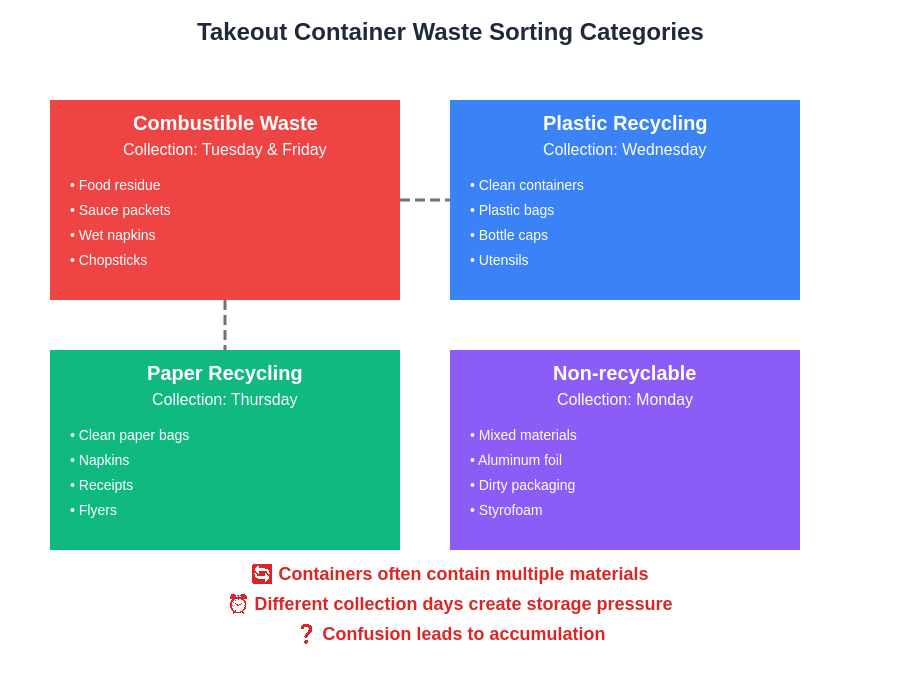
Different materials within single takeout orders require separation into multiple waste categories, including combustible waste, plastic recycling, paper recycling, and potentially hazardous materials, creating multiple decision points that slow disposal processes and increase the likelihood of temporary storage becoming permanent accumulation.
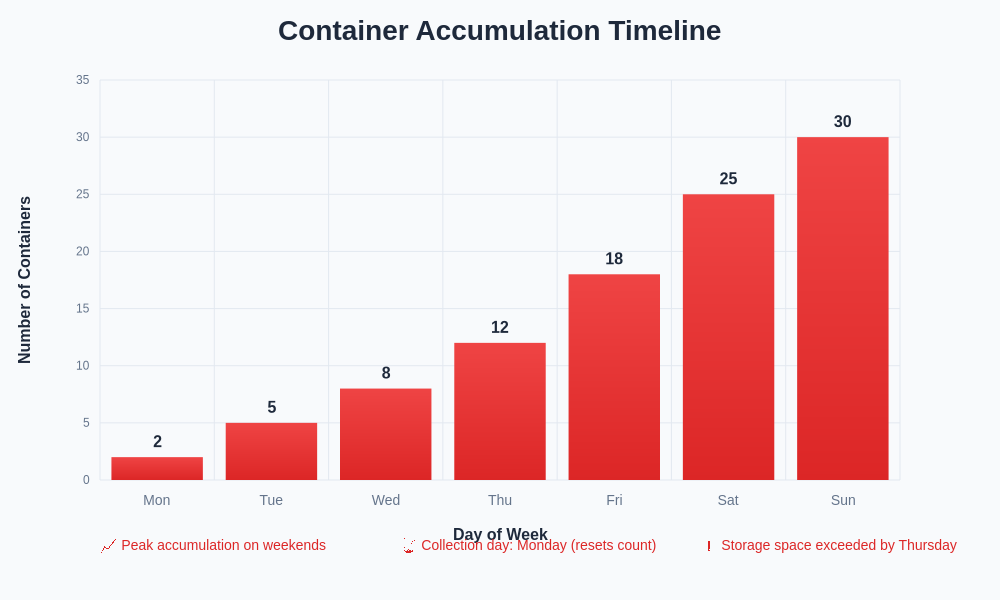
Collection schedules that occur only once or twice weekly for specific waste categories mean residents must store sorted materials for extended periods, requiring organization systems that many sharehouses lack due to space constraints and resident turnover that prevents establishment of consistent practices.
Language barriers and constantly changing municipal regulations make it difficult for residents to stay current with proper sorting procedures, leading to accumulation while residents research correct disposal methods or wait for assistance from Japanese-speaking housemates or building management.
The psychological burden of making sorting mistakes and potentially facing fines or social disapproval creates anxiety that can lead to avoidance behaviors, where residents postpone disposal decisions rather than risk improper categorization, allowing containers to accumulate while perfect solutions are sought.
Seasonal and Environmental Factors
Tokyo’s extreme seasonal variations create additional challenges for takeout container management, with summer humidity accelerating food spoilage and odor development while winter heating systems create dry conditions that make cleaning more difficult and time-consuming. How seasonal allergies worsen in crowded spaces explores how environmental factors affect shared living experiences.
Rainy season and typhoon periods disrupt regular waste collection schedules, forcing residents to store accumulating packaging materials for extended periods in already limited spaces, creating bottlenecks that can take weeks to resolve once normal collection resumes.
Hot summer temperatures accelerate the development of unpleasant odors from food residues in containers, creating urgency for disposal that conflicts with limited collection schedules and complex sorting requirements, leading to temporary outdoor storage solutions that may violate building rules or neighborhood aesthetics.
Winter heating costs encourage residents to keep windows closed, reducing ventilation that would otherwise help manage odors from accumulating containers, while dry indoor air makes cleaning dried food residues more difficult and time-consuming than during humid periods.
Psychological and Behavioral Patterns
The psychological phenomenon of decision fatigue significantly impacts container accumulation, as residents facing multiple daily decisions about food choices, work responsibilities, and social obligations often lack mental energy for thorough cleanup and waste management tasks. How stress management techniques become necessary addresses similar challenges in sharehouse living.
Broken windows theory applies to takeout container accumulation, where initial small amounts of clutter create psychological permission for additional accumulation, making the problem exponentially worse as residents become desensitized to increasing levels of packaging waste in shared spaces.
The diffusion of responsibility phenomenon means that individual residents feel less personally accountable for cleaning shared spaces, particularly when multiple people contribute to the problem and no clear ownership or leadership structure exists for addressing collective action challenges.
Optimism bias leads residents to underestimate the time and effort required for thorough container cleaning and proper waste sorting, resulting in containers being set aside for “later” disposal that never occurs due to competing priorities and the growing complexity of the accumulated task.
Infrastructure and System Failures
Many sharehouses lack adequate infrastructure for managing the volume and complexity of modern takeout packaging waste, with insufficient garbage storage areas, limited cleaning supplies, and absence of clear systems for waste processing and disposal coordination among multiple residents.
Building-level waste management systems designed for traditional Japanese households often prove inadequate for sharehouses with multiple international residents who generate different types and volumes of waste, creating mismatches between infrastructure capacity and actual usage patterns.
The absence of dedicated staging areas for waste sorting and temporary storage forces residents to use kitchen and living spaces for packaging accumulation, creating conflicts between immediate needs and long-term cleanliness goals that often resolve in favor of immediate convenience.
Management companies and building owners frequently provide insufficient guidance or support for waste management challenges specific to sharehouse environments, leaving residents to develop ad hoc solutions that may prove ineffective or unsustainable over time.
Technology and Delivery Integration
Modern food delivery applications encourage impulse ordering through sophisticated psychological design and promotional strategies that prioritize transaction volume over environmental consciousness or practical disposal considerations. How digital entertainment replaces social interaction explores similar technology impacts on daily behavior patterns.
The gamification of food delivery through loyalty points, achievement badges, and social sharing features creates psychological incentives for frequent ordering that compound packaging waste generation without corresponding increases in disposal capacity or environmental awareness.
Real-time tracking and delivery optimization systems enable multiple residents to place simultaneous orders from different restaurants, multiplying packaging waste arrival in concentrated time periods that overwhelm processing capabilities and create immediate accumulation crises.
The integration of delivery services with payment platforms and subscription services reduces psychological barriers to ordering while obscuring the cumulative environmental and practical costs of frequent takeout consumption in space-constrained living environments.
Solutions and Management Strategies
Effective takeout container management requires systematic approaches that address root causes rather than symptoms, including coordination mechanisms for group ordering that reduces per-capita packaging waste while maintaining convenience and food variety preferences. How group buying power reduces individual costs provides insights into collaborative consumption strategies.
Establishing clear protocols for immediate container processing, including designated washing stations, sorting systems, and storage areas, can prevent accumulation by making disposal processes more efficient and less psychologically burdensome for individual residents.
Educational initiatives that help residents understand local waste sorting requirements and disposal schedules can reduce anxiety and confusion that contribute to avoidance behaviors, while building cultural competency around Japanese environmental practices and community standards.
Technology solutions such as shared calendars for waste collection schedules, group messaging systems for coordination, and apps that simplify waste sorting decisions can provide infrastructure support for better container management practices.
The implementation of house rules that balance individual autonomy with collective responsibility, including rotation systems for common area cleaning and consequences for persistent accumulation, can address diffusion of responsibility while maintaining positive social dynamics.
Creating incentive structures that reward proper container management and environmental consciousness, such as collective goals for waste reduction or competitions between houses, can transform obligatory tasks into engaging community activities that strengthen social bonds while addressing practical challenges.
Establishing relationships with local environmental organizations or waste management services that provide specialized guidance for international residents can bridge knowledge gaps while demonstrating commitment to community integration and environmental responsibility.
The complexity of takeout container accumulation in Tokyo sharehouses reflects broader challenges of sustainable urban living in dense, multicultural environments where individual convenience intersects with collective responsibility. Addressing this issue effectively requires understanding its systemic nature while implementing practical solutions that account for the diverse needs, constraints, and capabilities of sharehouse residents navigating modern city life.
Disclaimer
This article is for informational purposes only and does not constitute professional advice regarding waste management or environmental practices. Local regulations and building rules may vary significantly between different areas and properties. Readers should consult with building management and local authorities for specific guidance on waste disposal requirements and procedures in their area.