The promise of affordable, convenient living in Tokyo sharehouses often comes with an unwelcome surprise that catches thousands of international residents off guard each year. Behind the attractive advertised monthly rates lurk numerous hidden fees, surcharges, and unexpected costs that can dramatically inflate your actual living expenses, sometimes doubling or even tripling the financial commitment you initially expected when signing your contract.
Understanding why these hidden fees exist requires examining the complex intersection of Japanese rental culture, business economics, and regulatory frameworks that govern the sharehouse industry. The proliferation of additional charges represents both legitimate business needs and, unfortunately, opportunistic practices that exploit the inexperience and language barriers faced by foreign residents navigating Tokyo’s challenging housing market.
This systematic exploration of hidden fee structures will illuminate the underlying mechanisms that drive these additional costs while providing practical strategies for identifying, negotiating, and minimizing unexpected expenses that can derail your carefully planned budget and create significant financial stress during your Tokyo living experience.
The Economic Reality Behind Sharehouse Operations
Tokyo’s sharehouse industry operates within economic constraints that create pressure for operators to supplement advertised rental income through additional fee structures that may not be immediately apparent to prospective residents. The competitive nature of the housing market forces operators to advertise attractive base rates while recovering operational costs through supplementary charges that become apparent only after residents commit to lease agreements.
Property acquisition costs in Tokyo rank among the highest globally, requiring sharehouse operators to generate sufficient revenue streams to cover mortgage payments, property taxes, and building maintenance expenses that far exceed those found in most other international markets. How much Tokyo sharehouses really cost per month reveals the complex financial calculations that operators must navigate to maintain profitable operations while competing for price-sensitive international residents.
The regulatory environment surrounding rental properties in Japan includes numerous compliance requirements, safety inspections, and administrative obligations that generate ongoing operational expenses. These regulatory costs often get passed through to residents via administrative fees, processing charges, and compliance-related surcharges that may not be explicitly disclosed during initial marketing presentations but appear throughout the contract documentation and billing processes.
Labor costs for property management, cleaning services, maintenance staff, and multilingual customer support create additional operational expenses that operators typically recover through service fees, facility usage charges, and monthly administrative surcharges that supplement base rental income while maintaining advertised competitive pricing structures.
Common Types of Hidden Fees and Surcharges
Utility billing represents one of the most significant sources of hidden costs in Tokyo sharehouses, with many operators implementing complex calculation systems that can result in charges substantially higher than actual consumption costs. The practice of utility markup allows operators to generate additional revenue while claiming to provide simplified billing services, often resulting in residents paying premium rates for electricity, gas, water, and internet services that could be obtained more economically through direct provider relationships.
Understanding utility bills in Japanese sharehouses provides insights into how these billing systems work and why they often favor operators over residents. Administrative processing fees for utility management, meter reading charges, and seasonal adjustment surcharges can add significant amounts to monthly bills while remaining technically within contract terms that residents may not have fully understood during the application process.
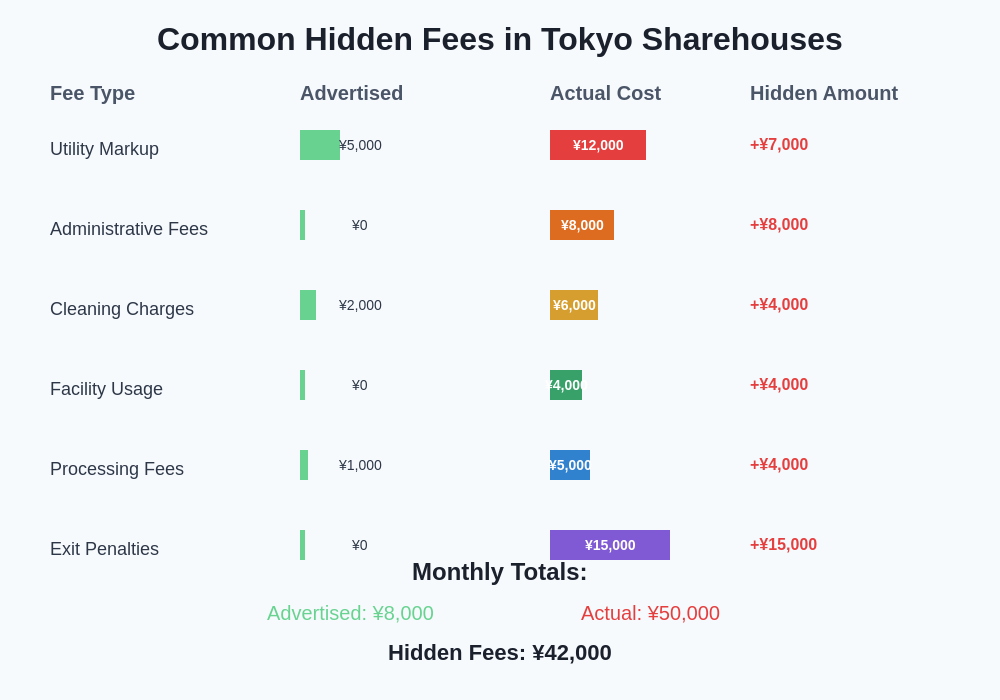
Cleaning and maintenance fees represent another major category of hidden costs, with many sharehouses implementing weekly or monthly cleaning charges that supplement contracted cleaning services with additional fees for deep cleaning, special maintenance, and facility upgrades that may occur regardless of actual usage or resident preferences. These charges often increase over time through automatic escalation clauses or seasonal adjustments that residents discover only when reviewing detailed billing statements.
Security and facility access fees encompass charges for key management, building security systems, emergency response services, and facility usage that may not be clearly explained during initial property tours or application processes. What security deposits actually cover in sharehouses explains how these costs often exceed actual security-related expenses while providing operators with additional revenue streams that residents cannot easily challenge or verify.
The Psychology of Pricing and Marketing Strategies
Sharehouse operators employ sophisticated pricing psychology that leverages international residents’ unfamiliarity with Japanese rental customs and their urgent need for housing solutions. The practice of featuring attractive base rates in marketing materials while burying additional fees in contract fine print exploits the cognitive biases that lead people to focus on headline numbers while underestimating total cost implications during decision-making processes.
Time pressure tactics commonly used in the sharehouse industry create environments where prospective residents feel compelled to make quick decisions without thoroughly reviewing contract terms or calculating total monthly expenses. How to spot financial red flags in sharehouse contracts identifies these pressure tactics and provides strategies for maintaining objective evaluation despite artificial urgency created by operators claiming limited availability or special promotional pricing.
Language barriers compound these psychological factors by making it difficult for international residents to fully understand contract terminology, fee structures, and billing procedures that may be explained in complex Japanese legal language or inadequately translated into English. Operators often take advantage of these communication challenges by providing minimal explanations for additional charges while relying on residents’ reluctance to ask detailed questions about terms they may not fully comprehend.
Cultural differences in negotiation styles and business relationships create additional vulnerabilities that operators may exploit through fee structures that would be considered unacceptable in residents’ home countries but appear normal within Japanese business contexts that emphasize hierarchical relationships and contract compliance over individual advocacy or complaint resolution.
Regulatory Gaps and Industry Practices
The sharehouse industry in Japan operates within a regulatory framework that was originally designed for traditional apartment rentals, creating gaps that allow operators to implement fee structures that might not be permitted in more strictly regulated housing sectors. These regulatory ambiguities enable practices such as utility markup, administrative surcharges, and facility fees that generate revenue beyond actual service costs while remaining technically compliant with existing housing regulations.
Japanese sharehouse rules every foreigner should know outlines how these regulatory gaps affect resident rights and operator obligations. The lack of standardized disclosure requirements means that operators can structure fee systems in ways that obscure total costs while maintaining technical compliance with basic rental regulations that do not address the complexity of modern sharehouse operations.
Industry self-regulation has proven insufficient to address hidden fee practices, with major operators often setting precedents that smaller companies then adopt or amplify to remain competitive. The absence of effective oversight mechanisms means that residents have limited recourse when faced with unexpected charges unless they can demonstrate clear contract violations or fraudulent practices that exceed even the permissive standards currently tolerated within the industry.
Consumer protection laws in Japan provide some safeguards against obviously deceptive practices, but their application to sharehouse fee structures remains inconsistent and often depends on individual resident initiative to pursue complaints through bureaucratic processes that may be intimidating or inaccessible for international residents with limited Japanese language skills or legal knowledge.
The Impact of Market Competition and Consolidation
Intense competition among sharehouse operators creates pressure to maintain artificially low advertised rates while recovering actual operational costs through hidden fees that become apparent only after residents commit to lease agreements. This competitive dynamic forces even ethical operators to adopt similar fee structures to remain viable in markets where headline pricing often determines initial resident interest and application volumes.
Living costs in Tokyo sharehouses explained demonstrates how market consolidation has enabled larger operators to standardize fee structures across multiple properties while smaller operators often implement even more aggressive hidden charges to maintain profitability with limited economies of scale. This consolidation trend has reduced transparent pricing options while making hidden fee practices more widespread and systematic throughout the industry.
The international resident demographic targeted by most sharehouses often lacks the local knowledge, language skills, or social connections necessary to effectively compare total costs across different operators or negotiate more favorable fee structures. This information asymmetry enables operators to maintain pricing practices that would be quickly challenged or avoided by more informed local residents with better understanding of Japanese rental markets and regulatory protections.
Seasonal demand fluctuations in Tokyo’s sharehouse market create additional incentives for operators to implement variable fee structures that can be adjusted based on occupancy rates, market conditions, and resident turnover patterns without requiring contract modifications or explicit resident consent for charges that fall within broadly written administrative fee categories.
Technology and Administrative Complexity
Modern sharehouse operations rely heavily on technology systems for billing, facility management, and resident communication, creating opportunities for operators to implement complex fee structures that may be difficult for residents to understand or challenge. Automated billing systems can generate numerous micro-charges for facility usage, service fees, and administrative costs that individually appear reasonable but collectively represent significant additional expenses beyond advertised rental rates.
The complexity of these technology-driven billing systems often makes it difficult for residents to verify charges, understand calculation methods, or identify errors that may favor operators. How to actually get your deposit back explains how these complex systems can be manipulated during deposit return processes to justify additional deductions that residents struggle to dispute effectively.
Mobile apps and digital platforms used by major sharehouse operators frequently include features that generate additional revenue through convenience fees, processing charges, and premium service options that may be presented as optional but become practically necessary for accessing basic facilities or resolving routine issues. These digital fee structures often update automatically without explicit resident consent, gradually increasing costs over time through system updates that residents may not notice or understand.
Administrative complexity created by multiple billing systems, vendor relationships, and service providers enables operators to distribute costs across numerous fee categories that obscure the total impact on resident expenses while making it difficult to compare costs between different operators or identify specific areas where charges exceed reasonable service provision costs.
Cultural and Communication Barriers
Japanese business culture emphasizes hierarchical relationships and contract compliance in ways that can discourage international residents from questioning fee structures or requesting detailed explanations of charges that appear in monthly bills. Living with Japanese roommates in Tokyo sharehouses explores how these cultural dynamics affect resident advocacy and complaint resolution processes.
Language barriers compound these cultural challenges by making it difficult for residents to access detailed explanations of fee structures, billing procedures, or dispute resolution processes that may be documented only in Japanese or inadequately translated into English. Operators often take advantage of these communication limitations by providing minimal explanations for charges while relying on residents’ reluctance to pursue clarification through complex bureaucratic channels.
The formal communication styles expected in Japanese business relationships can make international residents feel uncomfortable challenging charges or requesting fee reductions, even when they have legitimate grounds for complaint. This cultural reluctance to engage in confrontational discussions enables operators to maintain fee structures that might be more readily challenged in business environments where direct negotiation and advocacy are more culturally acceptable.
Professional translation services for legal documents and billing disputes can be expensive and difficult to access, creating practical barriers that prevent residents from effectively understanding or challenging complex fee structures even when they suspect unfair practices or calculation errors that work against their financial interests.
Exit Fees and Departure Penalties
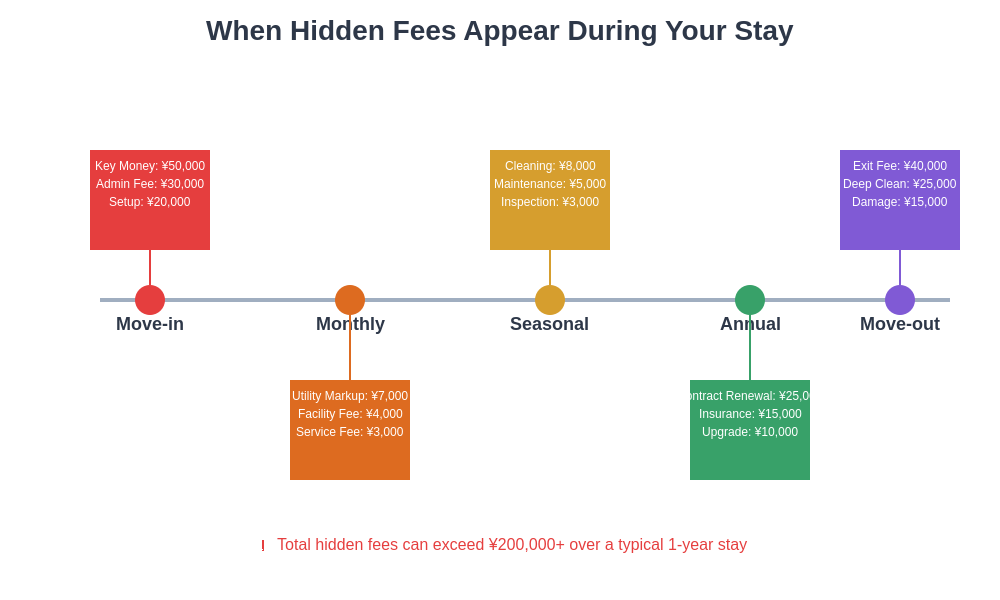
Move-out procedures in Tokyo sharehouses often involve numerous additional fees that can substantially increase the total cost of departure beyond initial security deposit expectations. What moving out really costs in Tokyo sharehouses details how these exit fees can accumulate to create significant financial burdens for residents who need to relocate due to job changes, relationship developments, or dissatisfaction with living conditions.
Professional cleaning fees imposed during move-out procedures frequently exceed reasonable costs for basic cleaning services, with operators often requiring specialized cleaning services from designated vendors at premium rates regardless of the actual condition of vacated rooms or common areas. These mandatory cleaning fees can range from moderate charges for basic services to substantial costs for deep cleaning, wall repainting, and facility restoration that may not reflect actual damage or wear patterns.
Administrative processing fees for deposit return, final billing reconciliation, and departure documentation can add hundreds of dollars to move-out costs while providing minimal actual service value to departing residents. These fees often include charges for inspection procedures, documentation processing, and communication services that represent routine operational activities rather than special services that justify additional resident expenses.
Penalty clauses for early departure, insufficient notice periods, or lease term violations can create substantial financial obligations that residents may not have fully understood during initial contract negotiations. These penalties often compound with other exit fees to create total departure costs that can equal or exceed monthly rental charges, effectively trapping residents in unsatisfactory living situations due to financial constraints rather than contractual satisfaction.
Strategies for Identification and Mitigation
Careful contract review before signing represents the most effective strategy for identifying potential hidden fees and understanding their calculation methods, triggering conditions, and total financial impact over anticipated residency periods. Contract terms that are more important than advertised prices provides guidance for focusing attention on fee structures that may have greater financial impact than base rental rates.
Pre-application research should include detailed discussions with current residents about their actual monthly expenses, billing experiences, and any unexpected charges they have encountered during their residency. Real stories from Tokyo sharehouse residents offers insights into common fee structures that residents discover only after moving in and receiving their first comprehensive billing statements.
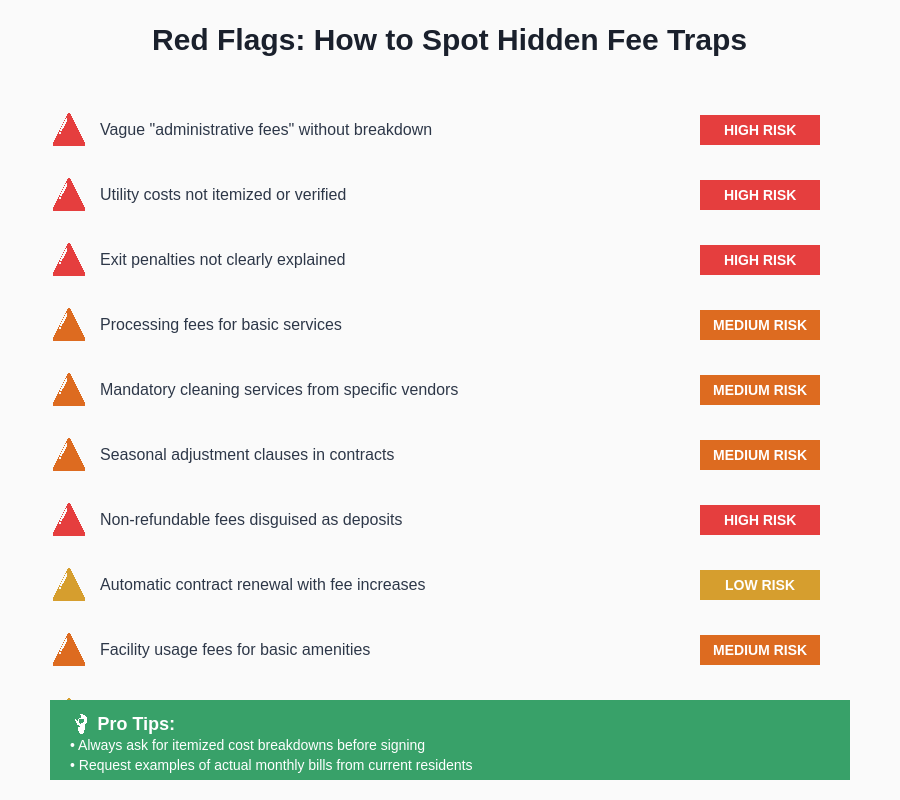
Documentation of all fee discussions, contract explanations, and billing disputes creates essential records for challenging unreasonable charges or pursuing dispute resolution through consumer protection agencies or legal channels if operators fail to provide satisfactory explanations or adjustments for questionable fees. Maintaining detailed records also helps identify patterns of excessive charging that may indicate systematic problems requiring regulatory intervention.
Building relationships with other international residents and participating in online communities focused on Tokyo housing can provide valuable information about operator practices, fee structures, and successful strategies for negotiating more favorable contract terms or challenging unreasonable charges that exceed industry standards or contractual obligations.
Long-term Industry Trends and Future Outlook
The increasing scrutiny of hidden fee practices by consumer advocacy groups and media attention focused on international resident experiences may drive gradual improvements in industry transparency and pricing disclosure requirements. However, the fundamental economic pressures and regulatory gaps that enable these practices are likely to persist without significant policy interventions or market disruptions that force more ethical business practices.
Technological developments in billing transparency and automated contract analysis may provide residents with better tools for understanding and comparing total housing costs across different operators, potentially reducing the effectiveness of hidden fee strategies that rely on information asymmetry and calculation complexity to generate revenue beyond competitive market rates.
Best sharehouses in Tokyo may increasingly differentiate themselves through transparent pricing and simplified fee structures as international residents become more sophisticated in evaluating total costs and demanding clearer contract terms. This market evolution could gradually reduce the prevalence of hidden fees while rewarding operators who adopt more ethical pricing practices.
The growing awareness of hidden fee practices among international residents and advocacy organizations may lead to increased regulatory attention and policy development that addresses the specific challenges faced by foreign residents in Tokyo’s rental housing market, potentially creating stronger disclosure requirements and consumer protection standards for the sharehouse industry.
The complex web of hidden fees in Tokyo sharehouses reflects broader challenges in international housing markets where information asymmetries, cultural barriers, and regulatory gaps create opportunities for exploitative business practices. Understanding these underlying mechanisms empowers residents to make more informed decisions while advocating for industry practices that serve resident interests alongside legitimate business needs. Through careful preparation, detailed contract analysis, and community knowledge sharing, international residents can navigate these challenges while working toward a more transparent and equitable sharehouse industry that serves the diverse needs of Tokyo’s growing international community.
Disclaimer
This article is for informational purposes only and does not constitute legal or financial advice. Hidden fee practices vary significantly between different sharehouse operators and may change over time. Readers should conduct thorough research, carefully review all contract terms, and consider consulting with legal professionals when evaluating sharehouse agreements. The specific fees and practices mentioned may not apply to all properties or operators in the Tokyo sharehouse market.