The complexity of Tokyo’s transportation system becomes immediately apparent when attempting to optimize train pass purchases based on commute distance, with strategies that work perfectly for short-distance travelers often proving financially disastrous for long-distance commuters. The intricate web of different railway companies, fare structures, and pass options creates a challenging puzzle where distance fundamentally alters the most cost-effective approach to daily transportation needs.
Understanding these distance-based variations becomes crucial for sharehouse residents who must balance transportation costs with housing affordability, often finding that cheaper accommodation in distant neighborhoods requires completely different pass strategies compared to expensive central locations with minimal commute requirements. The mathematical relationship between distance, frequency, and cost creates distinct optimization opportunities that experienced Tokyo residents learn to exploit for maximum financial efficiency.
Understanding Tokyo’s Distance-Based Fare Structure
Tokyo’s transportation system operates on a complex distance-based fare calculation that varies significantly between different railway operators, creating unique challenges for residents trying to optimize their monthly transportation expenses. How commute times impact your quality of life becomes particularly relevant when considering how distance affects both time and financial commitments for daily travel patterns.
The basic fare structure begins with minimum charges for short distances within central Tokyo, typically ranging from 140 to 200 yen depending on the specific railway company and route complexity. As distances increase beyond the initial zones, fares escalate in predetermined increments that can quickly reach 400-600 yen or more for longer suburban routes, making daily round-trip costs prohibitively expensive without appropriate pass strategies.
Different railway companies maintain separate fare structures even when serving similar distances, creating situations where parallel routes operated by JR East, Tokyo Metro, and various private railways charge substantially different amounts for comparable journey lengths. Transportation costs impact entertainment budgets demonstrates how these variations can significantly affect overall monthly spending patterns for residents living in different areas of Tokyo.
The zone-based pricing system creates specific breakpoints where moving slightly further from central Tokyo can trigger dramatically higher fare categories, making precise distance calculations essential for both accommodation selection and pass optimization strategies.
Short-Distance Commute Strategies
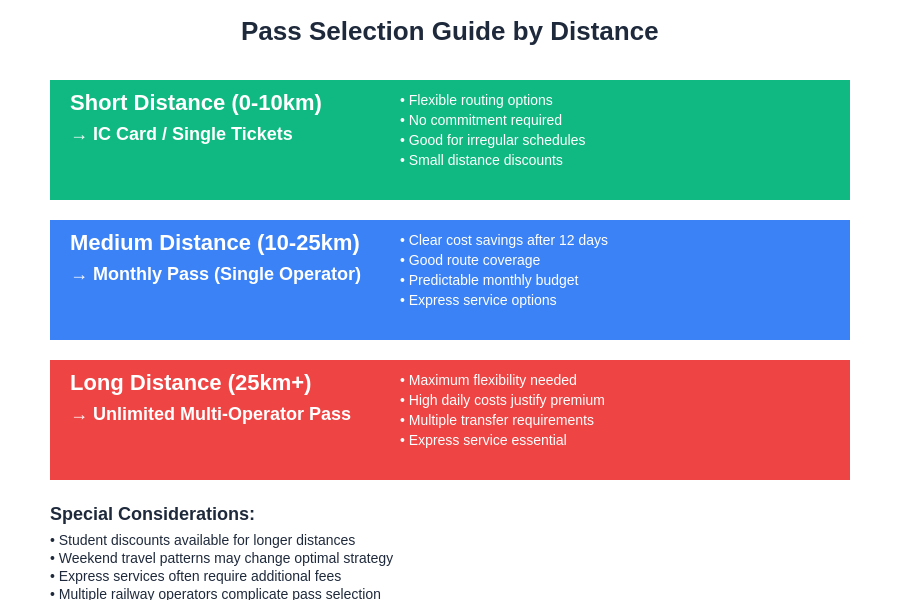
Residents living within central Tokyo’s core areas typically face commute distances of less than 10 kilometers, creating unique optimization opportunities that prioritize flexibility and convenience over bulk savings. Metro access impacts your social life highlights how central location advantages extend beyond simple transportation economics to encompass broader lifestyle benefits.
For short-distance commuters, single-ride tickets often remain competitive with monthly passes when travel patterns include irregular schedules, weekend variations, or multiple destination requirements that don’t follow consistent daily routines. The flexibility to choose different routes, transfer between operators, and adjust travel timing without financial penalties can provide greater value than committed monthly pass purchases.
IC card usage becomes particularly advantageous for short-distance travelers who benefit from small per-ride discounts while maintaining complete routing flexibility and the ability to take advantage of off-peak discounts offered by various operators during non-rush hour periods. The convenience of seamless transfers between different railway systems without advance planning requirements often outweighs modest savings available through more restrictive pass options.
Weekly passes occasionally provide optimal value for short-distance commuters with highly regular schedules, particularly during periods with consistent five or six-day work weeks, but require careful calculation to ensure usage frequency justifies the upfront investment compared to pay-per-ride alternatives.
Medium-Distance Optimization Approaches
Commuters traveling 10-25 kilometers from central Tokyo enter a distance range where monthly passes begin demonstrating clear financial advantages while still maintaining reasonable travel times and multiple routing options. How distance from city center changes living experience explores how this middle distance range often provides optimal balances between housing costs and transportation convenience.
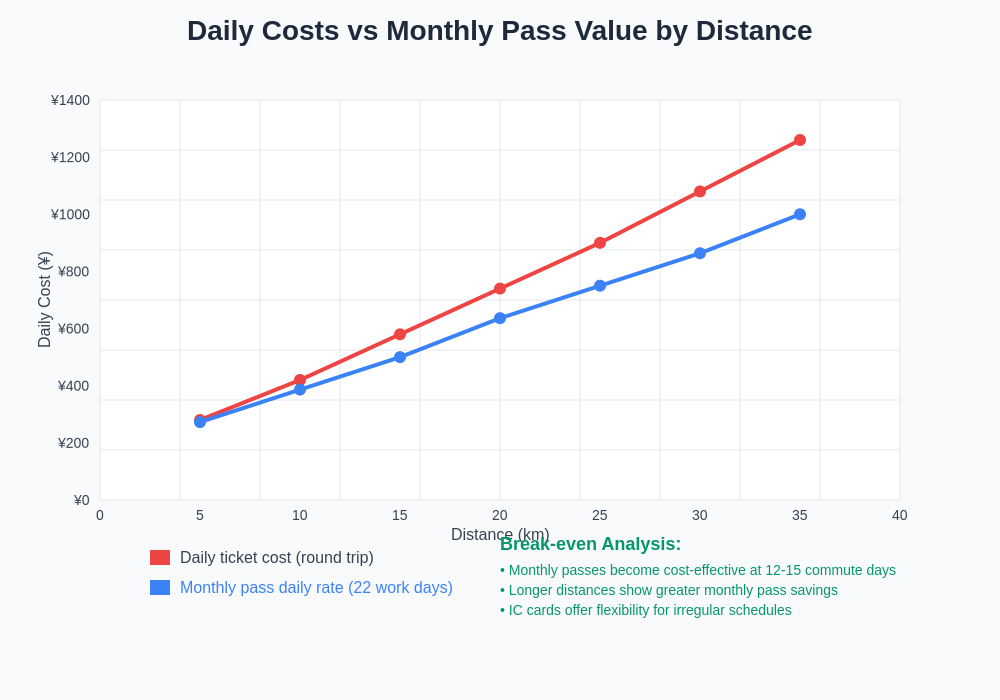
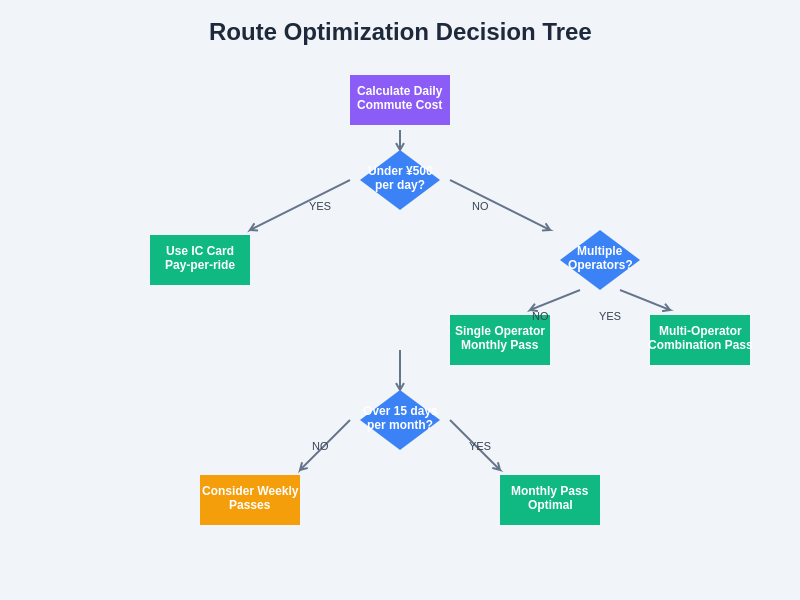
Monthly passes become increasingly attractive as round-trip daily costs approach 600-800 yen, making 30-day unlimited travel options financially advantageous for anyone commuting more than 15 days per month. The calculation becomes straightforward when daily costs exceed the monthly pass price divided by expected usage days, typically occurring around the 12-15 commute threshold for medium-distance routes.
Combination passes that include multiple operators become essential for medium-distance commuters who frequently require transfers between JR lines, subway systems, and private railways. Business district sharehouses near Tokyo Station demonstrates how strategic location selection can minimize transfer requirements and optimize pass selection strategies.
Route flexibility remains important for medium-distance commuters who benefit from alternative routing options during service disruptions, maintenance periods, or schedule changes that commonly affect Tokyo’s transportation network. Monthly passes that provide access to multiple parallel routes offer superior value compared to restrictive single-route options that may become unusable during unexpected service interruptions.
Long-Distance Commute Considerations
Residents choosing accommodation options beyond 25 kilometers from central Tokyo face fundamentally different transportation economics where monthly passes become essential financial tools rather than convenience options. Cheaper sharehouse options in Tokyo suburbs explains how distance-based housing savings must be carefully balanced against increased transportation costs and time commitments.
Long-distance commuters typically face daily round-trip costs exceeding 1,000 yen, making monthly unlimited passes financially advantageous after just 8-10 commuting days and creating substantial savings opportunities for regular travelers. The economics become compelling enough that even occasional commuters often find monthly passes worthwhile when factoring in weekend travel, social activities, and incidental trips to central Tokyo.
Express and limited express services become crucial considerations for long-distance commuters who must balance time efficiency against additional costs that may not be covered by standard monthly passes. How commute times impact work performance illustrates how longer distances create time pressures that may justify premium service expenses despite higher overall transportation costs.
Multi-modal integration becomes essential for long-distance commuters who often require combinations of local trains, express services, and potentially bus connections to reach final destinations efficiently, creating complex pass selection challenges that require careful route analysis and cost optimization.
Pass Type Analysis and Selection Criteria
The variety of available pass options creates a complex decision matrix where commute distance serves as the primary determining factor for optimal selection strategies. Transportation accessibility affects housing choices demonstrates how pass economics directly influence residential location decisions for budget-conscious residents.
Single-operator monthly passes typically provide the most cost-effective option for commuters using predominantly one railway system, particularly JR East passes for suburban residents or Tokyo Metro passes for central area commuters with limited transfer requirements. These specialized passes offer superior value when travel patterns align with single-operator route networks but become restrictive for commuters requiring frequent inter-operator transfers.
All-operator combination passes command premium prices but provide maximum flexibility for commuters with complex routing requirements or those who frequently travel to multiple destinations across Tokyo’s diverse transportation networks. How transportation strikes disrupt daily life highlights how pass flexibility becomes crucial during service disruptions that require alternative routing options.
Weekly and 10-day passes serve specific niches for short-term visitors or residents with irregular commuting patterns who need temporary solutions that provide better value than daily tickets without the commitment of full monthly passes. These intermediate options work particularly well for sharehouse residents during transitional periods or those with variable work schedules that don’t justify monthly pass purchases.
Cost-Benefit Calculations and Break-Even Analysis
Determining optimal pass strategies requires systematic calculation of daily transportation costs compared to various pass options, with break-even points varying significantly based on commute distance and travel frequency patterns. How to calculate your true living costs provides frameworks for incorporating transportation expenses into comprehensive budget planning processes.
The fundamental calculation involves dividing monthly pass costs by expected usage days to determine the daily rate, then comparing this figure to actual daily commute costs including any required transfers or express service supplements. Most Tokyo residents find that monthly passes become advantageous when commuting more than 12-15 days per month, though this threshold varies significantly based on distance and route complexity.
Hidden costs often affect break-even calculations, including express service supplements not covered by basic monthly passes, transfer fees between different operator systems, and occasional longer routing requirements during maintenance or disruption periods that can substantially increase daily transportation expenses.
Seasonal variations in commuting patterns, including holiday periods, vacation times, and weather-related schedule changes, can significantly impact annual transportation costs and should be factored into pass selection strategies rather than basing decisions solely on typical monthly usage patterns.
Seasonal and Schedule Flexibility Considerations
Tokyo’s transportation needs vary dramatically throughout the year, creating opportunities for strategic pass selection that adapts to changing commute patterns and seasonal travel requirements. How seasonal employment affects payment ability illustrates how work pattern changes directly impact optimal transportation strategies.
Golden Week, Obon, and New Year holiday periods create extended breaks where monthly pass holders may not achieve typical usage levels, potentially making these months better suited for pay-per-ride approaches or shorter-term pass options. Conversely, busy periods with increased work days or social activities may justify upgrading to more comprehensive pass options for improved value and convenience.
Weather-related schedule changes, particularly during rainy season and typhoon periods, can significantly affect optimal routing and transportation costs, making flexible pass options more valuable than restrictive single-route alternatives during these challenging periods. How weather affects transportation choices explains how seasonal conditions impact daily commuting decisions and transportation budgets.
Student schedules, part-time employment patterns, and freelance work arrangements create irregular commuting requirements that may benefit from flexible pass strategies rather than committed monthly options, particularly for residents with variable income streams or changing work locations throughout different periods.
Technology Integration and Modern Payment Systems
Modern IC card systems have revolutionized transportation payment flexibility while creating new optimization opportunities that vary significantly based on commute distance and travel patterns. How contactless payments are becoming standard explores how payment technology evolution affects daily transportation experiences for international residents.
Smartphone integration and mobile payment systems provide enhanced tracking capabilities that help commuters analyze actual travel patterns and costs, enabling data-driven decisions about optimal pass selection strategies based on real usage rather than estimated travel requirements. These digital tools become particularly valuable for residents experimenting with different commute routes or adjusting travel patterns based on work schedule changes.
Auto-charging features and linked bank accounts create convenience benefits that may justify slightly higher transportation costs for busy professionals who prioritize time savings and reduced administrative burden over maximum cost optimization. How digital entertainment replaces social interaction demonstrates how technology integration affects broader lifestyle choices beyond transportation decisions.
Real-time fare calculation and route optimization apps provide dynamic alternatives to fixed monthly passes, particularly benefiting commuters with irregular schedules or those who frequently travel to multiple destinations across Tokyo’s extensive transportation network.
Strategic Location Selection for Transportation Optimization
The relationship between sharehouse location and optimal transportation strategies creates opportunities for holistic cost optimization that considers both housing and transportation expenses as integrated financial planning elements. How work location should influence sharehouse choice provides comprehensive frameworks for evaluating location decisions based on total commuting costs and convenience factors.
Proximity to major transportation hubs often justifies higher housing costs through reduced transportation expenses and increased routing flexibility, particularly for residents with variable work locations or those who frequently travel to different areas of Tokyo for business or social activities. The convenience premium for central locations may prove cost-effective when comprehensive transportation savings are calculated over extended periods.
Station accessibility and walking distance from sharehouses directly impact daily transportation costs and time commitments, with locations requiring bus connections or extended walking adding hidden costs and inconvenience that affect optimal pass selection strategies. How late night transportation limits social life illustrates how location choices affect broader lifestyle considerations beyond basic commuting requirements.
Multi-line access points provide superior flexibility for residents who benefit from alternative routing options during service disruptions, maintenance periods, or schedule changes, making these strategic locations valuable for commuters across all distance ranges who prioritize reliability and convenience over minimum transportation costs.
The optimization of train pass strategies based on commute distance represents a fundamental aspect of successful Tokyo living that directly impacts monthly budgets and daily convenience levels. Understanding these distance-based variations empowers residents to make informed decisions that balance housing costs, transportation expenses, and lifestyle preferences while adapting to changing circumstances throughout their residence in Japan’s complex but efficient transportation ecosystem.
Disclaimer
This article is for informational purposes only and does not constitute financial advice. Transportation costs and pass options in Tokyo may change frequently, and individual circumstances vary significantly. Readers should verify current pricing and options with official transportation operators before making pass purchases. The effectiveness of strategies mentioned may vary depending on specific routes, travel patterns, and personal circumstances.