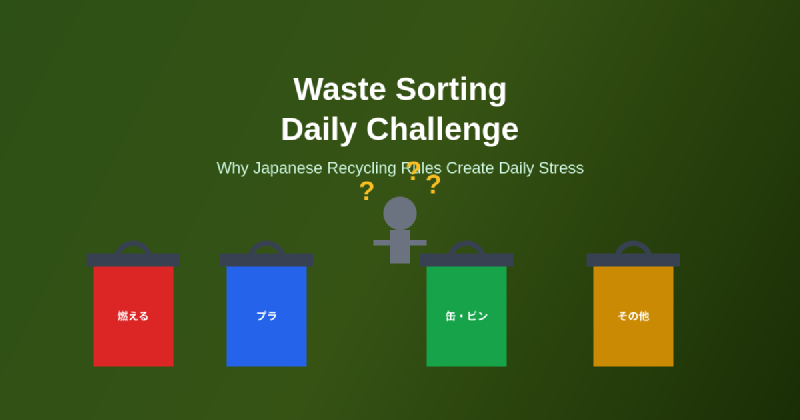
The seemingly simple act of throwing away trash transforms into an overwhelming daily challenge for international residents living in Japanese sharehouses, where complex waste sorting rules intersect with cultural expectations and strict community enforcement mechanisms that can make or break social harmony within shared living environments. What appears straightforward in promotional materials becomes a labyrinthine system of categories, schedules, and unspoken protocols that test patience, comprehension, and cultural adaptation skills on a daily basis.
The psychological burden of waste sorting extends far beyond environmental consciousness, creating anxiety-inducing situations where simple disposal decisions require extensive research, consultation with housemates, and constant fear of making mistakes that could result in social ostracism or official reprimands from building management. This daily challenge reflects deeper cultural integration issues that affect overall quality of life and community relationships within sharehouse environments.
The Complexity of Japanese Waste Categories
Japanese waste sorting systems operate on principles of environmental efficiency and resource conservation that divide household refuse into numerous specific categories, each requiring distinct handling procedures and disposal schedules that vary significantly between municipalities and even individual buildings within the same area. Understanding how recycling rules vary by Tokyo ward becomes essential knowledge for avoiding costly mistakes and social friction within sharehouse communities.
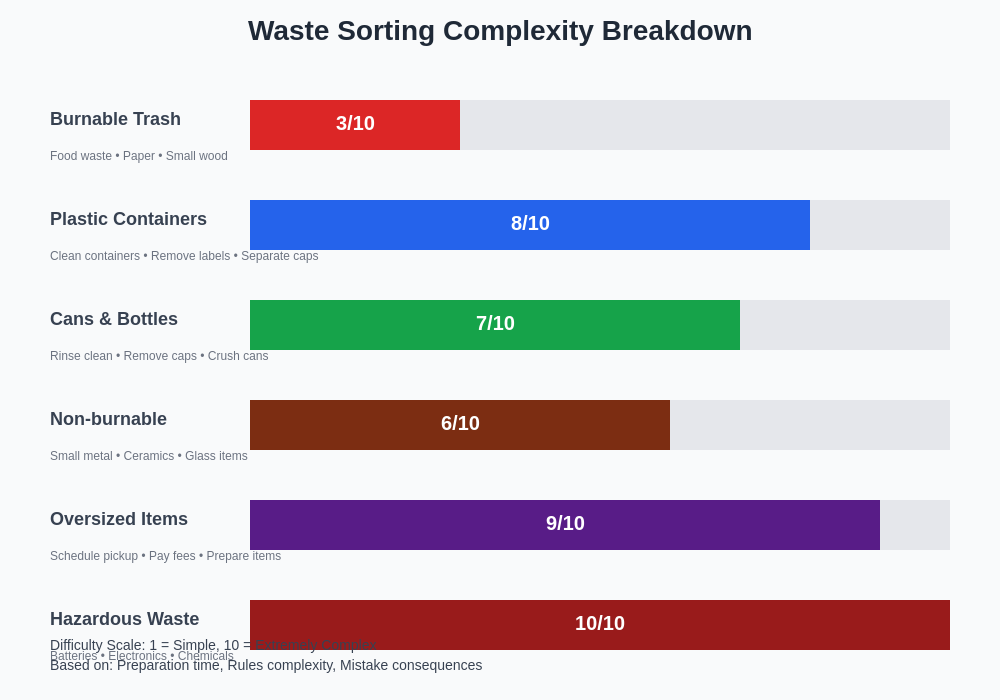
The basic categories of burnable trash, non-burnable trash, recyclables, and oversized items expand into dozens of subcategories that include specific requirements for cleaning, preparation, and timing that can overwhelm even organized and environmentally conscious residents. Plastic containers require rinsing and label removal, aluminum cans need crushing, glass bottles demand cap separation, and paper products must be sorted by type and bundled according to precise specifications that seem designed to test dedication rather than facilitate disposal.
The complexity increases exponentially in sharehouses where multiple residents with varying levels of understanding and commitment to proper sorting create inconsistent practices that lead to contaminated bins, rejected collections, and mounting frustration among community members who take environmental responsibility seriously. Why some residents ignore environmental policies explores the social dynamics that emerge when waste sorting compliance becomes a source of tension and judgment within shared living spaces.
Language barriers compound the challenge as official sorting guidelines rely heavily on Japanese text and cultural context that assume familiarity with specific product categories, disposal timing, and preparation requirements that may not translate directly to international residents’ home country experiences or expectations.
Cultural and Social Pressures
The social implications of improper waste sorting in Japanese sharehouses extend beyond environmental concerns to encompass respect, community harmony, and cultural integration that can significantly impact residents’ daily stress levels and overall satisfaction with shared living arrangements. Waste sorting serves as a visible indicator of cultural adaptation and social responsibility that housemates and building management use to evaluate residents’ commitment to community standards and long-term compatibility.
Public shaming mechanisms emerge naturally within sharehouse communities when improper sorting is discovered, creating uncomfortable confrontations and passive-aggressive communications that can poison community atmosphere and make simple disposal decisions sources of anxiety and social navigation challenges. Why some residents feel constantly judged examines how waste sorting compliance becomes intertwined with social acceptance and community belonging within international sharehouse environments.
The perfectionist expectations surrounding waste sorting reflect broader Japanese cultural values of precision, group responsibility, and attention to detail that can feel overwhelming for residents from cultures with more relaxed environmental practices or individual-focused disposal approaches. Building management companies often use waste sorting compliance as criteria for lease renewals and resident evaluations, adding financial and housing security implications to daily disposal decisions.
Peer pressure dynamics within sharehouses create informal monitoring systems where residents observe and evaluate each other’s sorting practices, leading to social hierarchies based on environmental knowledge and compliance that can affect friendship formation and community integration success for international residents.
Practical Implementation Challenges
The logistics of proper waste sorting in sharehouse environments present numerous practical obstacles that complicate daily routines and require significant time investments that may not be immediately apparent to prospective residents evaluating shared living options. Living costs in Tokyo sharehouses explained should include the hidden time costs associated with proper waste management that can add substantial daily overhead to simple household maintenance tasks.
Kitchen space limitations in typical sharehouses often cannot accommodate the multiple bins, cleaning stations, and preparation areas required for proper waste sorting, forcing residents to develop creative storage solutions or accept cluttered common areas that may violate house rules or create additional conflicts with space-conscious housemates. The washing and drying requirements for recyclable containers compete with food preparation activities for limited sink and counter space, creating scheduling conflicts during peak usage periods.
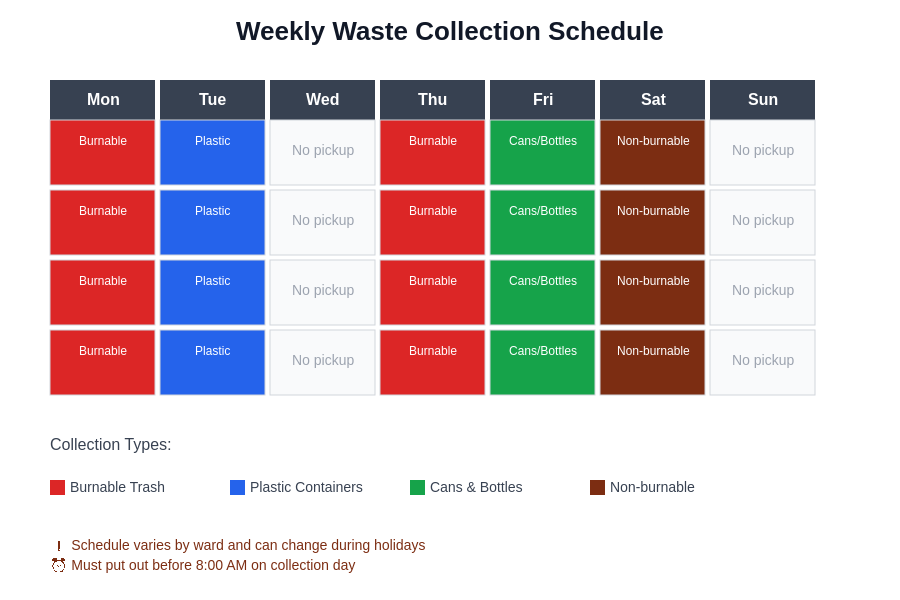
Collection schedule complexity requires residents to track multiple pickup days for different waste categories while maintaining awareness of holiday adjustments and seasonal variations that can result in accumulated waste and storage problems when timing mistakes occur. Why some residents always forget shopping duties reflects similar organizational challenges that compound when applied to waste management responsibilities.
The physical demands of proper waste sorting include container cleaning, label removal, and item preparation that require additional water usage, cleaning supplies, and time investments that may not align with busy work schedules or limited bathroom access during peak usage periods within sharehouse environments.
Language and Communication Barriers
Waste sorting instructions in Japanese sharehouses rely heavily on local language proficiency and cultural context that create significant barriers for international residents attempting to navigate complex disposal requirements without comprehensive linguistic support or cultural education programs. Why language barriers create more issues than expected applies directly to waste sorting challenges that test comprehension skills daily.
Official municipal guidelines typically provide minimal English translation support while assuming familiarity with Japanese product categories, brand names, and cultural disposal practices that may not correspond to international residents’ previous experiences or expectations. Technical terminology for specific materials, container types, and preparation requirements often lacks direct translation equivalents, requiring residents to develop specialized vocabulary through trial-and-error experimentation that can result in costly mistakes.
Communication with housemates about sorting procedures often reveals gaps in mutual understanding as residents attempt to explain complex rules using limited shared vocabulary while navigating cultural differences in environmental practices and individual responsibility concepts. The informal knowledge transfer systems within sharehouses depend on voluntary mentorship relationships that may not develop naturally or provide comprehensive guidance for all possible disposal scenarios.
Building management communications about sorting violations or policy changes typically arrive in Japanese-only formats with short notice periods that assume residents can quickly comprehend and implement new requirements without additional support or clarification opportunities.
Financial and Administrative Consequences
Improper waste sorting in Japanese sharehouses can result in significant financial penalties and administrative complications that extend beyond simple disposal mistakes to affect housing security, community relationships, and long-term residency status in ways that may not be immediately apparent to international residents. What security deposits actually cover in sharehouses often includes waste sorting violations that can impact deposit recovery at lease termination.
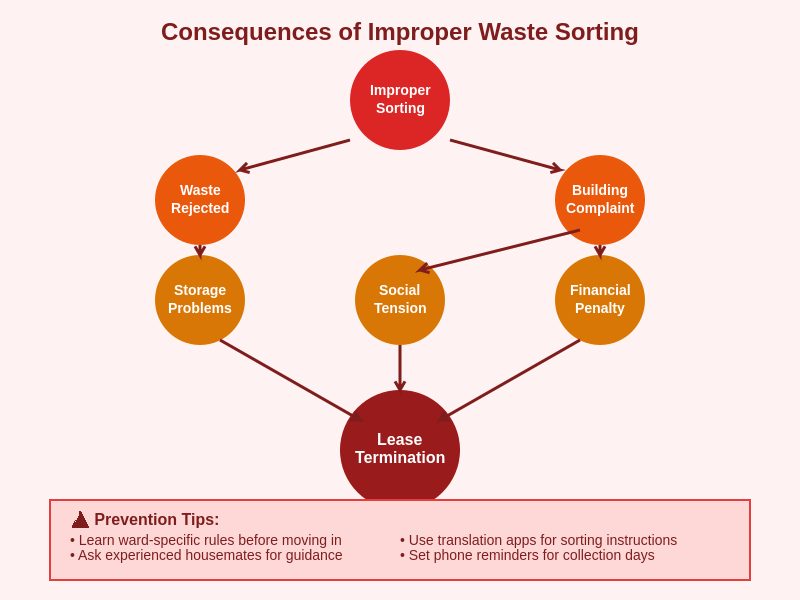
Building management companies increasingly implement fine systems for sorting violations that can range from warning letters to monetary penalties deducted from security deposits or added to monthly rent obligations, creating financial pressure that transforms environmental compliance into economic necessity rather than voluntary civic participation. Repeated violations can result in lease termination threats or non-renewal decisions that force residents to relocate despite otherwise satisfactory living arrangements.
The administrative burden of appealing sorting violations or disputing penalty charges requires navigation of formal complaint procedures conducted in Japanese with building management companies that may have limited patience for cultural misunderstandings or language barrier explanations. How legal disputes get resolved in sharehouses becomes relevant when waste sorting conflicts escalate beyond community-level resolution attempts.
Municipal waste collection services can refuse pickup for improperly sorted materials, leaving sharehouses with accumulated refuse that creates health and safety concerns while requiring expensive private disposal arrangements that building management may charge back to residents responsible for original sorting violations.
Technology and Information Gaps
Modern waste sorting requirements in Japanese sharehouses increasingly rely on smartphone applications and digital information systems that assume technological literacy and internet access capabilities that may not be equally available to all international residents navigating complex disposal requirements. Why translation apps help daily interactions becomes essential for accessing sorting information and municipal guidelines that determine compliance requirements.
Municipal waste sorting applications typically offer limited multilingual support while requiring location-specific settings and regular updates that may not function properly on international phone plans or older devices commonly used by budget-conscious sharehouse residents. The complexity of app navigation and information hierarchy can overwhelm users attempting to quickly determine proper disposal methods during busy daily routines.
QR code systems on waste bins and sorting stations assume smartphone ownership and technical proficiency that may exclude residents with limited technology access or older devices that cannot scan modern information systems designed for domestic Japanese users. The reliance on digital information distribution creates barriers for residents who prefer traditional printed materials or require alternative communication methods for effective learning.
Information updates about policy changes, collection schedule modifications, and new sorting requirements increasingly arrive through digital channels that may not reach all residents effectively, creating knowledge gaps that result in unintentional violations and community conflicts within sharehouse environments.
Psychological Impact and Daily Stress
The constant mental load of waste sorting decision-making creates cumulative psychological pressure for international residents in Japanese sharehouses who must evaluate every disposal action against complex rule systems while managing fear of social disapproval and financial consequences that can affect overall mental health and quality of life. Why stress management techniques become necessary often relates directly to daily challenges like waste sorting that compound over time.
Decision fatigue from continuous waste sorting evaluations can exhaust cognitive resources that residents need for work, study, and social activities, creating a hidden daily drain on mental energy that may not be immediately recognized as contributing to overall stress and dissatisfaction with sharehouse living experiences. The perfectionist anxiety surrounding proper disposal can transform routine household tasks into sources of procrastination and avoidance behaviors that affect overall domestic efficiency.
Social anxiety related to waste sorting performance can affect community participation and relationship building within sharehouses as residents become self-conscious about disposal practices and withdraw from common area usage to avoid potential conflicts or judgment from environmentally conscious housemates. The fear of making mistakes can prevent residents from asking questions or seeking help, perpetuating knowledge gaps and increasing the likelihood of violations.
Cultural imposter syndrome may develop as residents struggle to meet environmental standards that represent broader cultural integration expectations, creating feelings of inadequacy and outsider status that extend beyond waste sorting to affect overall cultural adaptation and community belonging within Japanese society.
Seasonal and Holiday Complications
Japanese waste collection schedules incorporate numerous seasonal adjustments and holiday modifications that create additional complexity for sharehouse residents attempting to maintain proper disposal routines while managing irregular pickup timing that can result in accumulated waste and storage problems. Why golden week creates housing market changes reflects seasonal disruptions that affect all aspects of daily life including waste management systems.
Extended holiday periods such as Golden Week and New Year celebrations can disrupt collection schedules for multiple weeks while requiring residents to plan storage capacity and disposal timing around irregular pickup patterns that may not be clearly communicated in advance. The accumulation of waste during holiday periods creates storage challenges in space-limited sharehouses while potentially attracting pests and creating health concerns that affect entire communities.
Seasonal changes in waste composition, particularly during moving seasons and year-end cleaning periods, can overwhelm normal disposal capacity while requiring specialized handling for items that may not typically appear in regular household refuse streams. The increased waste volume during peak periods can strain sharehouse storage capacity and create conflicts over space usage and disposal responsibility among residents.
Temperature fluctuations affect waste decomposition rates and odor development that can become problematic during extended storage periods caused by holiday schedule disruptions, requiring additional management strategies and potentially creating health and safety concerns within shared living environments.
Building-Specific Rules and Variations
Individual sharehouse buildings often implement additional waste sorting requirements and disposal procedures that supplement municipal regulations while creating property-specific compliance expectations that new residents must learn through informal knowledge transfer or trial-and-error experimentation. Why some sharehouses have unique networking benefits extends to environmental policies where different buildings develop distinct community standards and enforcement mechanisms.
Building management companies may impose stricter sorting requirements than municipal minimums while implementing monitoring systems and penalty structures that create additional pressure and complexity beyond basic environmental compliance obligations. The variation between different management companies means residents moving between sharehouses cannot assume consistent policies or procedures, requiring complete relearning of disposal systems with each housing change.
Older buildings may lack adequate waste storage facilities or sorting infrastructure that meets modern municipal requirements, forcing residents to develop creative solutions or accept suboptimal disposal conditions that increase difficulty and complexity of proper compliance. New construction sharehouses may implement advanced sorting systems that require technological literacy and procedural knowledge that exceeds basic municipal requirements.
The enforcement consistency within buildings varies significantly based on management priority, resident composition, and community culture, creating uncertainty about actual expectations versus written policies that can affect newcomer integration and long-term community stability.
Long-term Adaptation Strategies
Successful navigation of waste sorting challenges in Japanese sharehouses requires development of systematic approaches, community relationship building, and cultural adaptation strategies that transform initial overwhelming complexity into manageable daily routines that support environmental compliance and social integration goals. How cultural sensitivity develops through daily interaction applies directly to environmental practices that become indicators of community commitment and cultural understanding.
Creating personal reference systems through translated sorting guides, photographic documentation of proper procedures, and digital reminder systems can help residents develop confidence and consistency in disposal practices while reducing daily decision-making burden and anxiety around compliance requirements. Building relationships with environmentally knowledgeable housemates provides ongoing support and guidance that facilitates learning while contributing to community integration and mutual assistance networks.
The development of efficient routines that incorporate waste preparation into daily activities can reduce time burden and procedural complexity while ensuring consistent compliance with sorting requirements that support both environmental goals and community harmony within sharehouse environments. Understanding waste sorting as cultural participation rather than mere environmental compliance can shift perspective from burden to integration opportunity that supports broader cultural adaptation and community belonging objectives.
Long-term residents often find that mastery of waste sorting systems provides confidence and cultural knowledge that extends to other aspects of Japanese society navigation, creating foundational skills and cultural understanding that enhance overall living experience and community integration success beyond immediate sharehouse environments.
Disclaimer
This article is for informational purposes only and does not constitute official guidance on waste sorting requirements. Waste sorting rules vary significantly between municipalities, buildings, and management companies. Residents should consult their specific building management and local municipal authorities for accurate and current waste sorting requirements. Individual experiences may vary based on building policies, community dynamics, and local regulations.